Voyage of the Rascal
  • Home
  • Blog
  • The View
  • The Route
  • The Crew
  • The Plan
    • Motivation
    • Finances

My First Foray into Patagonia

6/1/2015

2 Comments

 
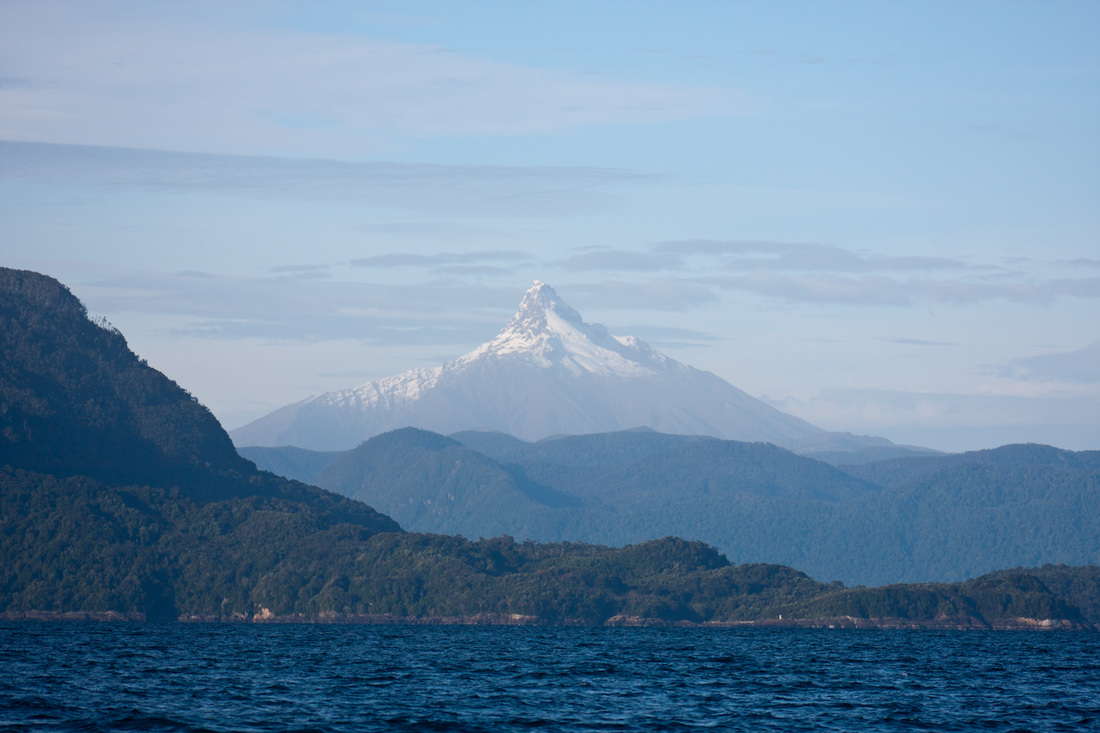
When I sailed out of Puerto Montt, I was expecting to enter a world of cascading waterfalls, narrow fjords, picturesque islands, and frosty volcanic peaks.  But the reality is far from what I was expecting.  After all the hype, I found that Chile is just not that great.
Picture


JUST KIDDING!!!  It’s totally and completely gorgeous and awe-inspiring!

Picture
The Fjords
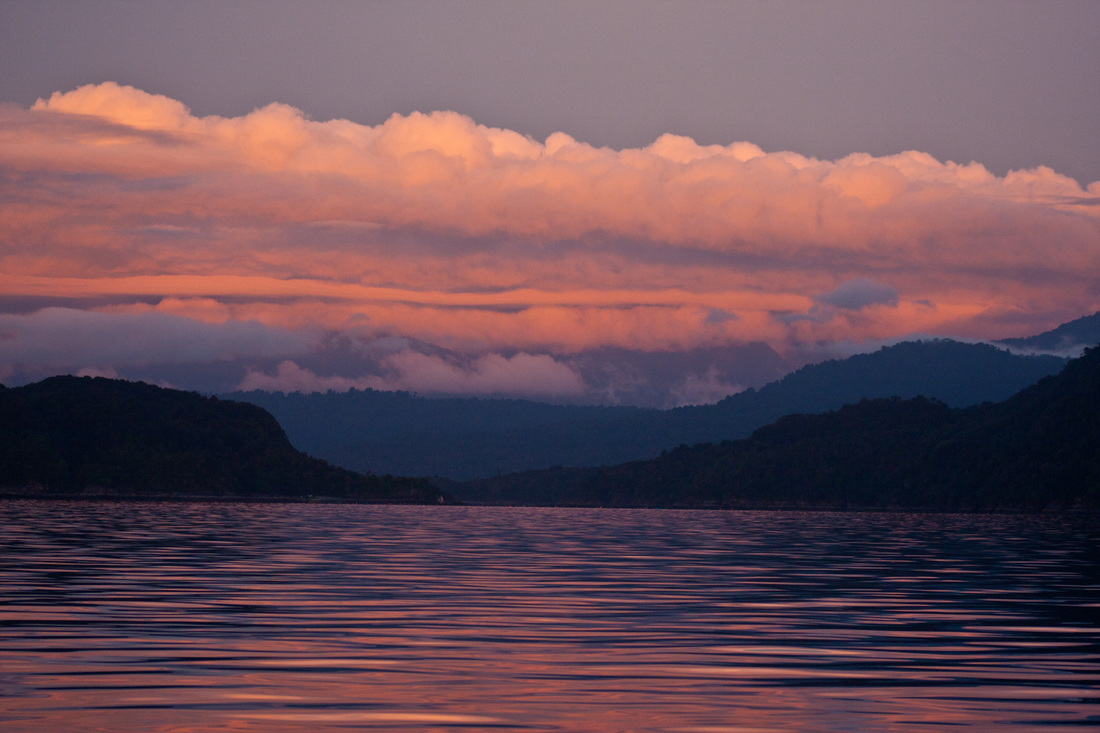
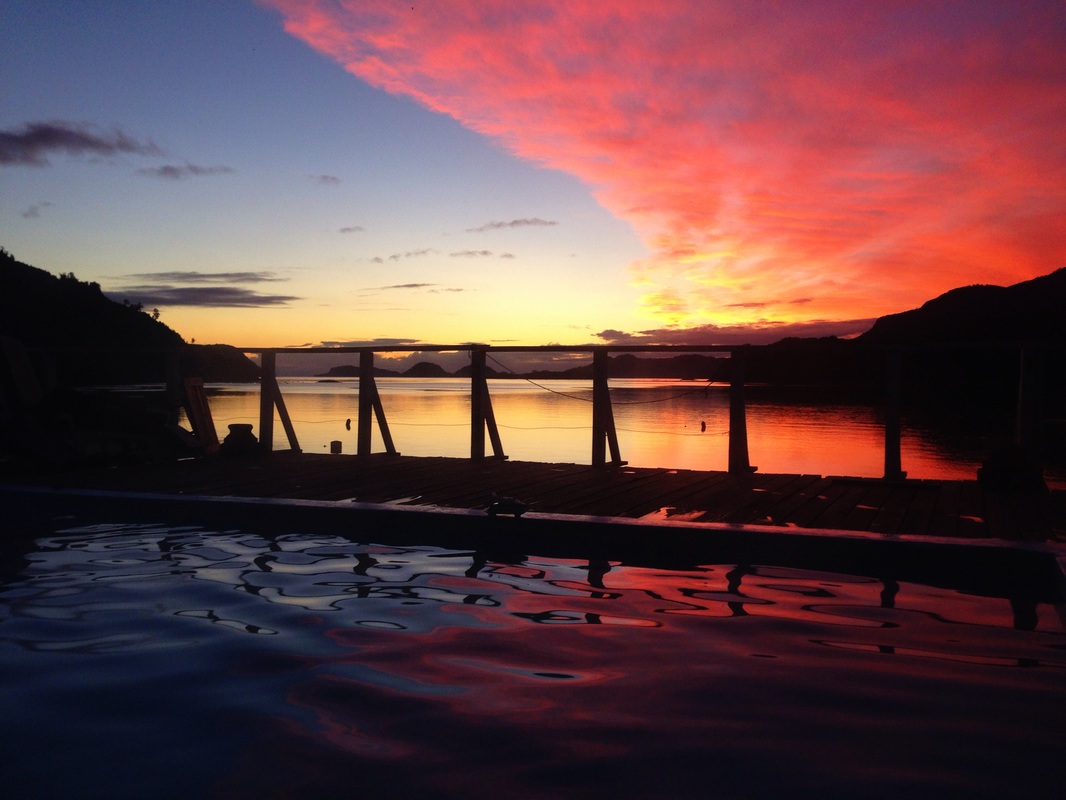
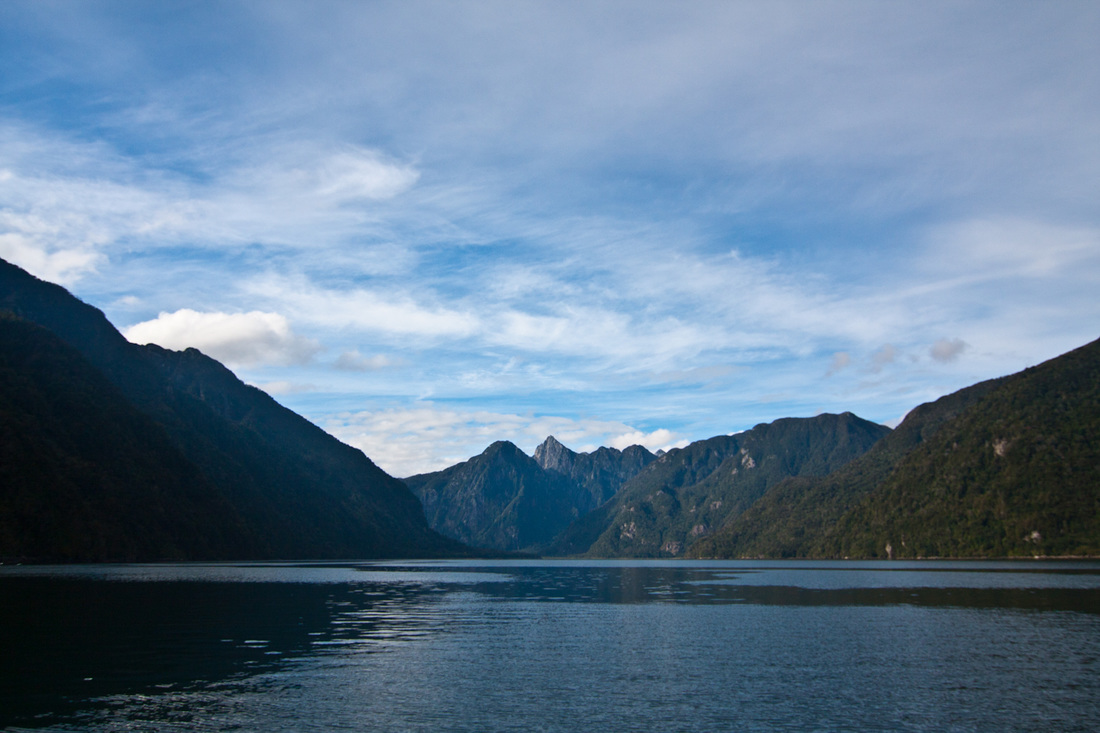
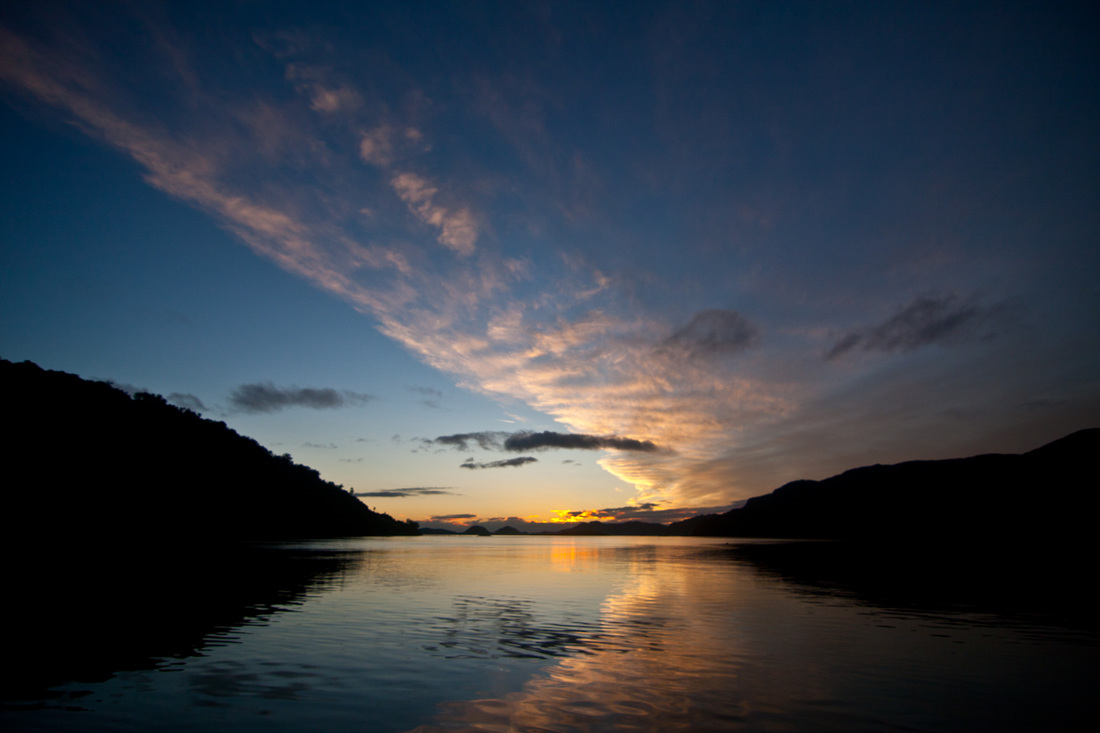
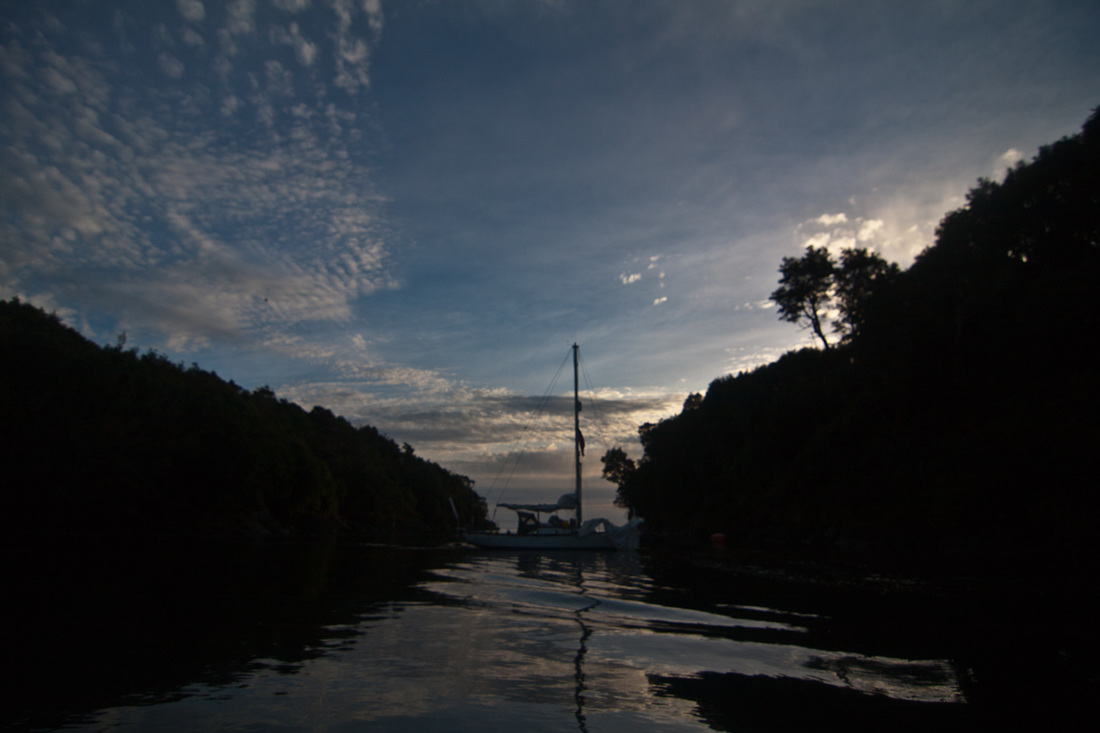
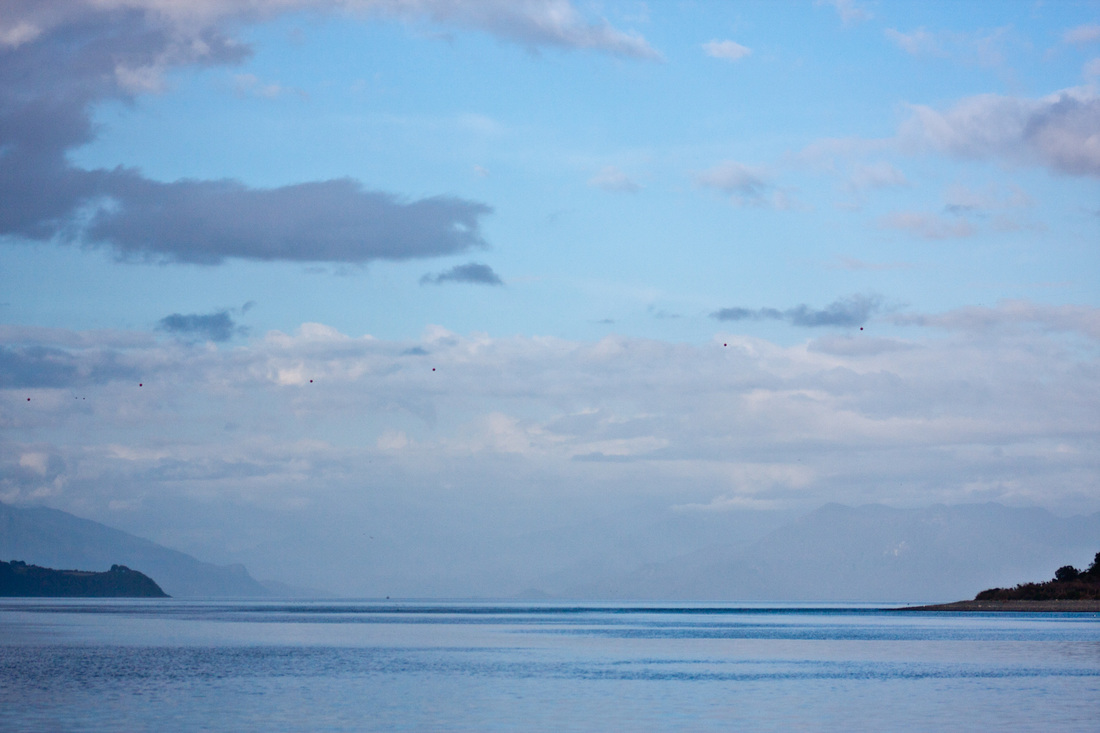
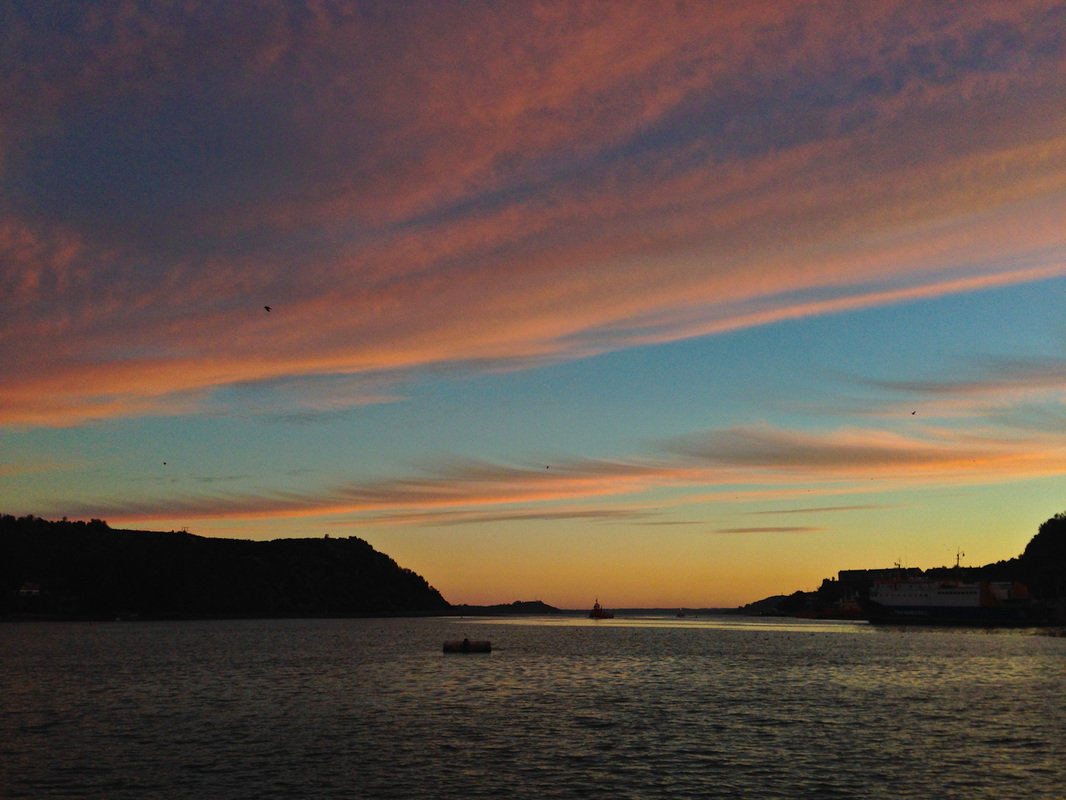
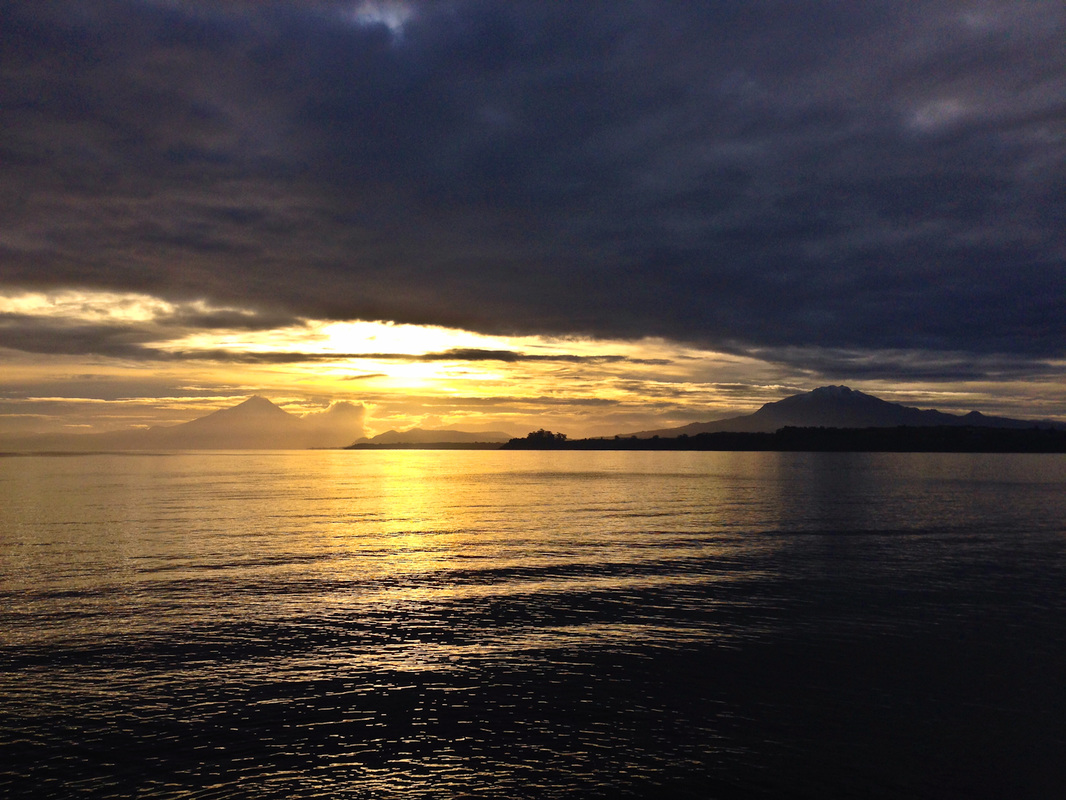
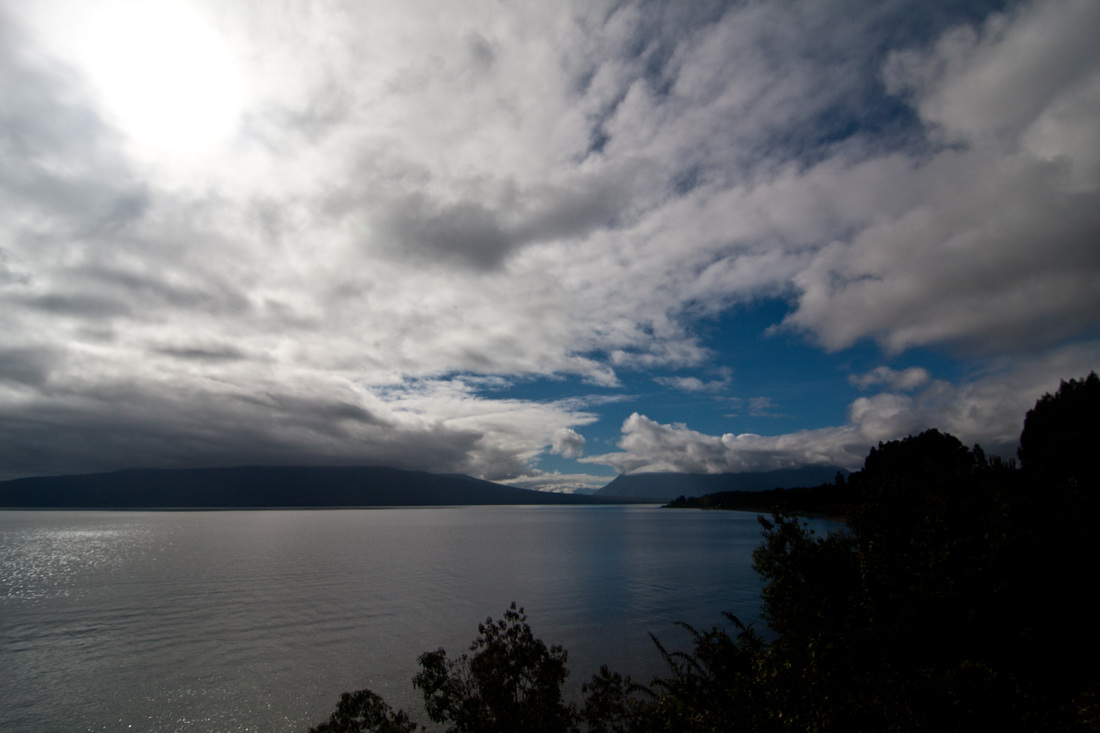
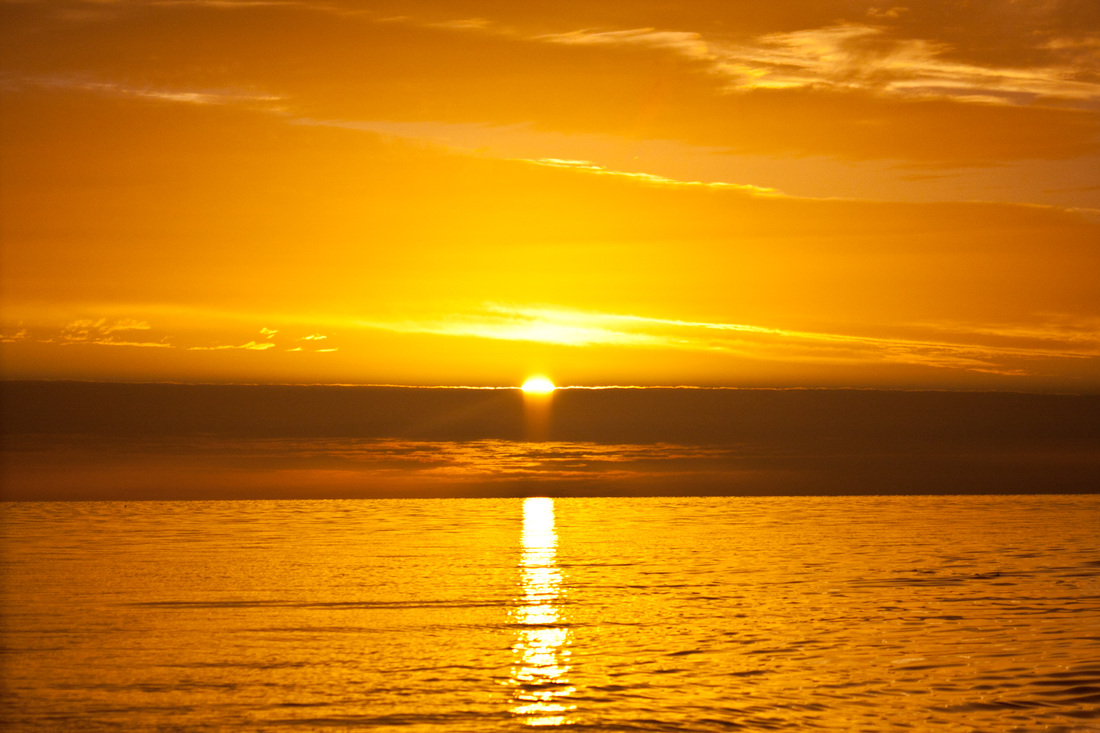
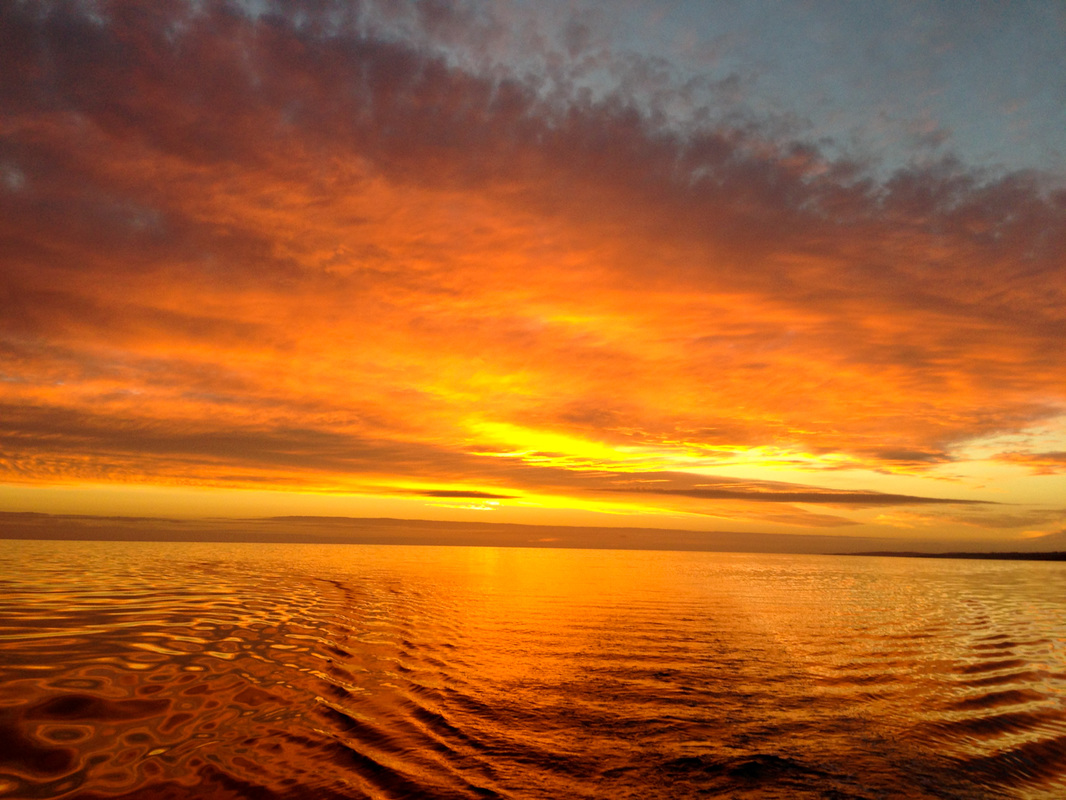
I pulled out of Puerto Montt a few hours before dawn and pointed the Rascal south. By the time the sun was setting, we were navigating into the heart of the Andes with thousand foot cliffs on either side and snow capped peaks glimmering in the distance.  A glorious sunset ushered me into a snug anchorage between two islands.  
Picture
Picture
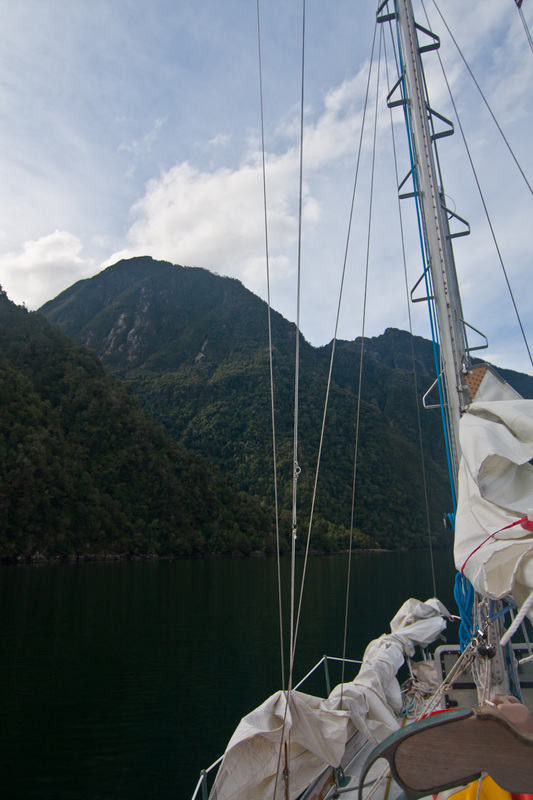
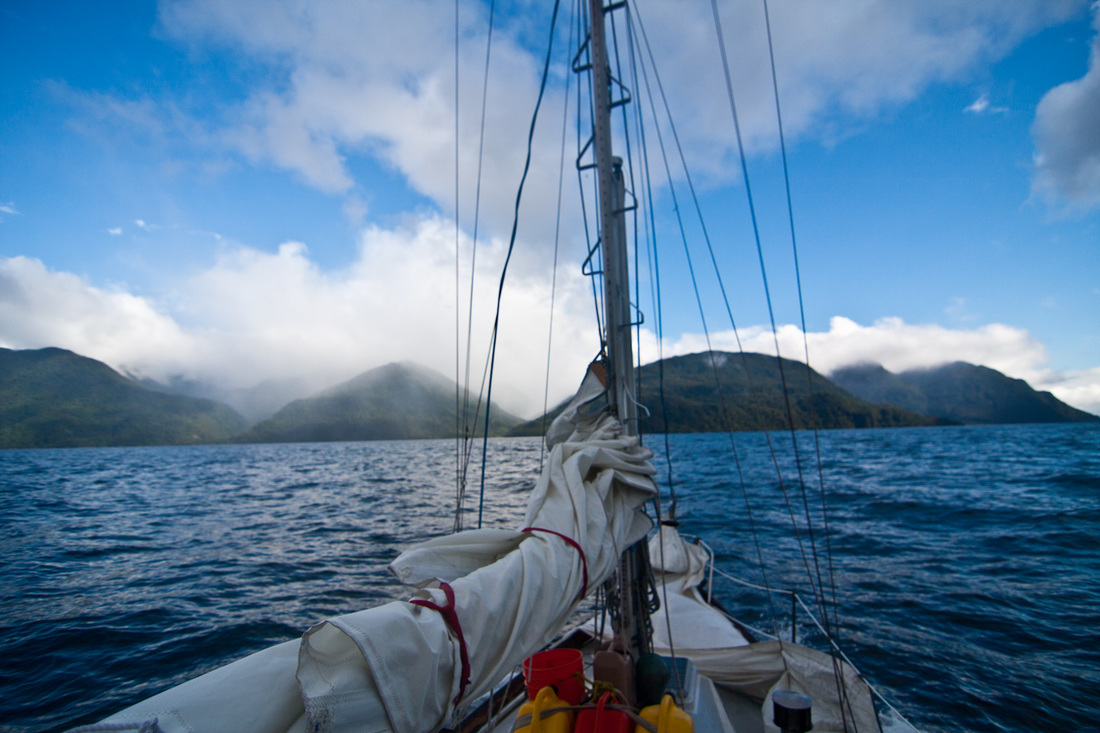
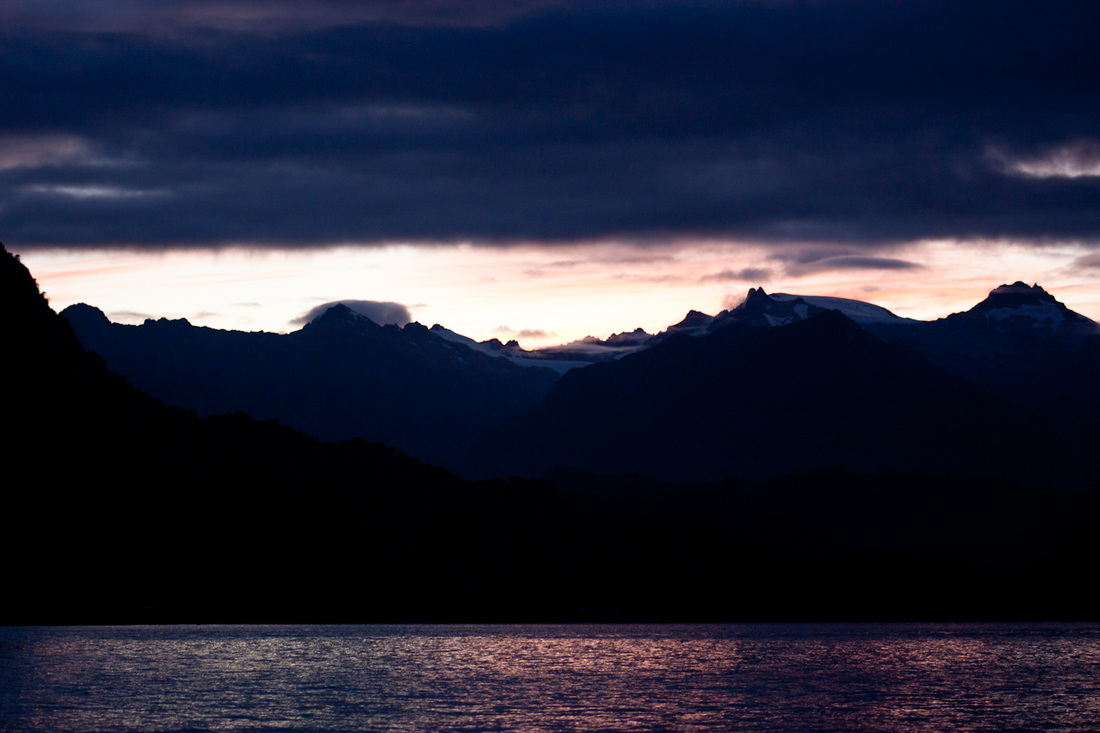
The next morning was absolutely gorgeous and the Rascal and I began to delve deeper into the mountains.  
Picture
Picture
Picture
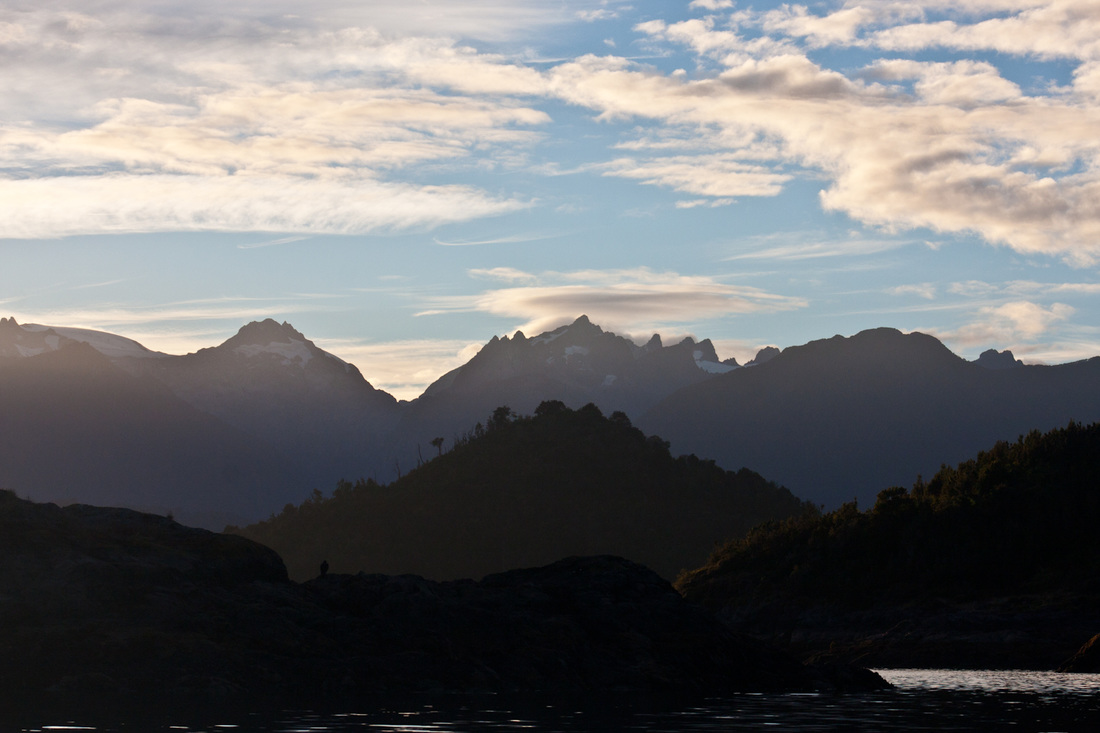
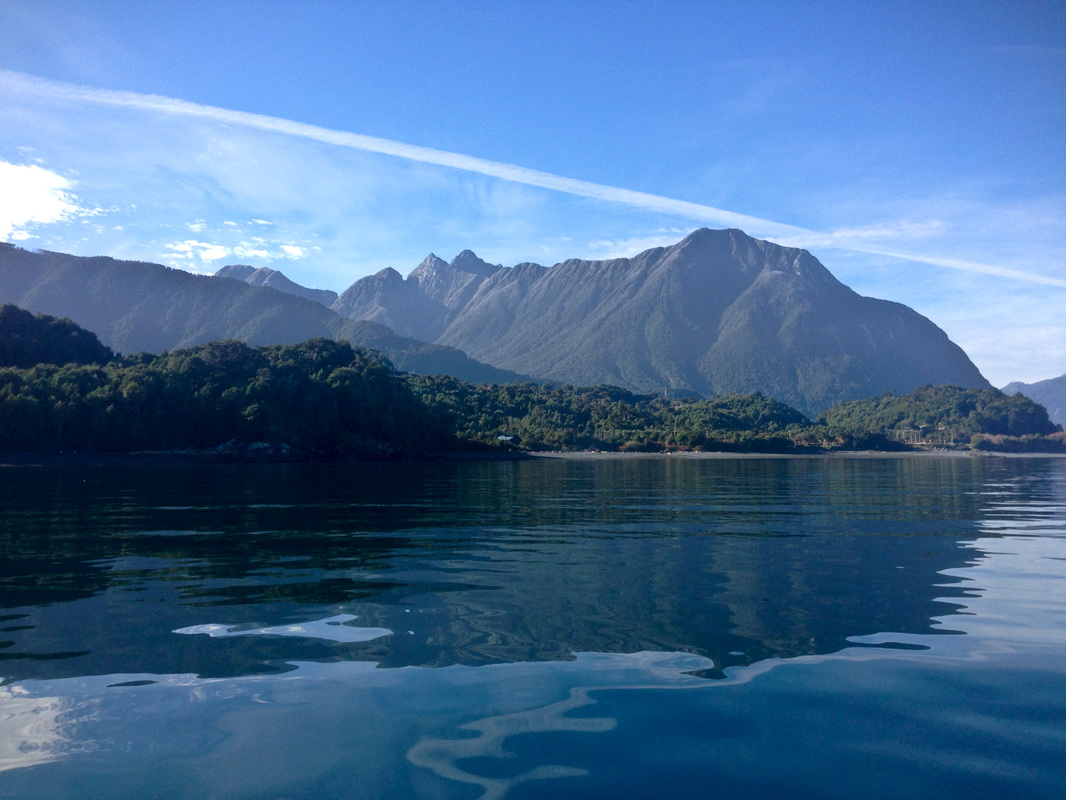
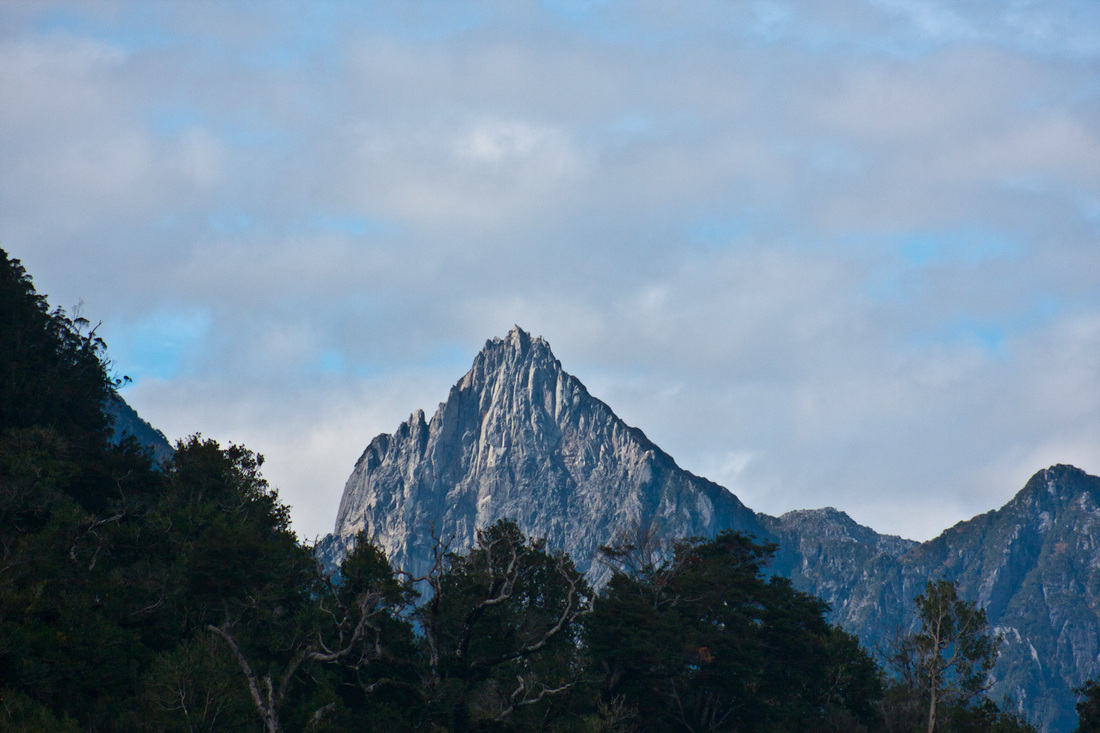
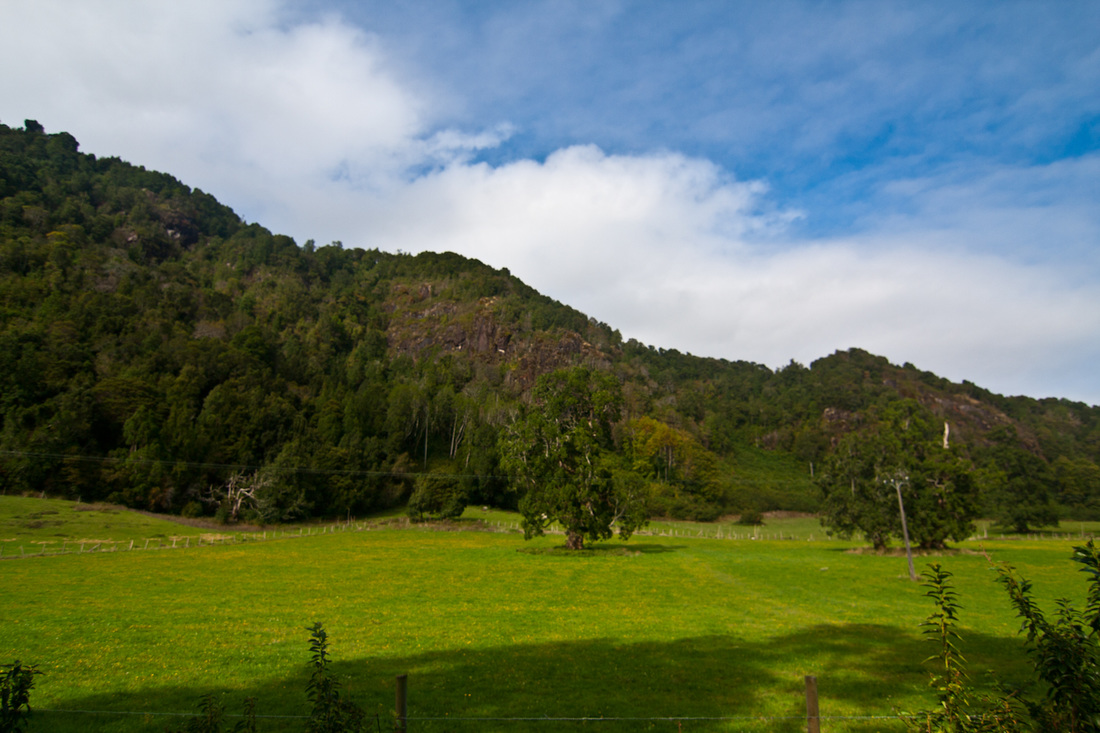
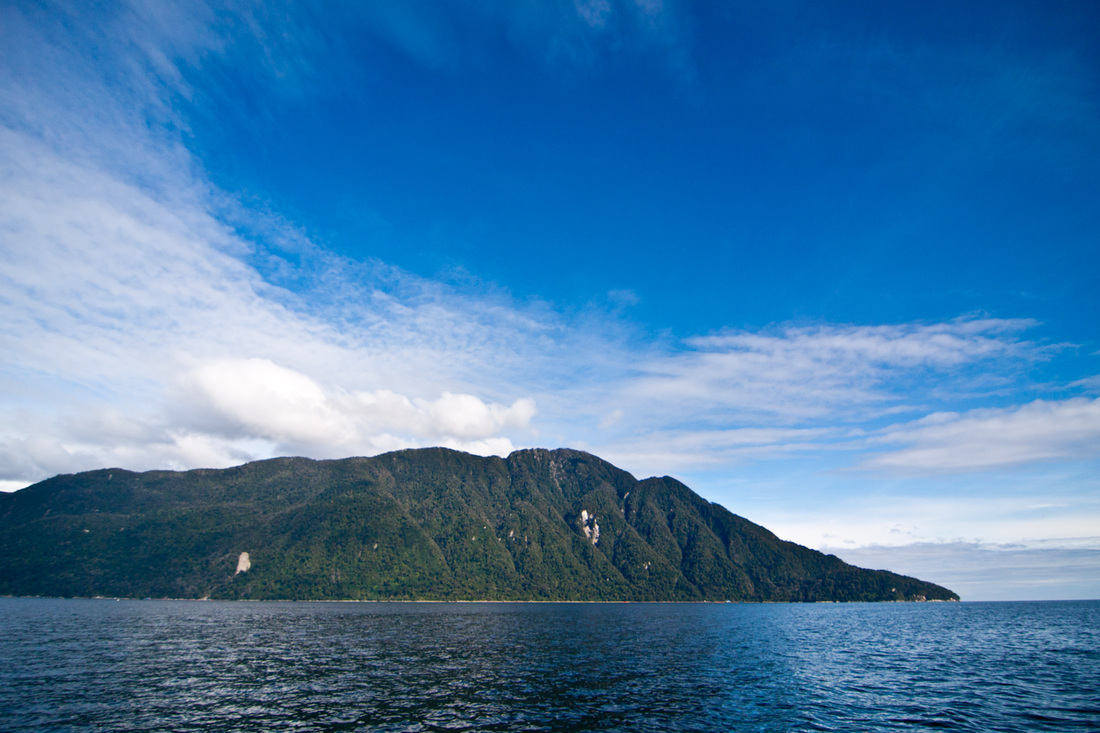
I was surrounded by pristine forested mountainsides.  Sharp, craggy peaks could be seen peeking out in the distance.
Picture
Picture
Picture
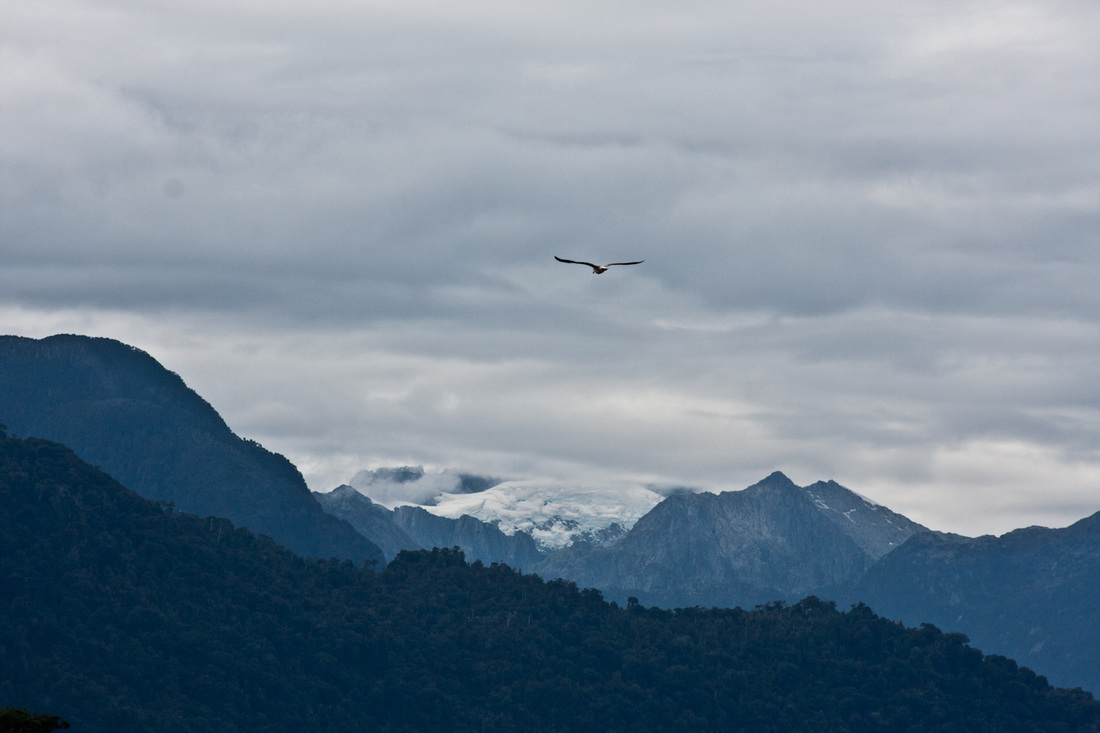
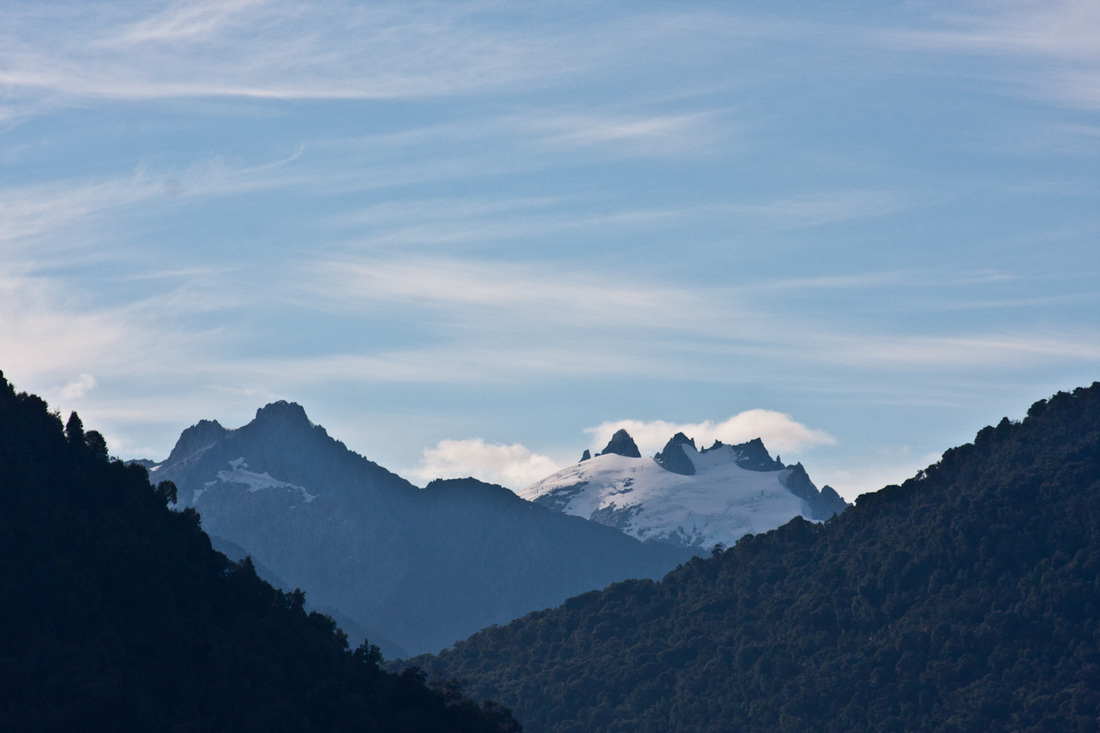
Every now and then, you could spot a glacier in the depths of the Andes.
Picture
Picture
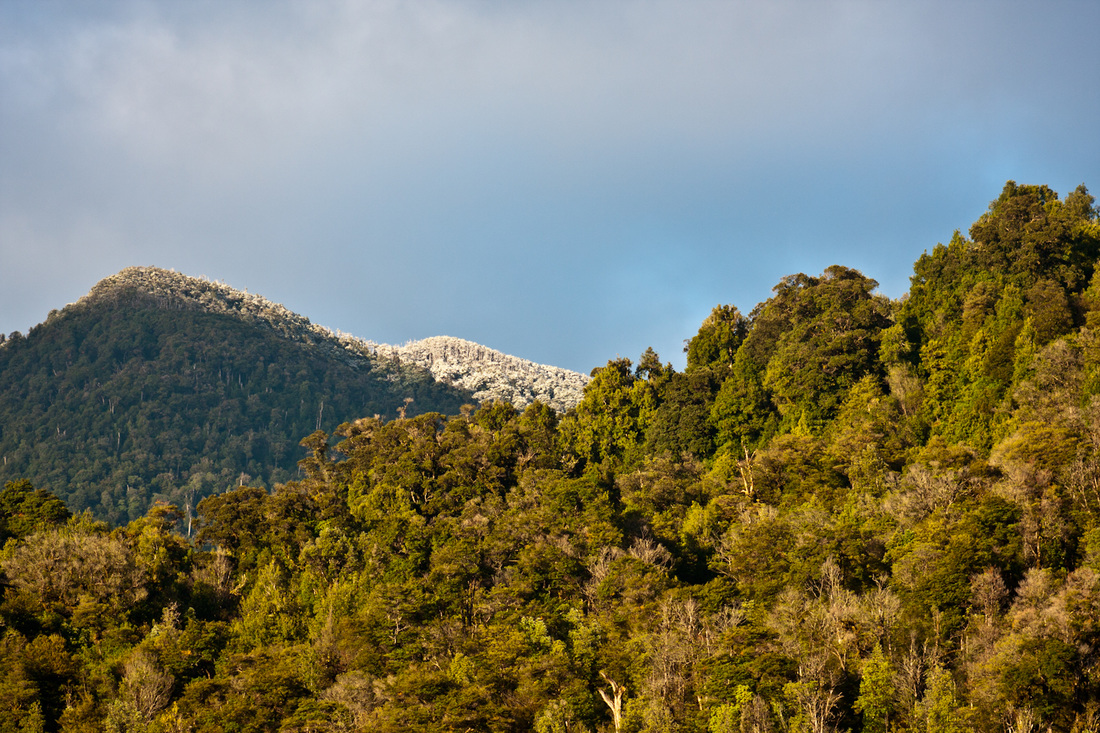
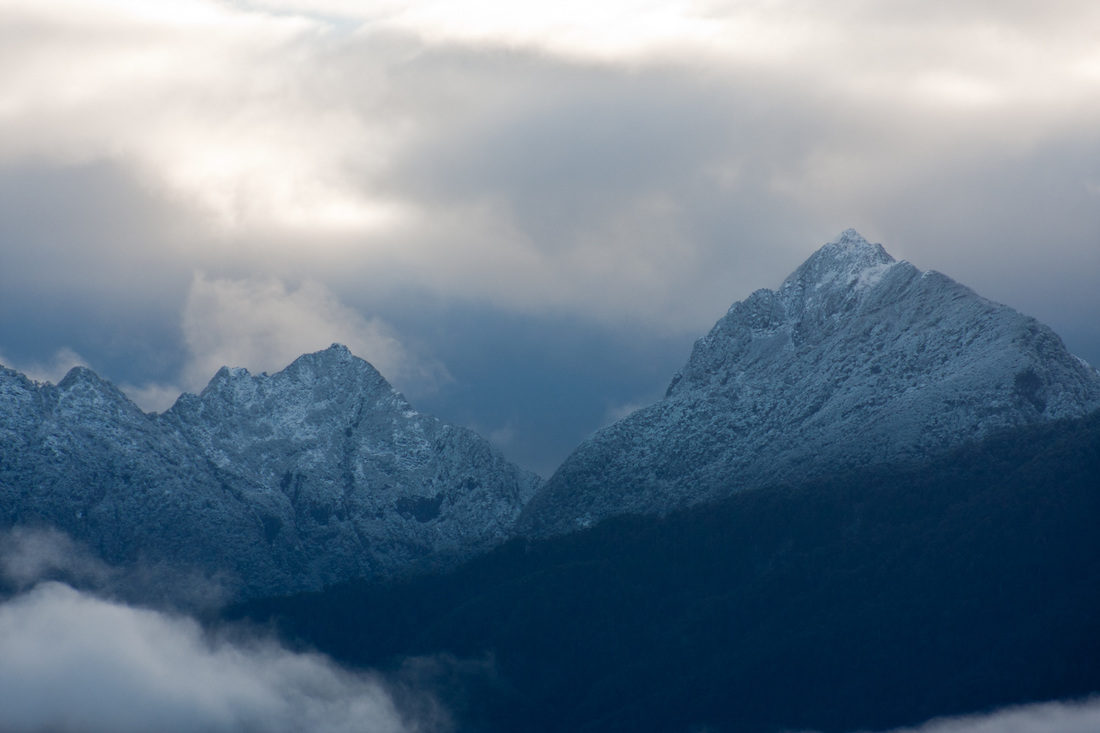
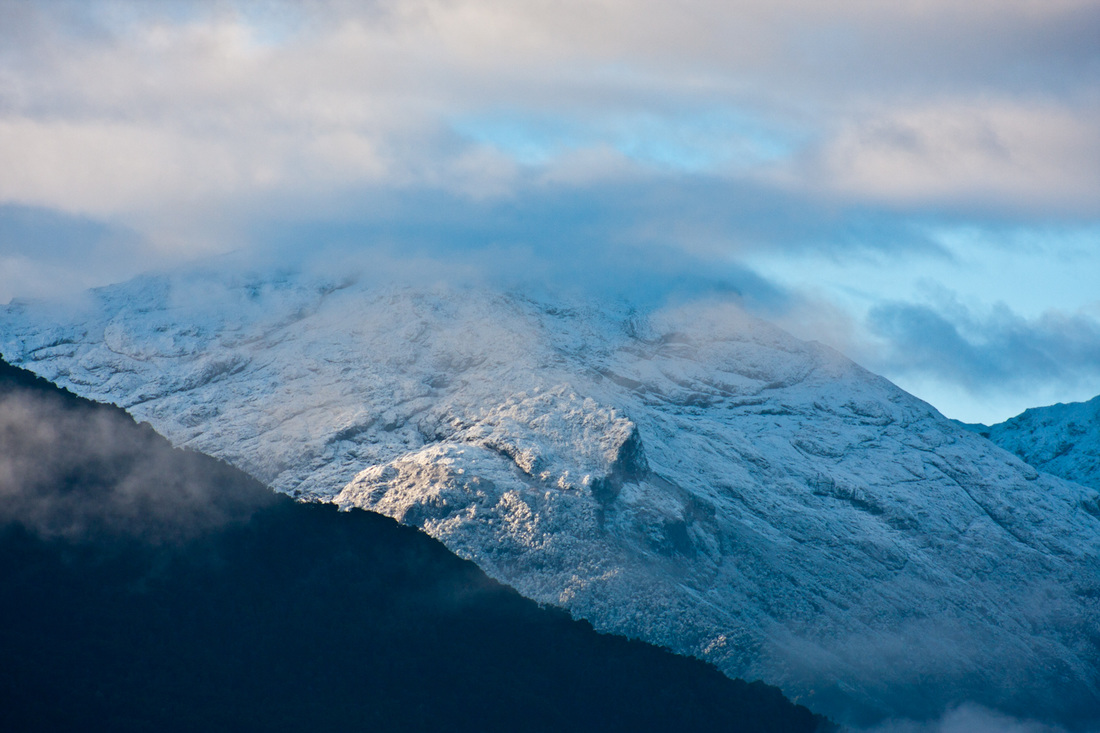
On my third morning in the fjords, I woke to clear skies and a dusting of snow up in the high country.  Winter is clearly on its way.
Picture
Picture
Picture
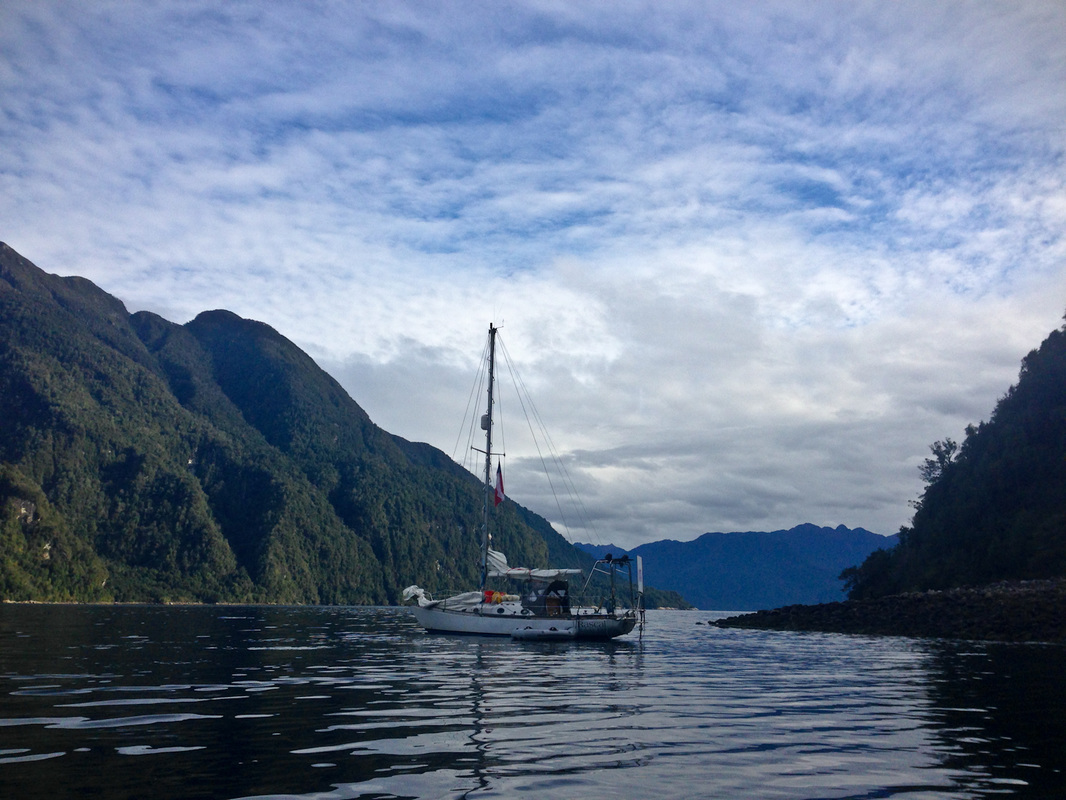
One tough thing about sailing in the fjords is finding a good spot to anchor.  You can imagine how the thousand foot cliffs that you can see above the waterline just continue down into the ocean.  Thus, all of the anchorages are very deep, and anchoring is really only possible in areas where a river or landslide has thrown enough debris into the fjords to fill them up.  Oftentimes you have to get very close to the cliffs to be able to get your anchor to hold at all.  I’ve been in a couple places now where my bow will be in 60 or 70 feet of water and my stern will only be in 20 or 25.  Typically you need to tie lines to shore to keep the boat secure.  It’s definitely a little nerve-wracking to have your rudder ten feet way from a bunch of sharp, point rocks, but its normally the only possibility.  The 15-20 ft tidal range compounds these issues.  
Picture
Picture
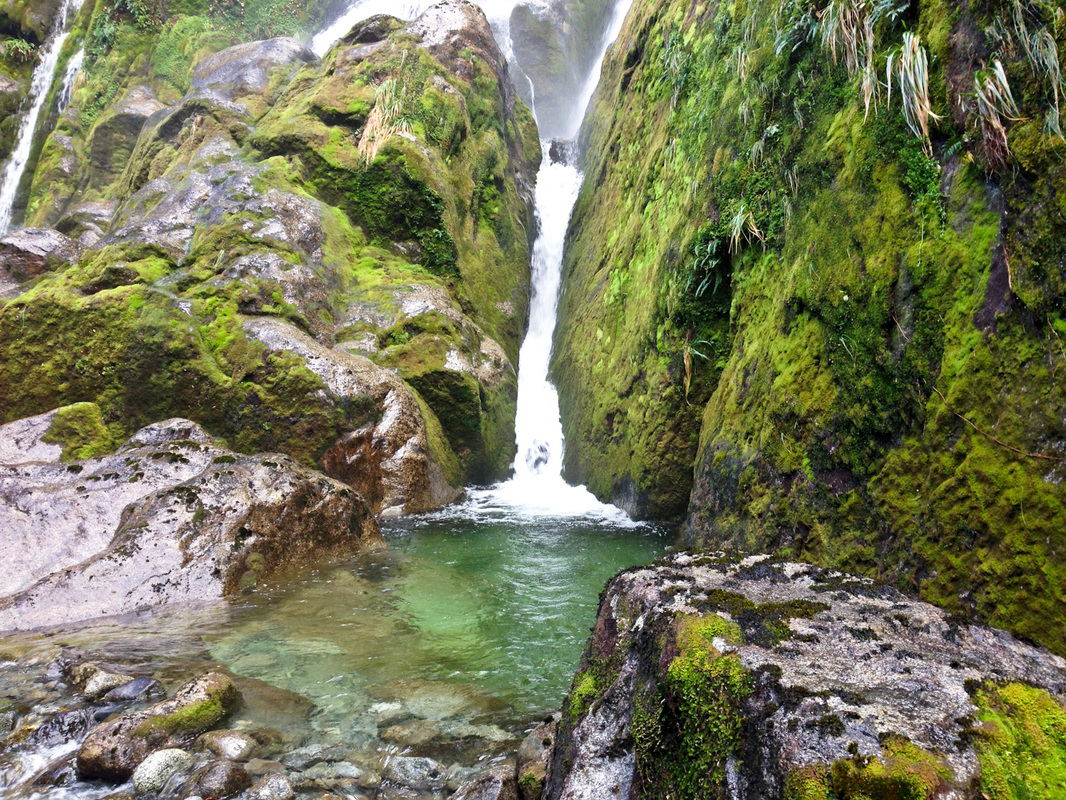
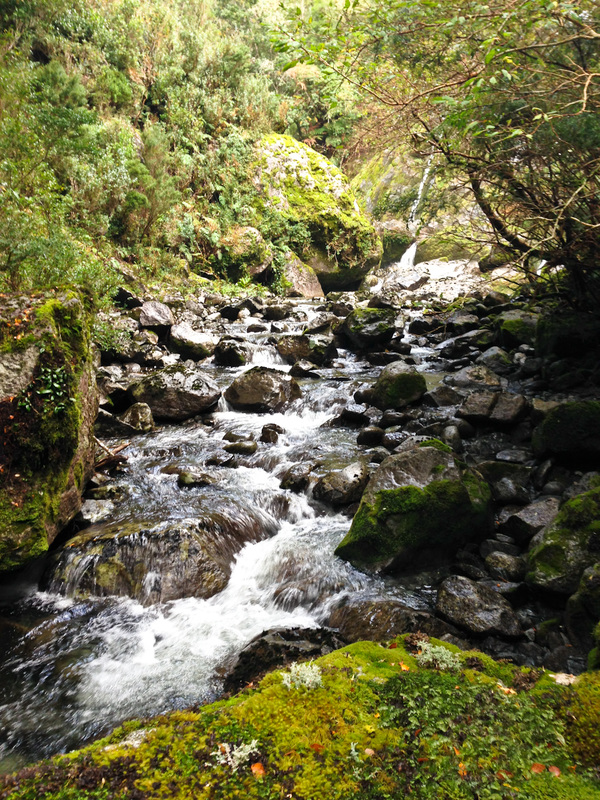
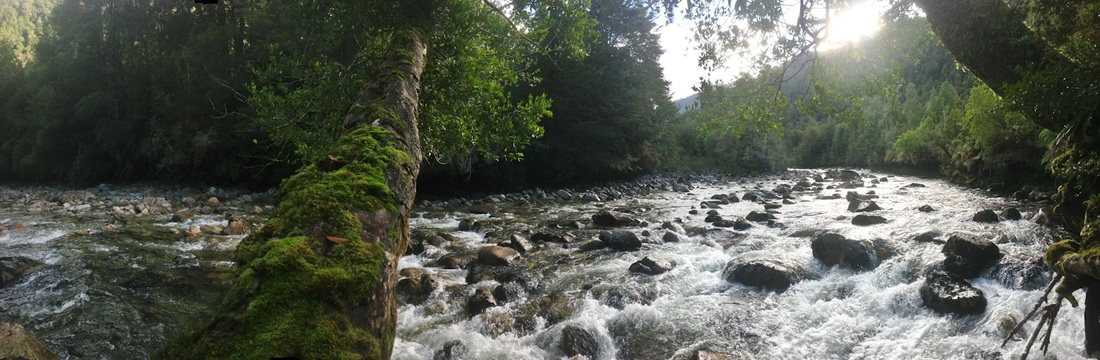
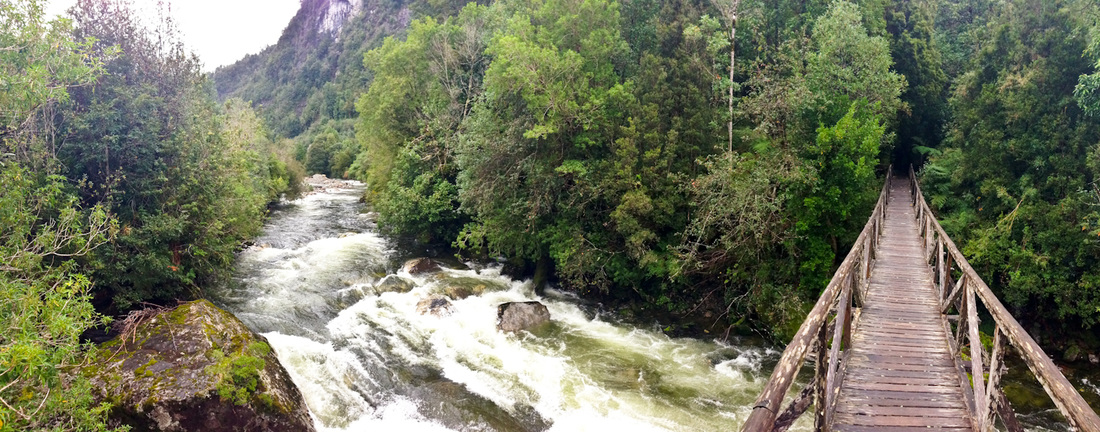
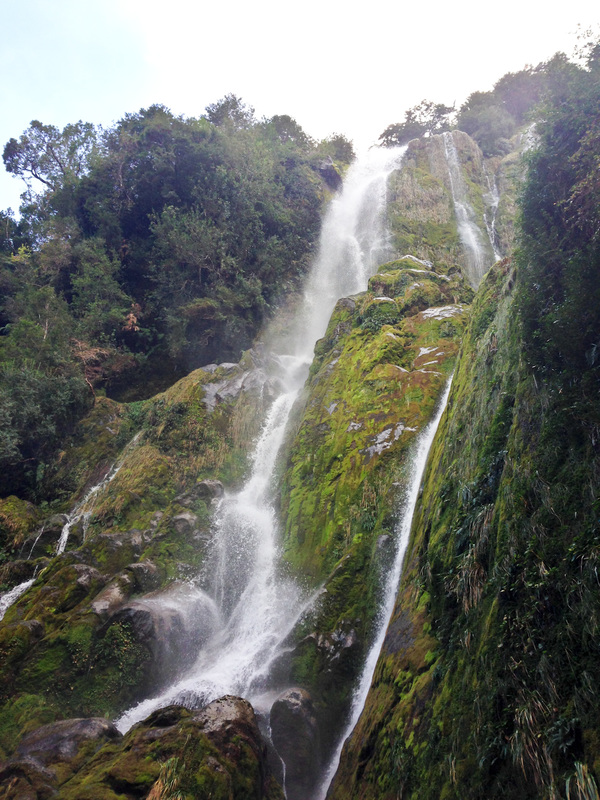
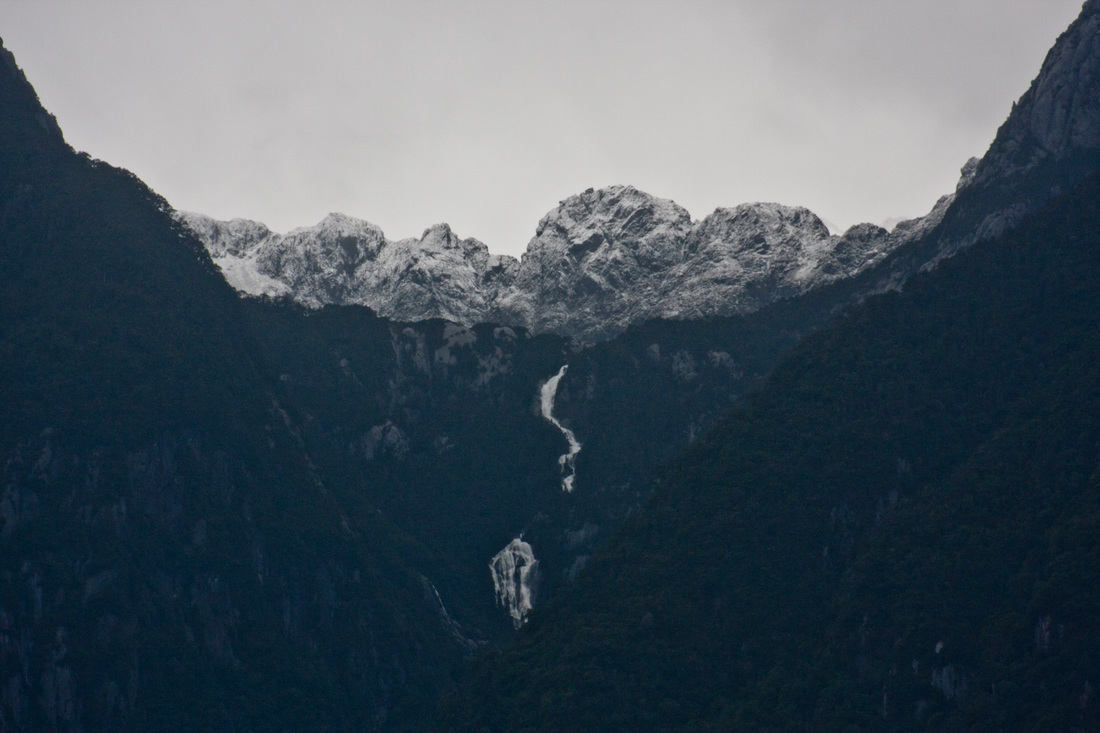
After rainstorms (ie: almost every day) there are hundreds of waterfalls, large and small that come spouting out of the walls of the fjords.  You've got to do some pretty stout bushwhacking, but oftentimes its possible to climb up to the base of them for a closer look.  Some are fed by rainfall, some by glacier melt, and others by springs.  Every single one I've tasted so far has been delicious!
Picture
Picture
Picture
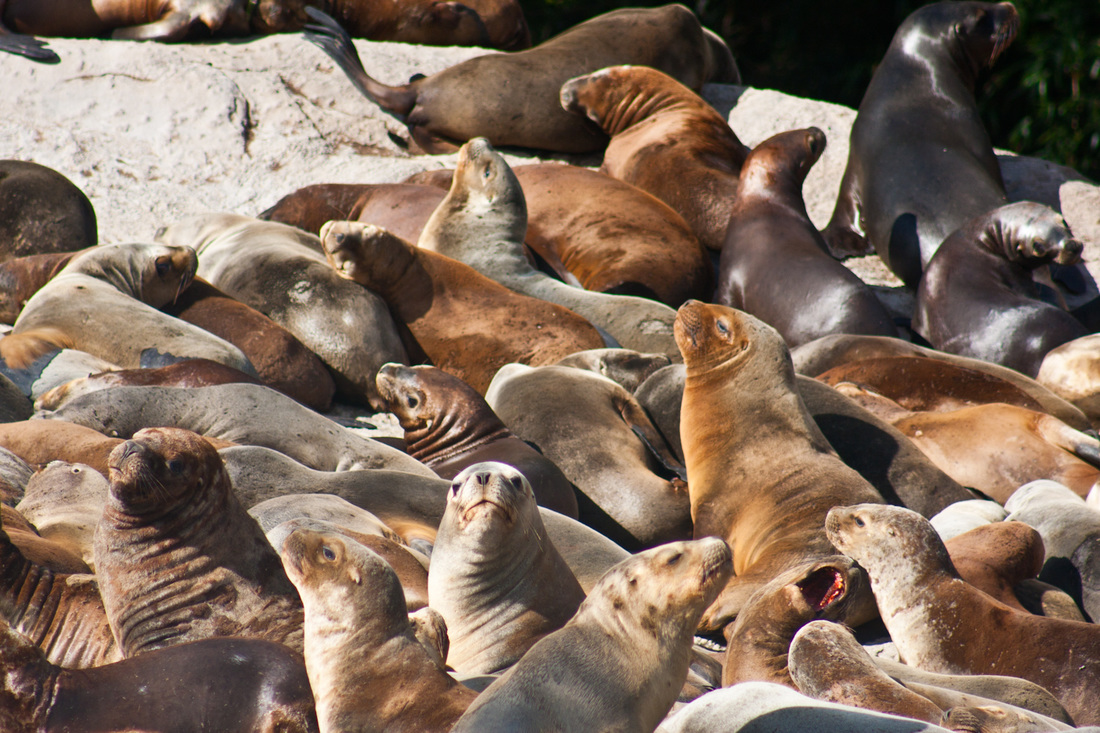
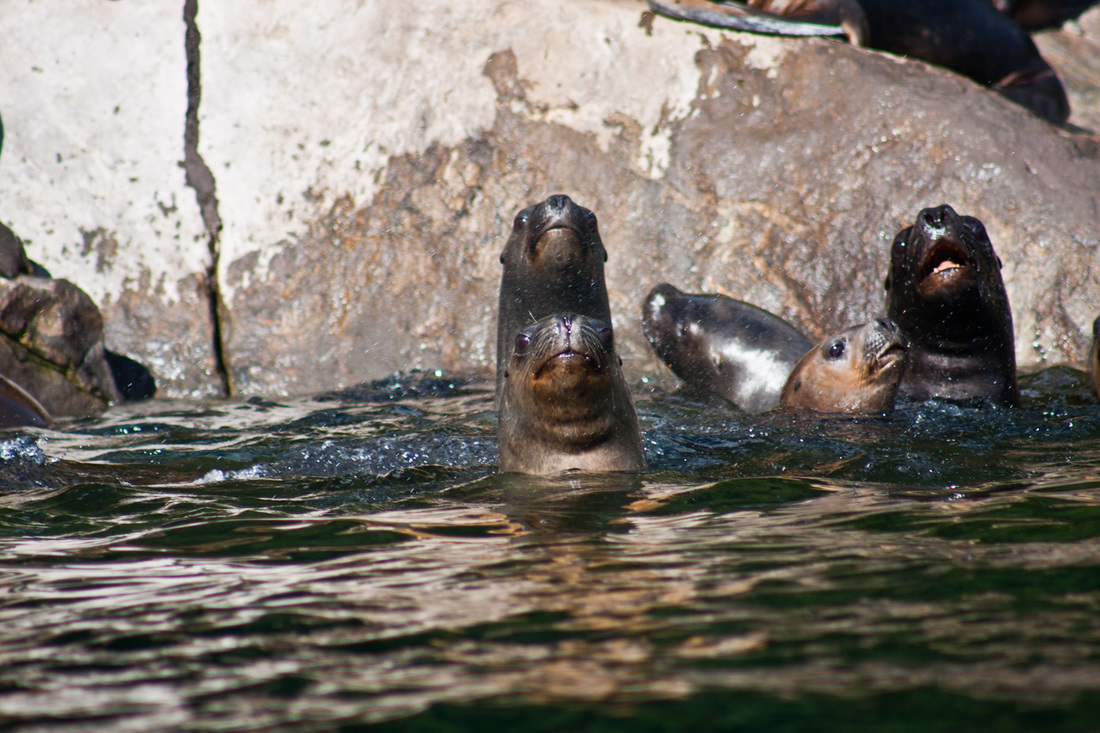
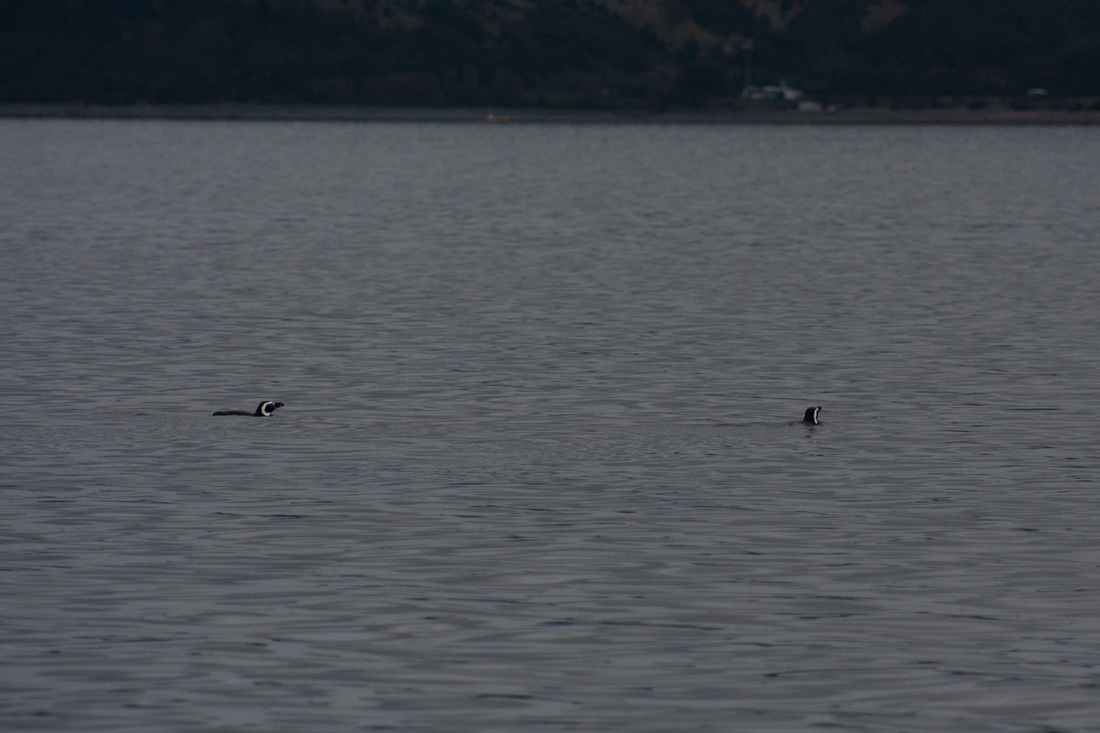
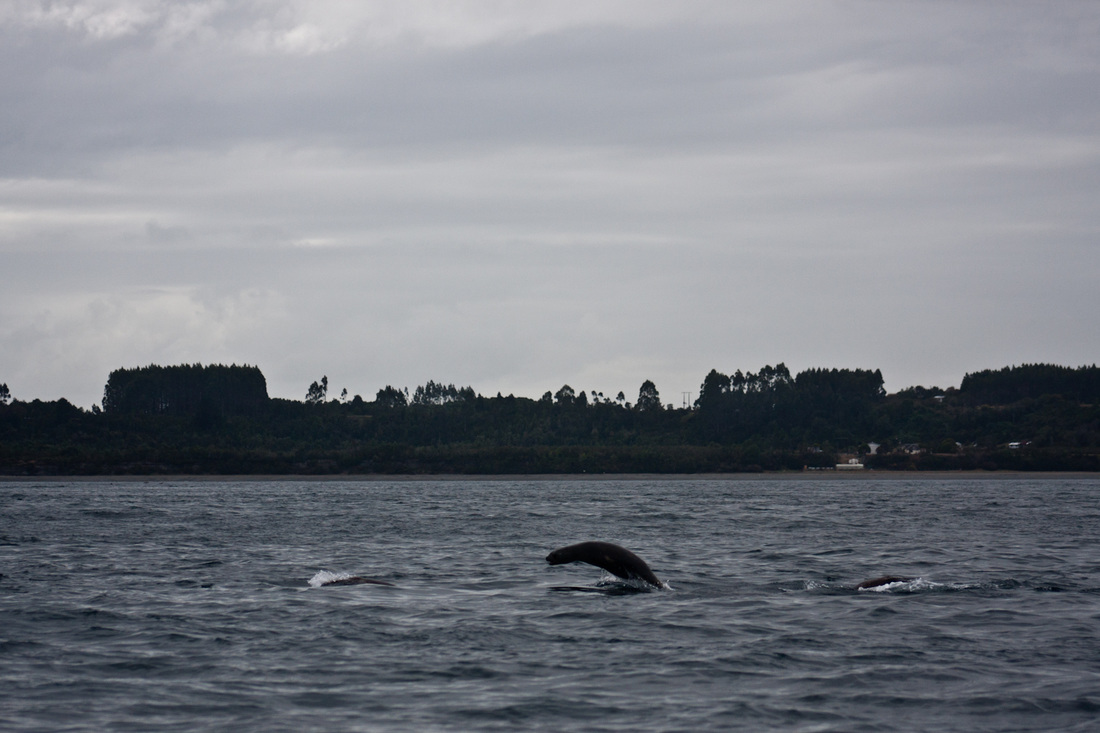
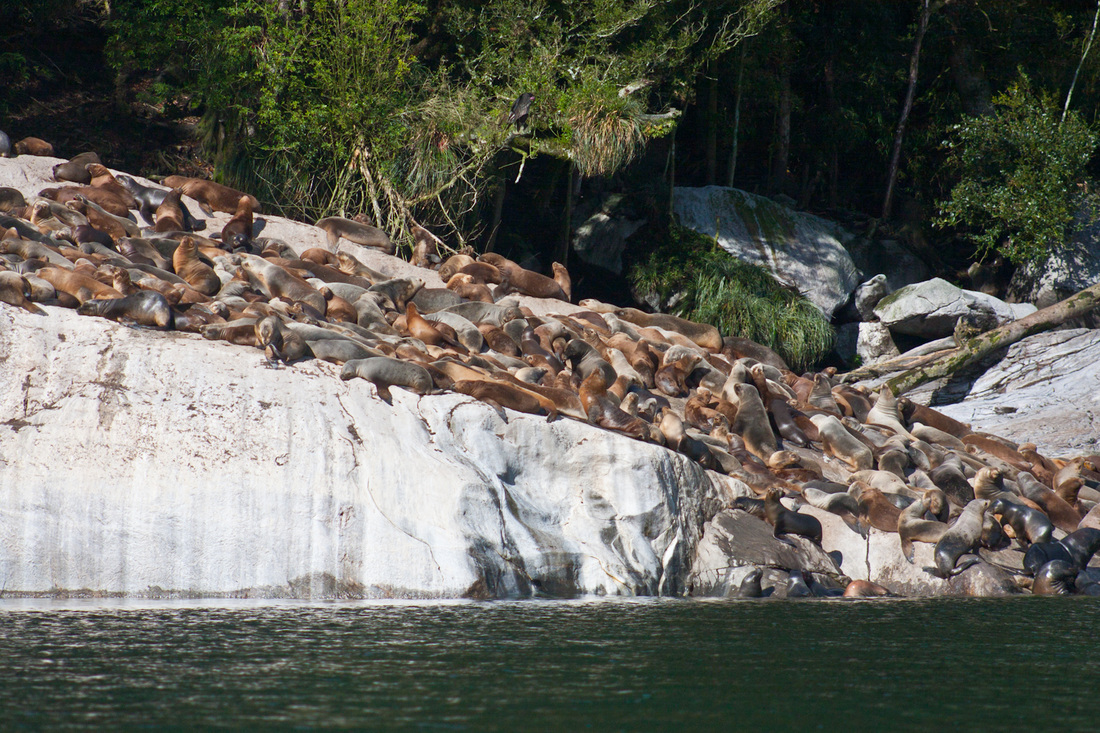
As always, there were plenty of birds cruising around and I've also seen a few colonies of sea lions on rocky outcroppings.  
Picture
Picture
Picture
Picture
Some errant penguins!
The Hot Springs
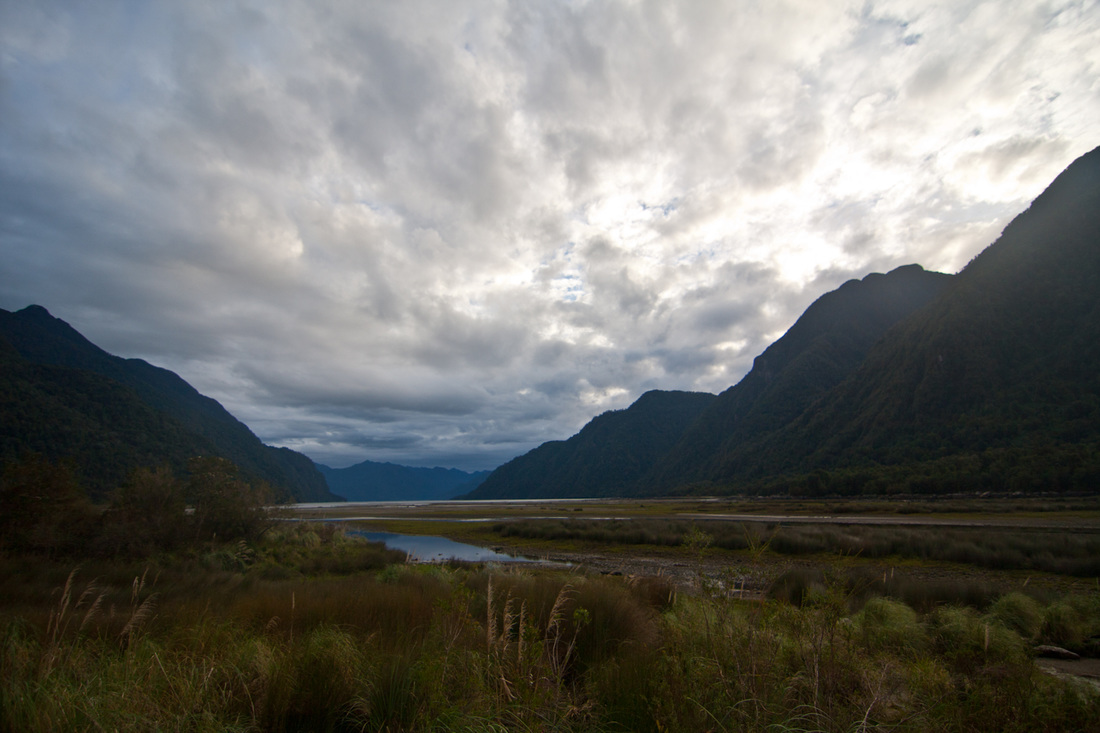
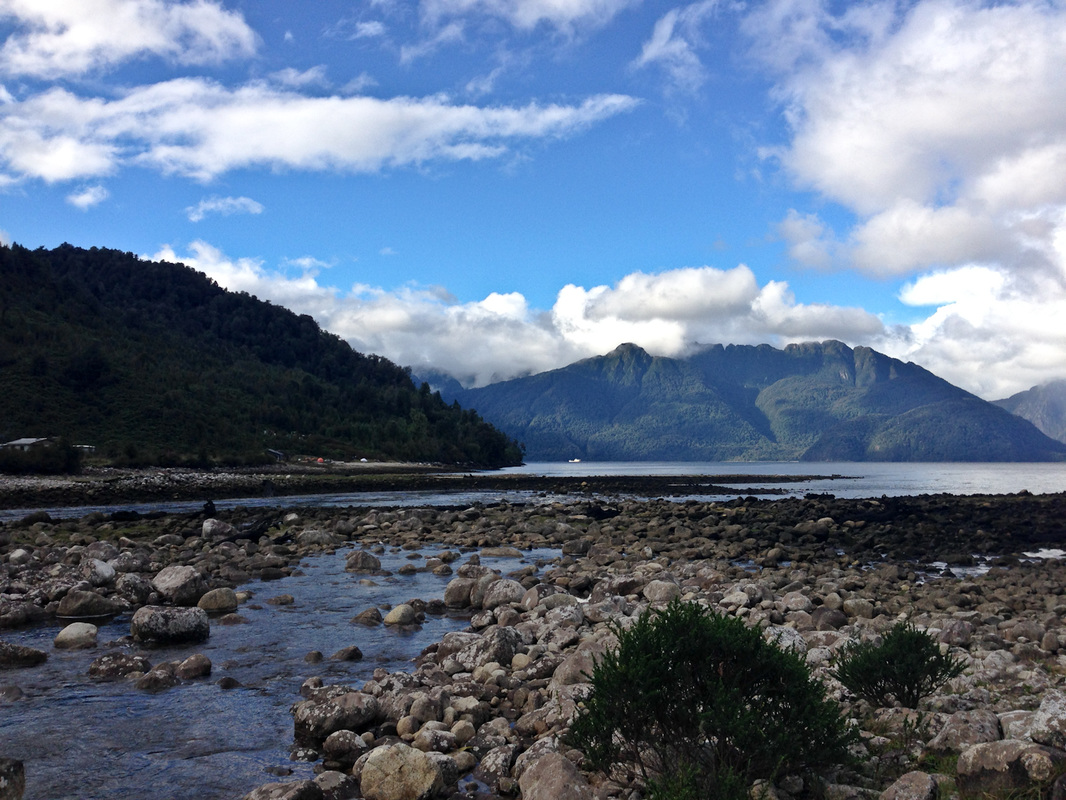
Chile’s predominately volcanic geology means that there are lots of hot springs bubbling up out of the ground.  One such place is at the very end of a beautiful isolated fjord, with the nearest town dozens of miles away.  It was one of the first places I visited and I immediately fell in love.
Picture
Picture
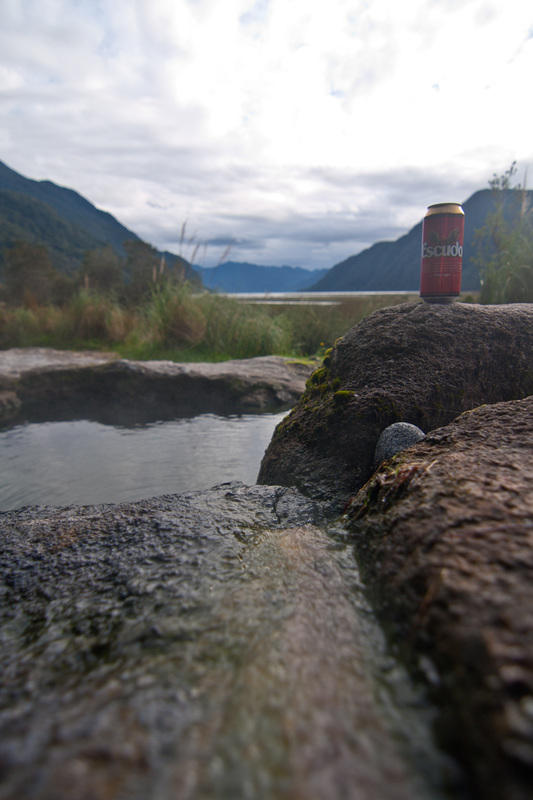
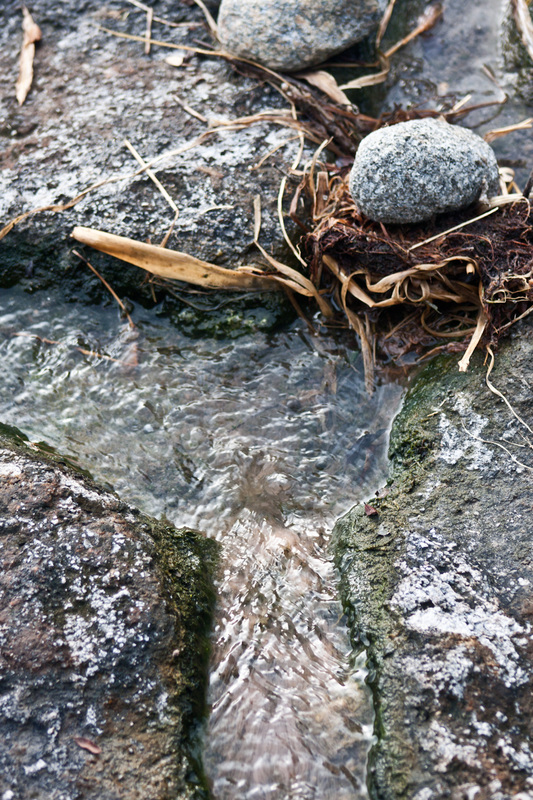
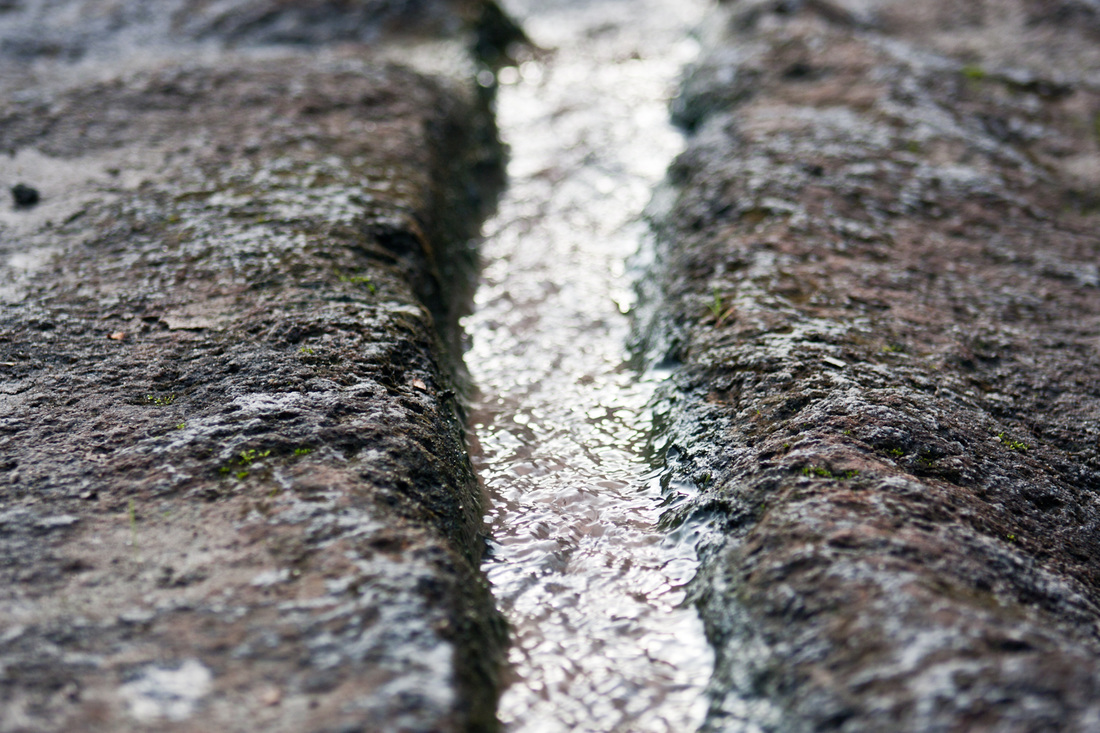
A dozen small tubs and baths had been carved out of the solid rock with tiny little channels to bring the water to each.  Depending on how hot you wanted your soak, you’d add some rocks to the channel to stem the flow, or remove them to get more hot water.  
Picture
Picture
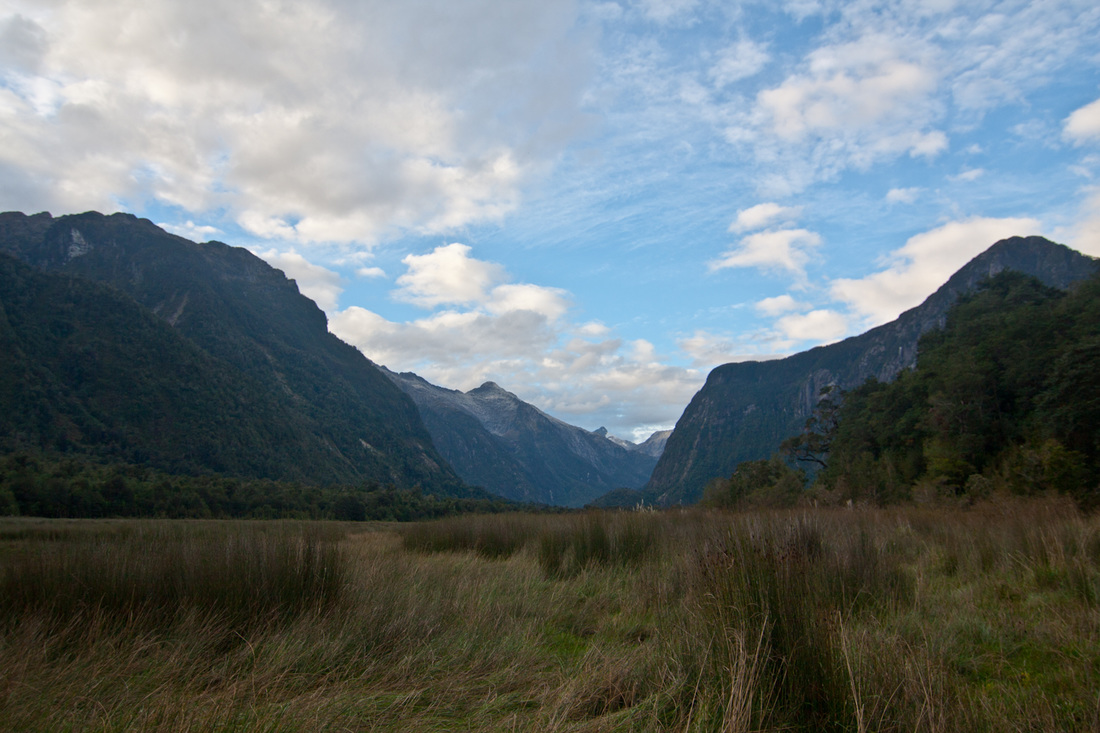
I spent a few hours (and a few beers) soaking in the tub, relaxing, and listening to birds call from the forest that surrounded me.  
Picture
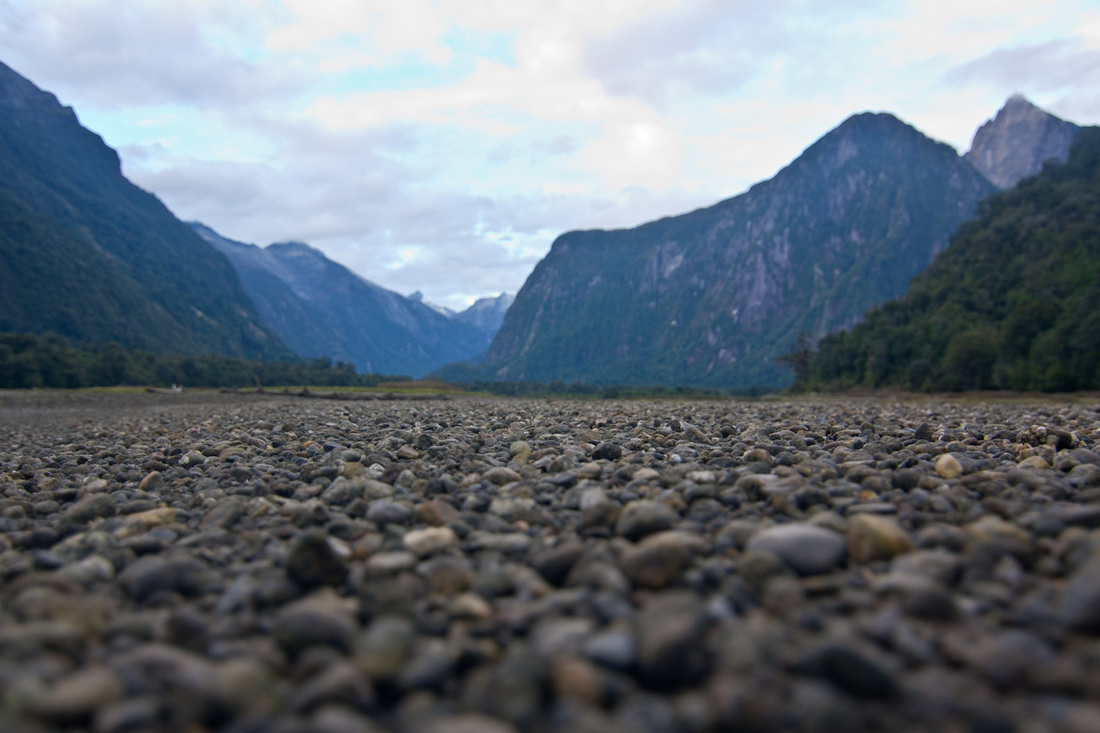
I thought about how incredibly crowded this place would be if it were in the United States... yet I had it all to myself.
Picture
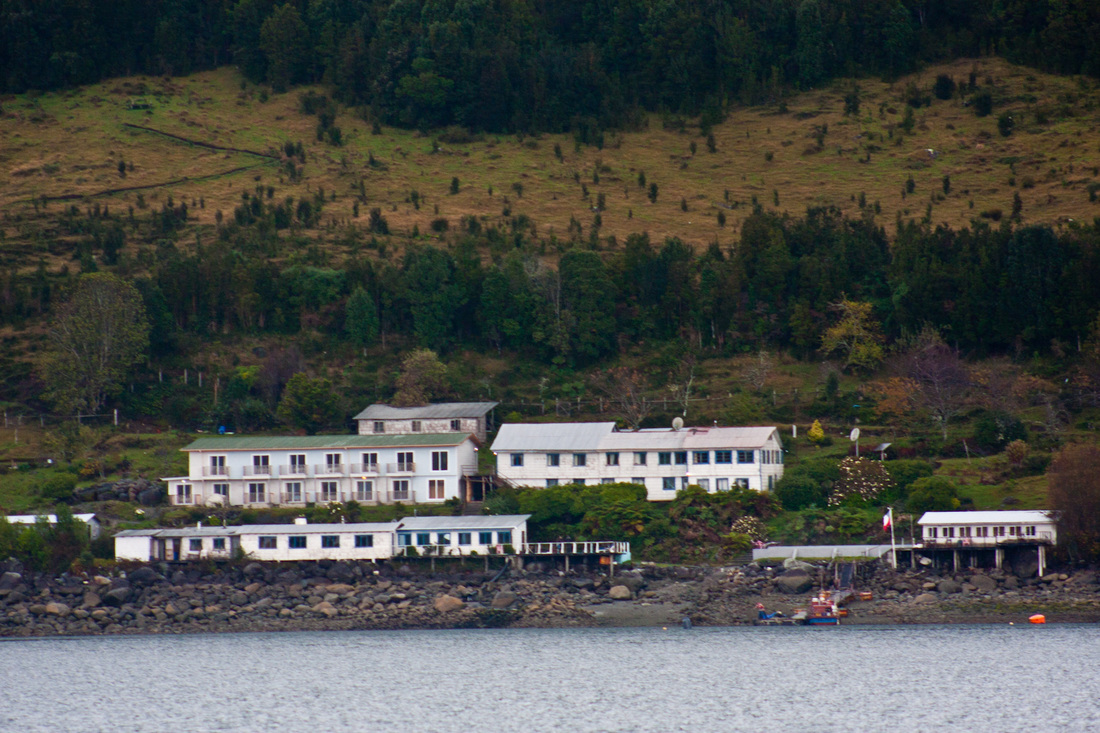
I also spent some time anchored beside hot spring that was a little more built up and developed, with a small hotel and a couple of shepherd families living nearby.  It didn’t have quite the same natural charm as the first, but it did have a cute Chilean girl working there and we shared a couple of beers while the sun set.  
Picture
Picture
The People
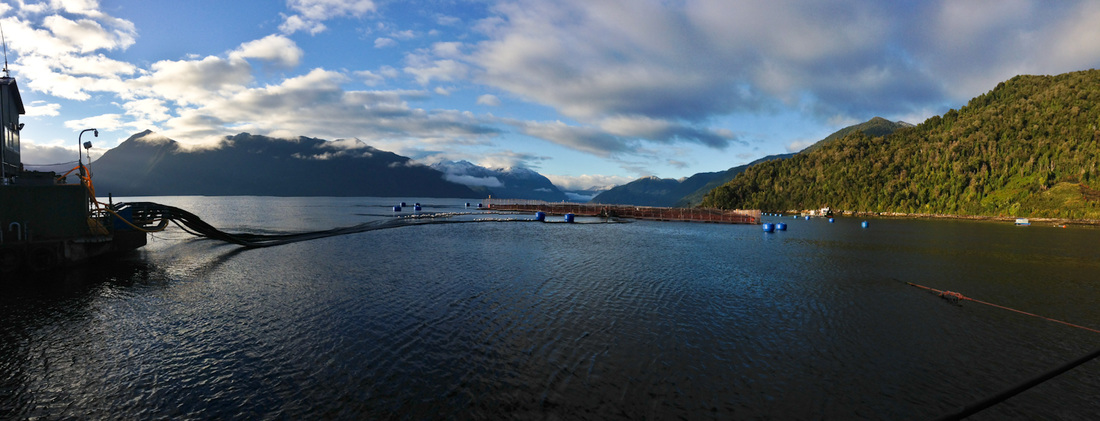
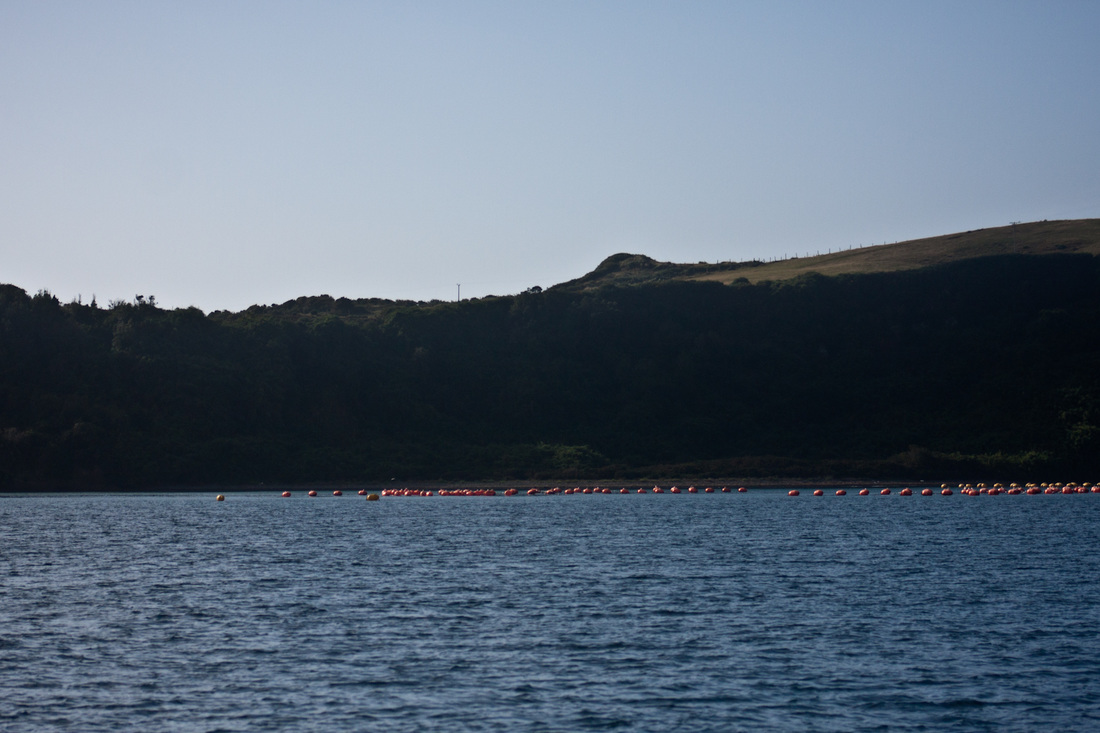
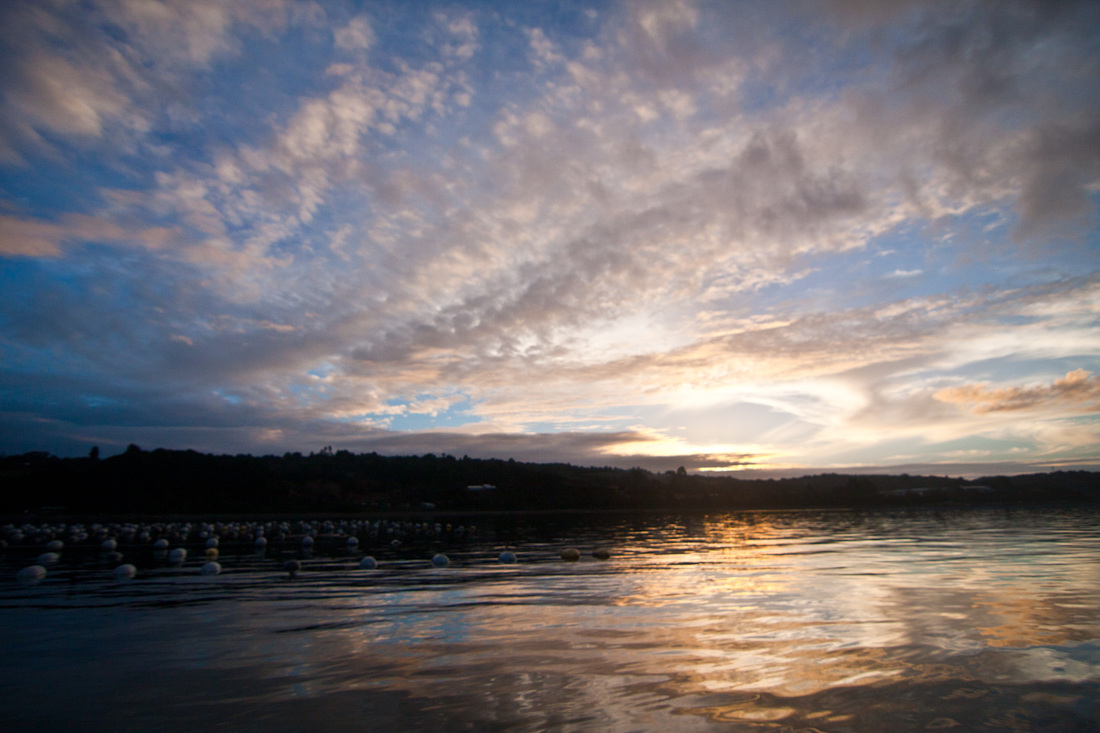
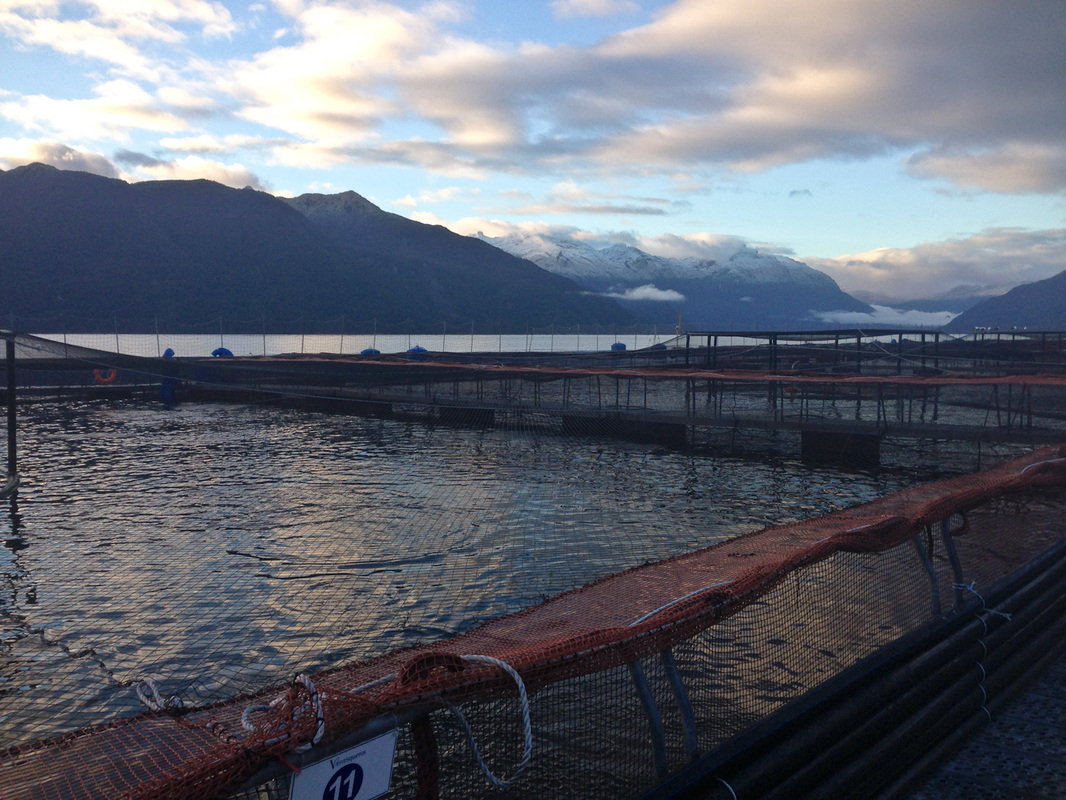
After a particularly sketchy night (with bad weather and a mediocre anchorage), I decided to take refuge in a cove that was a few miles away.  There are lots of salmon farms (they are like big net cages that’re floating on the surface, but anchored to the bottom) around this part of Chile and this cove happened to have a big one.  I anchored near the outlet to a river and decided to cook some lunch.  A man in an old leaky wooden boat rowed up to say hello and I got into a good conversation with him.  
Picture
Picture
We ate lunch together in the Rascal and I learned that he had lived at this same small village his entire life.  He said he was normally a fisherman, but he is currently out of work and most of his family moved to a bigger town a couple dozen miles away.  He was very polite and also quite friendly and I've found these two traits to exist throughout Chile.  Nearly everyone is eager to meet and try to help foreigners like myself.  

I was surprised to find that even without a job, he still had enough money for a cell phone and satellite TV.  It’s interesting to see the amenities and possessions that people choose to spend their money on.  It’s also quite interesting to see just how far American culture spreads throughout the world – when I mentioned I was from Utah, he had the same response that I always got while I was living in China.  "KARL MALONNEEEEE!!!" (From the Utah Jazz).
Picture
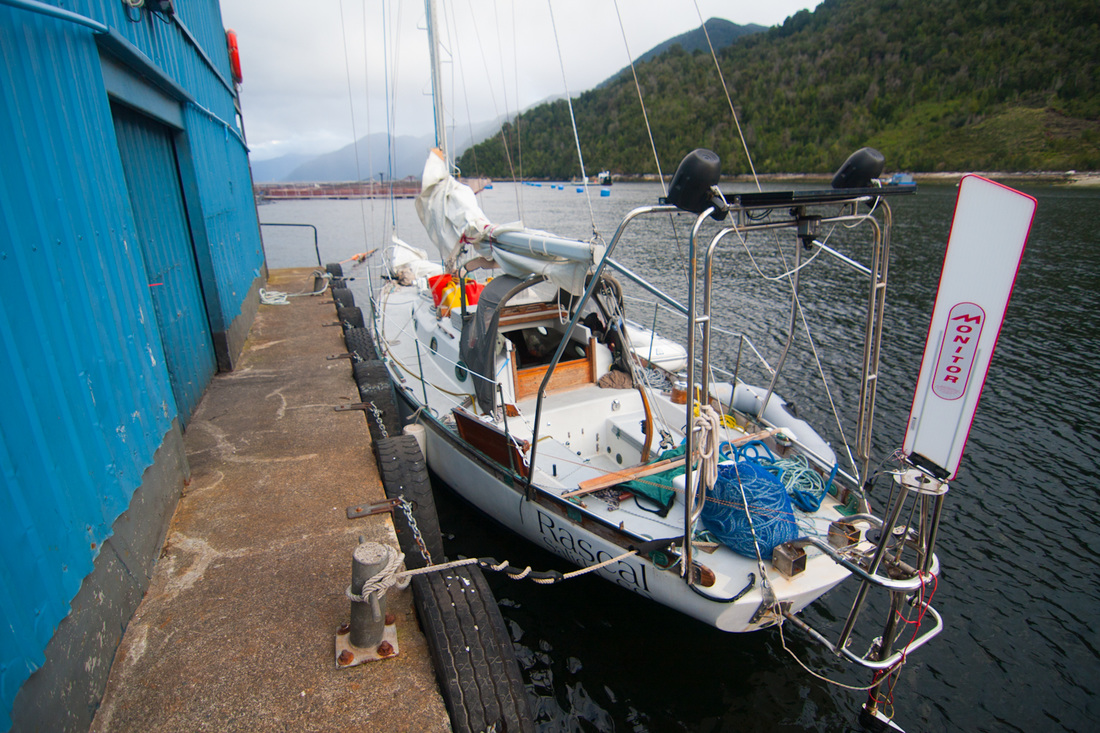
Later that day, a couple of guys from the salmon farm motored up in a fancy work boat to tell me that I was anchored in a mediocre place (with the current from the river and the variable depth) and they offered for me to tie up to the salmon farm pontoon which was really well secured.  I moved on over and lo and behold, we started drinking beers on the Rascal.  
Picture
Picture
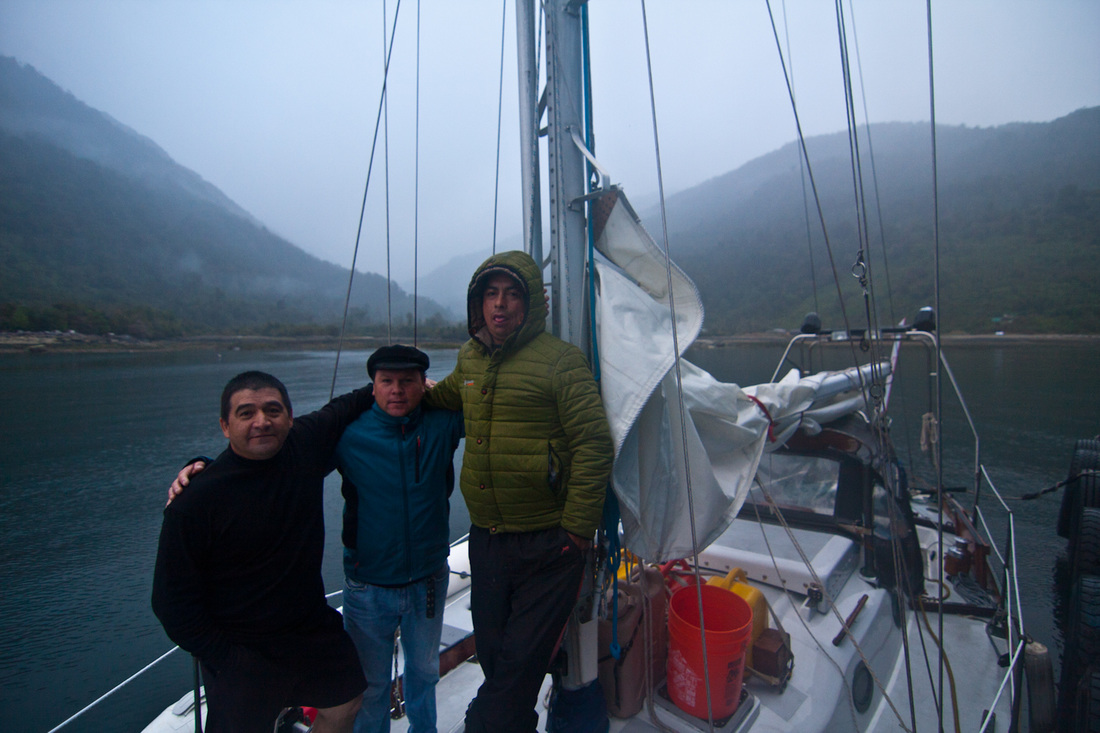
I spent the next couple of days hanging out with the salmon farmers, going on exploratory hikes during the day, eating dinner together with my new friends at night, and learning a bunch about salmon farming.  They were exceptionally hospitable and it was great to get to know them.  
Picture
Picture
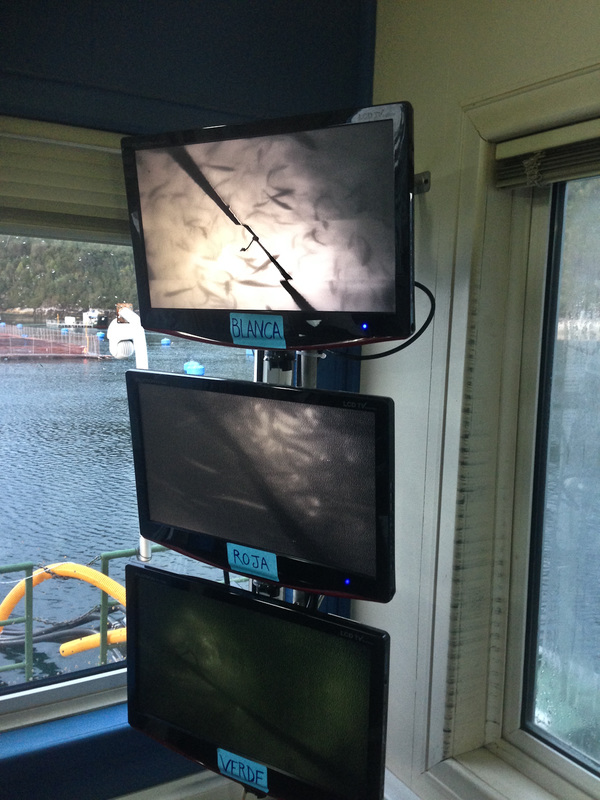
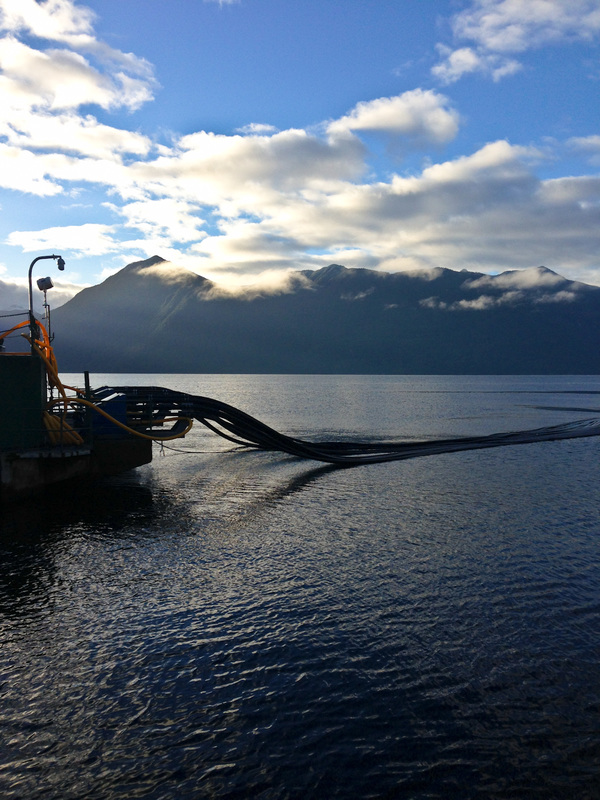
The salmon farming process was totally fascinating.  They start with a bunch of tiny smelt from a salmon hatchery, pour them into a big cage in the ocean, feed them a blend of grain and dead sea creatures in pelletized form, and a year or two later, they’ve got a bunch of 10lb salmon ready for market.  They have secondary nets over the top and around the outside to keep birds and sea lions away from the fish and they’re very careful about monitoring the health and condition of the salmon.  Special attention is paid to oxygen levels in the salmon pens, which happened to be quite good while I was there.  All of the feeding was automated using computer programs and the entire operation was very clean and well tended.  
Picture
Picture
Live video from different depths inside the salmon cages
Depending on your perspective, salmon farming in Chile is either an environmental atrocity that is ruining one of the most pristine wild places on earth or an absolute godsend that is employing hundreds of thousands of Chileans that’ve been exploited by foreign businesses for hundreds of years.  I’m still not sure where I fall within that spectrum, but it was definitely interesting to get a more personal, educated perspective on the salmon industry.  
Picture
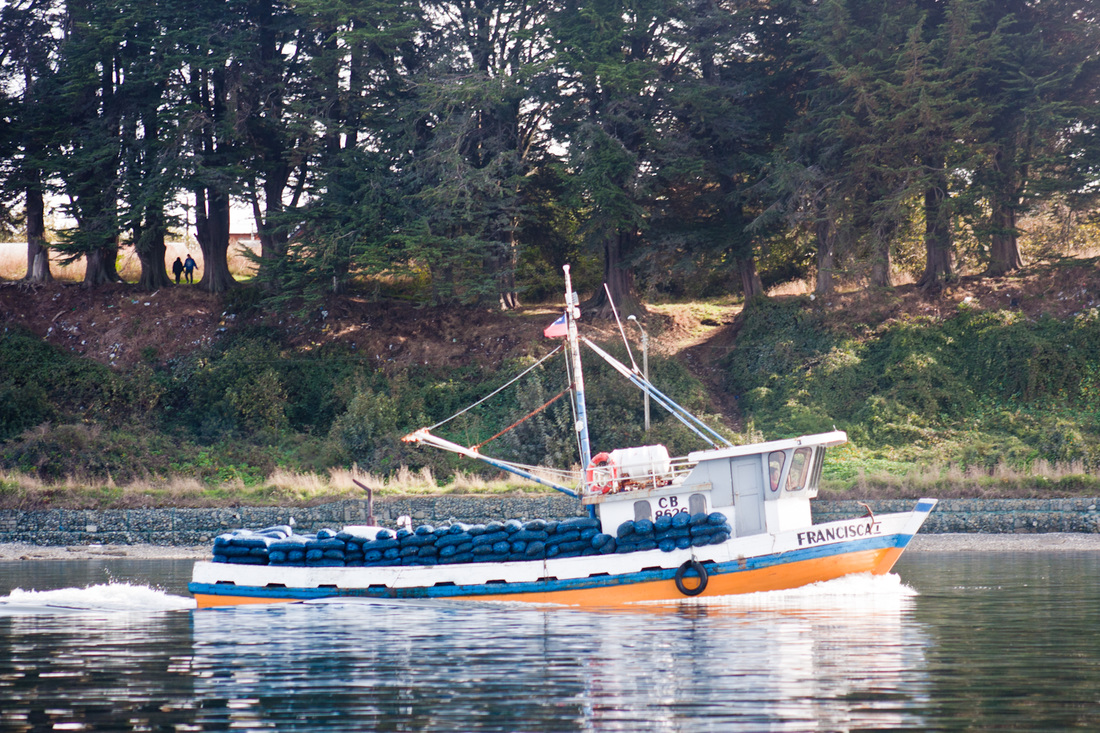
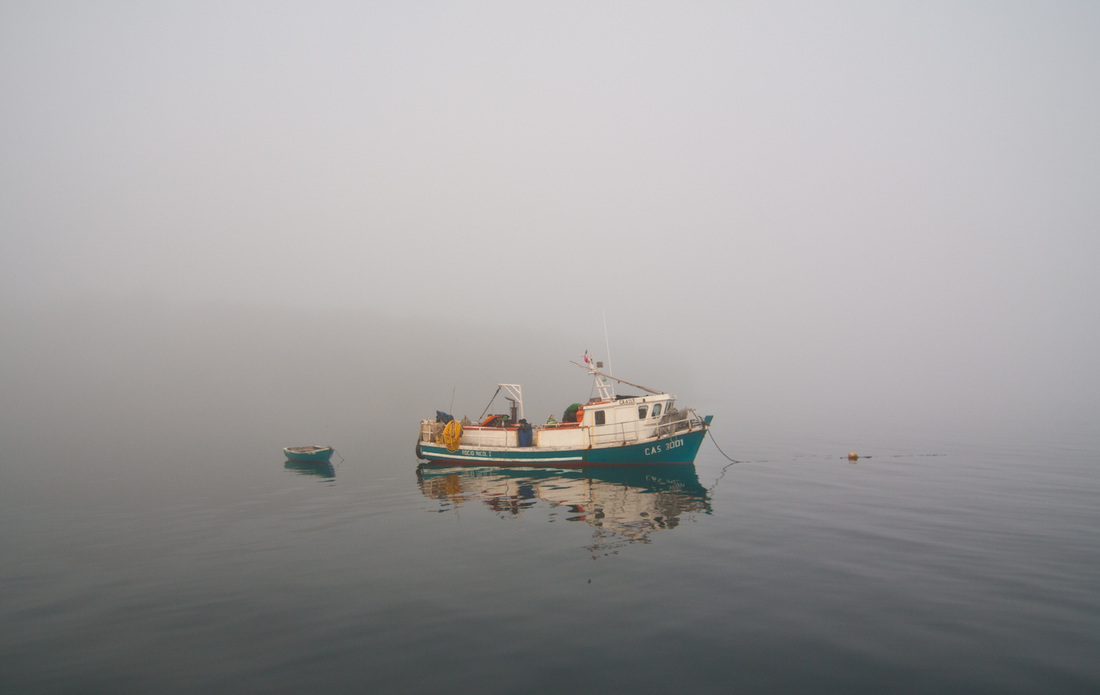
You also see lots of small boats around the islands that are fishing for hake or congrio (or perhaps diving for mussels and clams).  It seems to be very hard work and every fisherman I’ve approached has been super friendly and personable.  Normally they’ll even offer to give you some of their catch, which is super generous considering they make very little profit in the first place.  
Picture
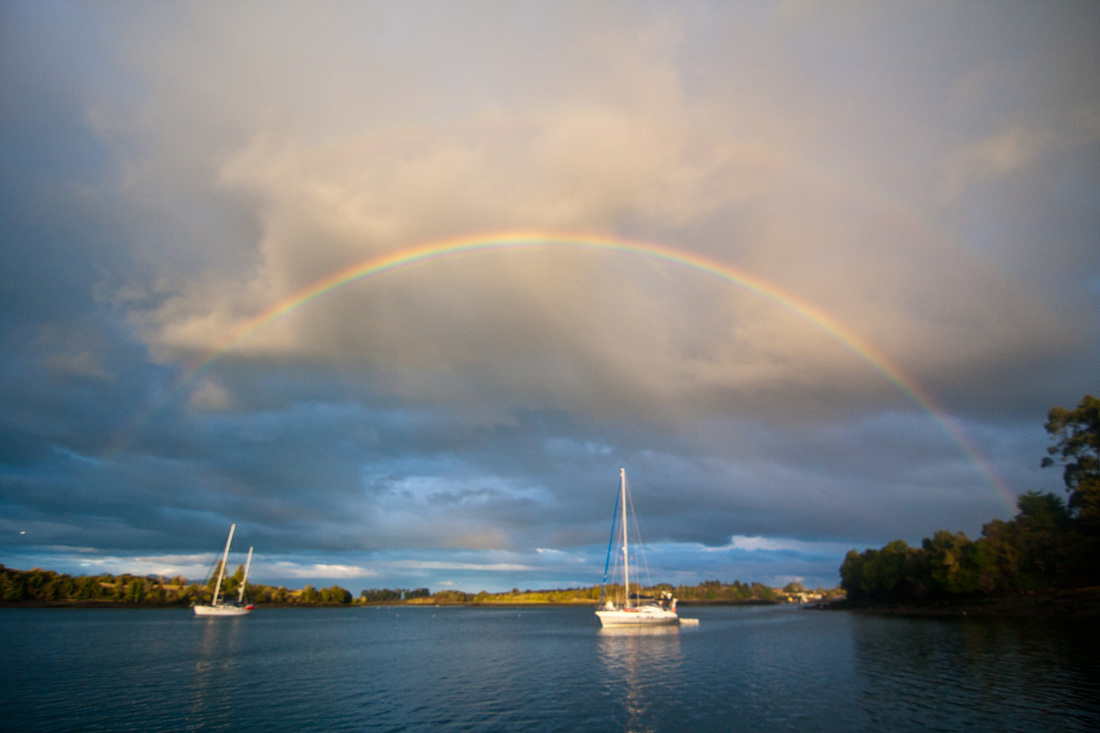
I’ve also had a blast meeting and hanging out with other cruisers along the way.  You don’t see many sailboats in Chile, so when you do, it’s always interesting to chat and hear their story.  Most folks are on their way around the world, having come up from the Straights of Magellan or east someplace in the South Pacific.  Everyone has been much more friendly than the cruisers I'd happen across in Mexico, for instance.  
Picture
The Islands
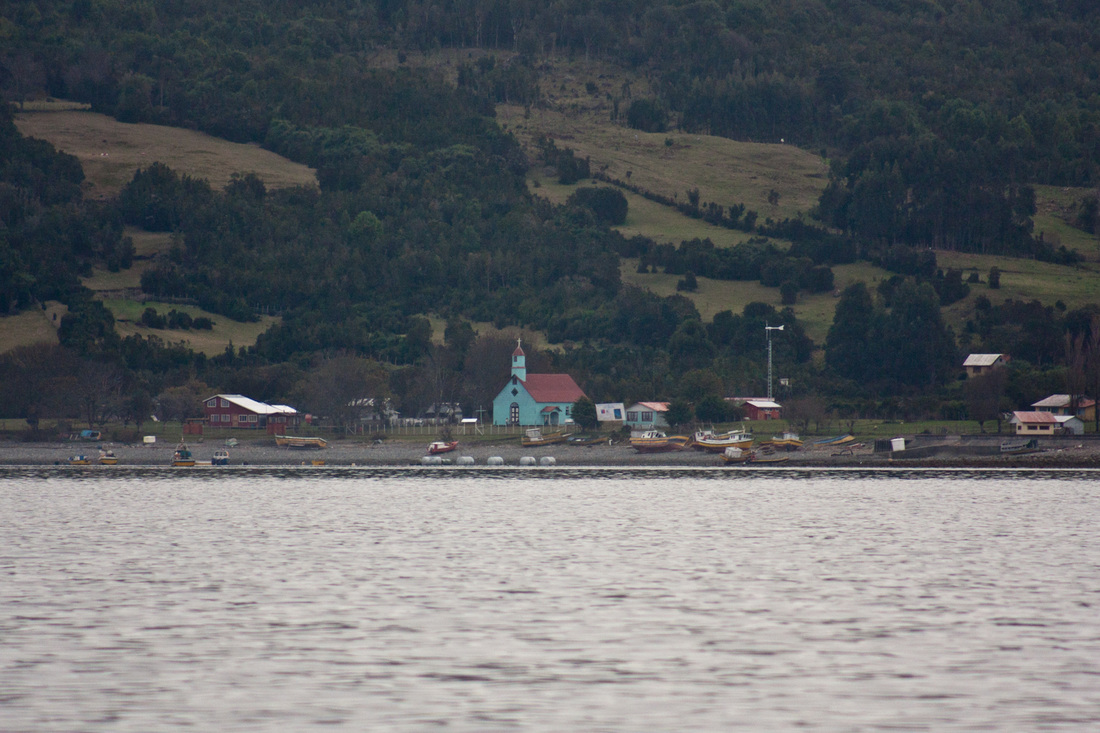
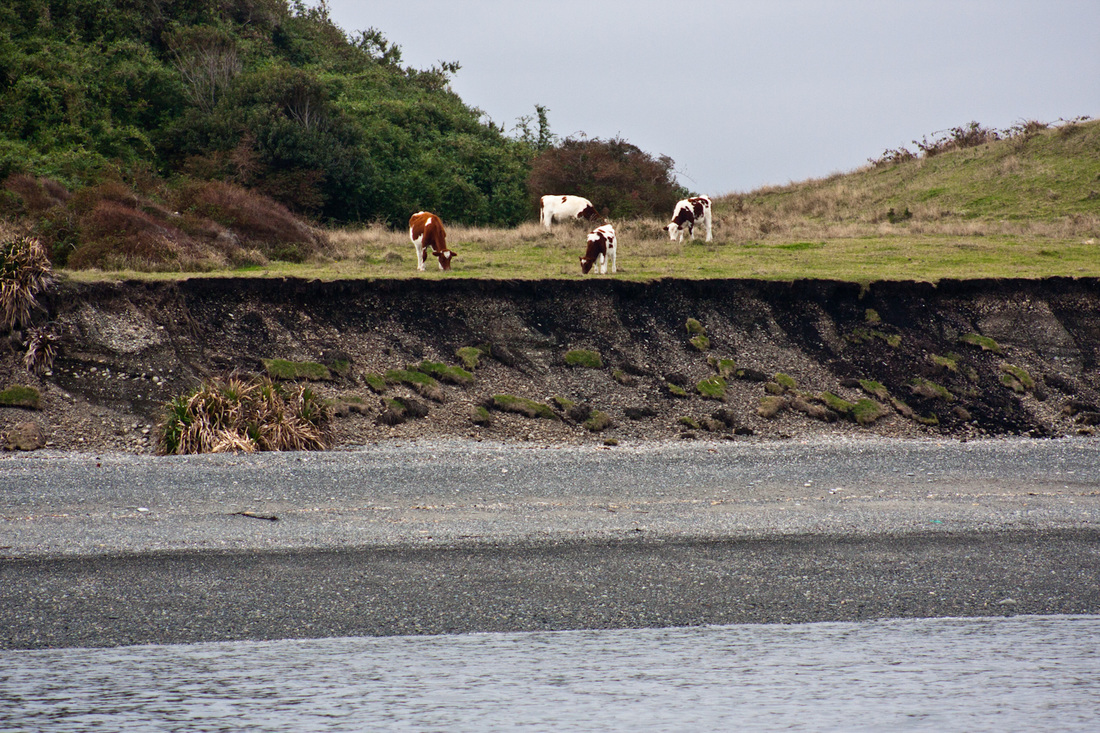
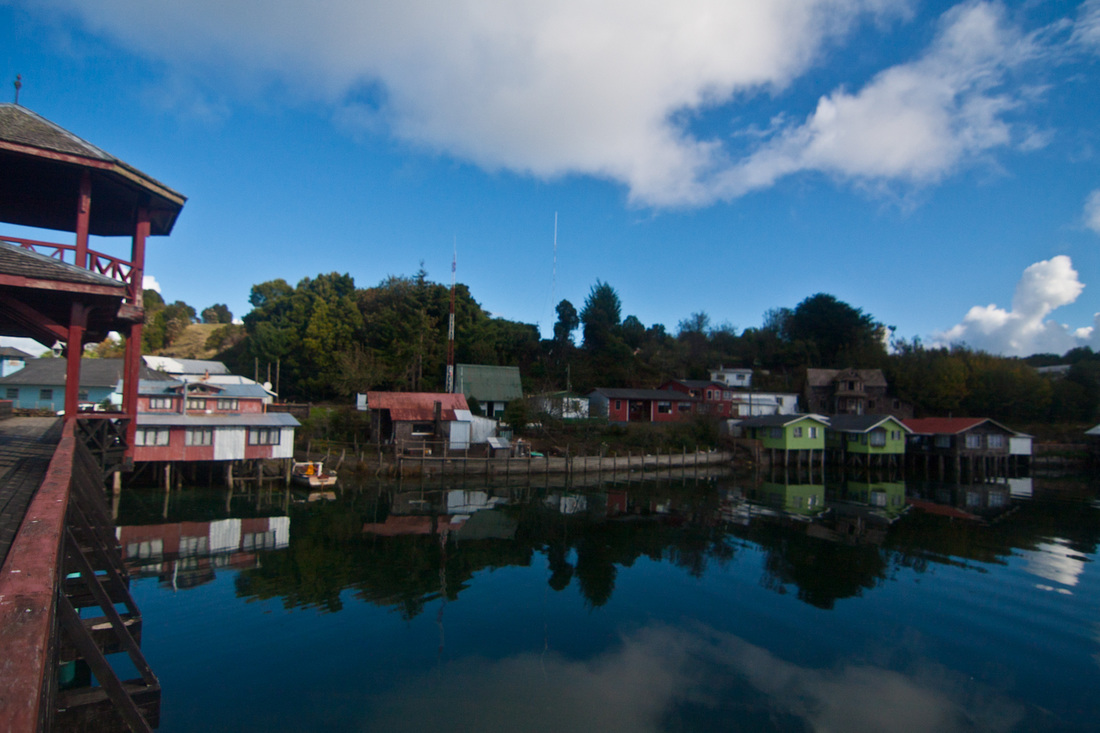
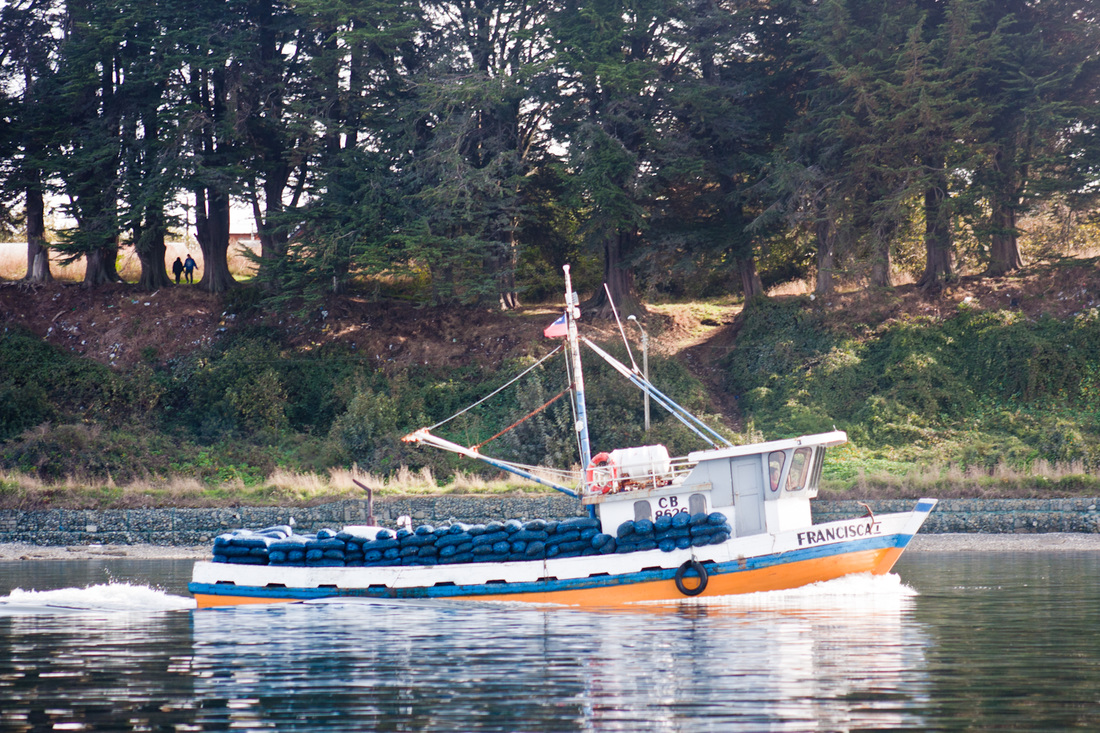
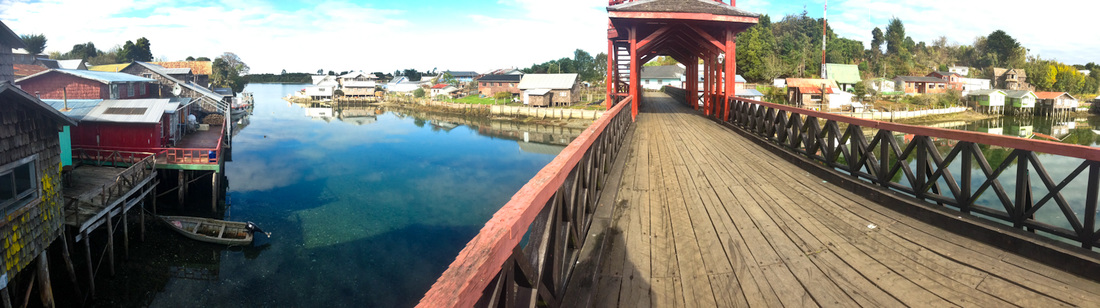
There are a couple dozen islands south of Puerto Montt that're protected from ocean swell by the huge island of Chiloe.  These islands are primarily inhabited by fisherman and ranchers / farmers that've lived there for hundreds of years.  Most of the land has been logged out, but there are beautiful pastures, lots of good protected harbors, and some small towns that have a really unique, beautiful character about them.  
Picture
Picture
Picture
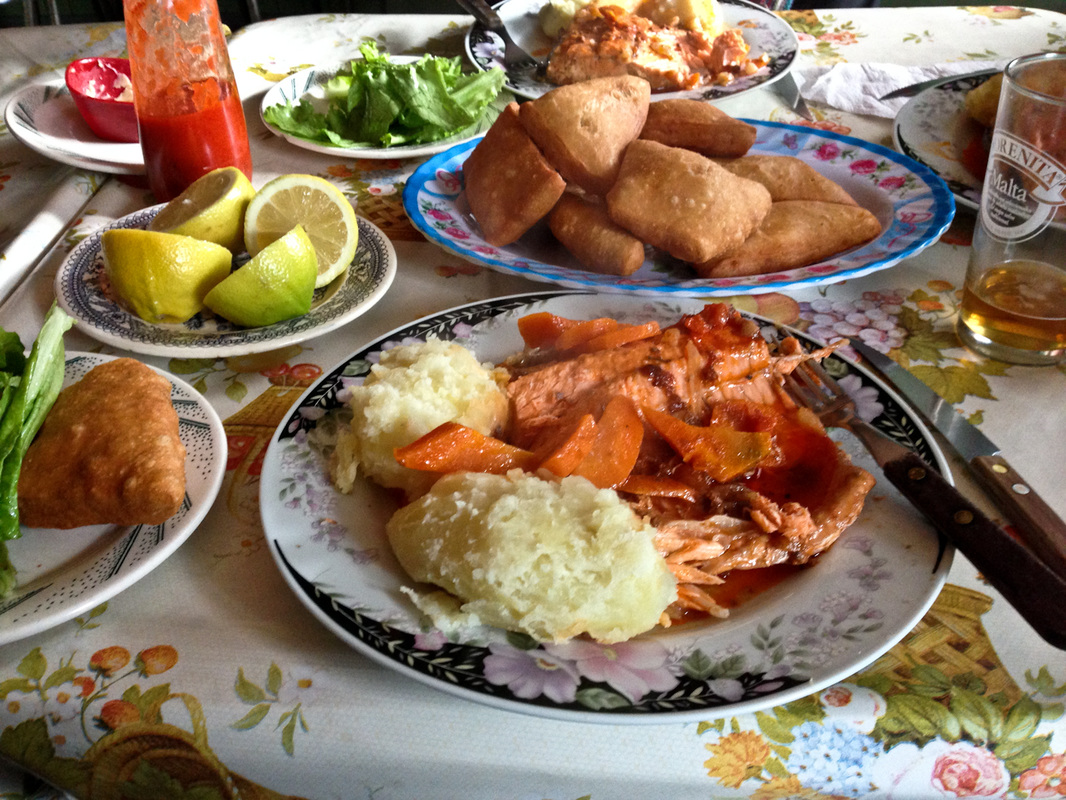
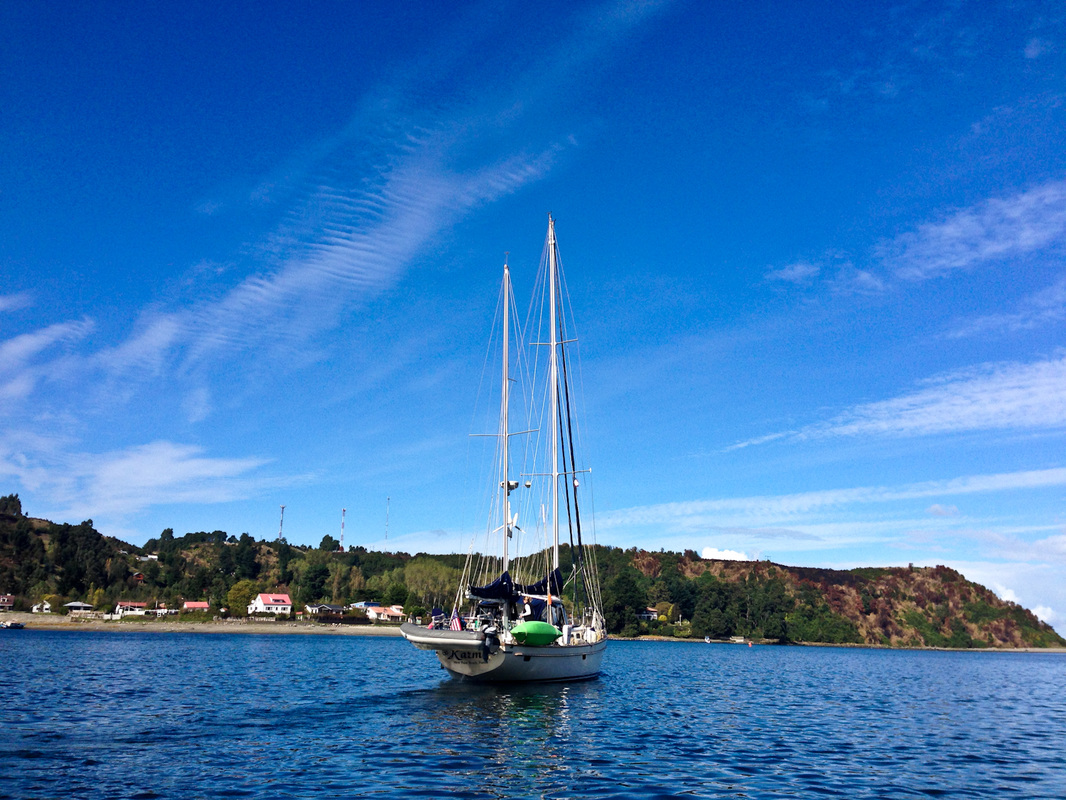
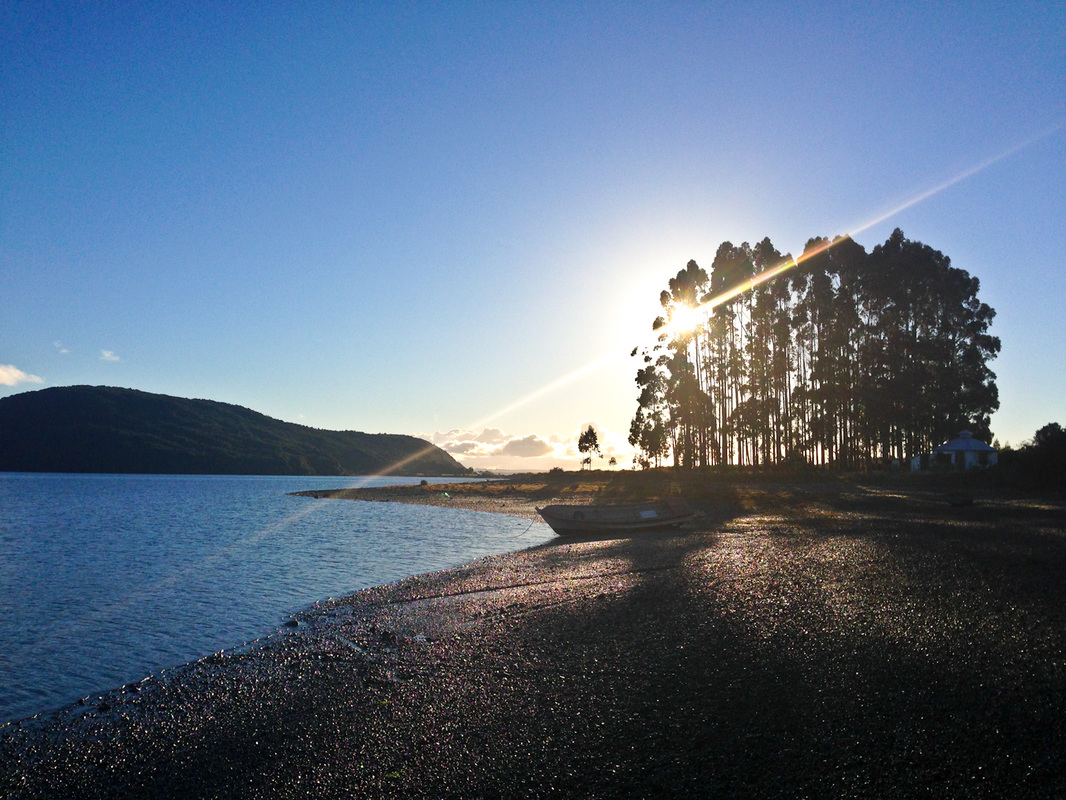
I spent a handful of days walking around towns, going for beach walks, and eating huge, cheap, delicious meals with my friends on SV Karma.  
Picture
Picture
Picture
Picture
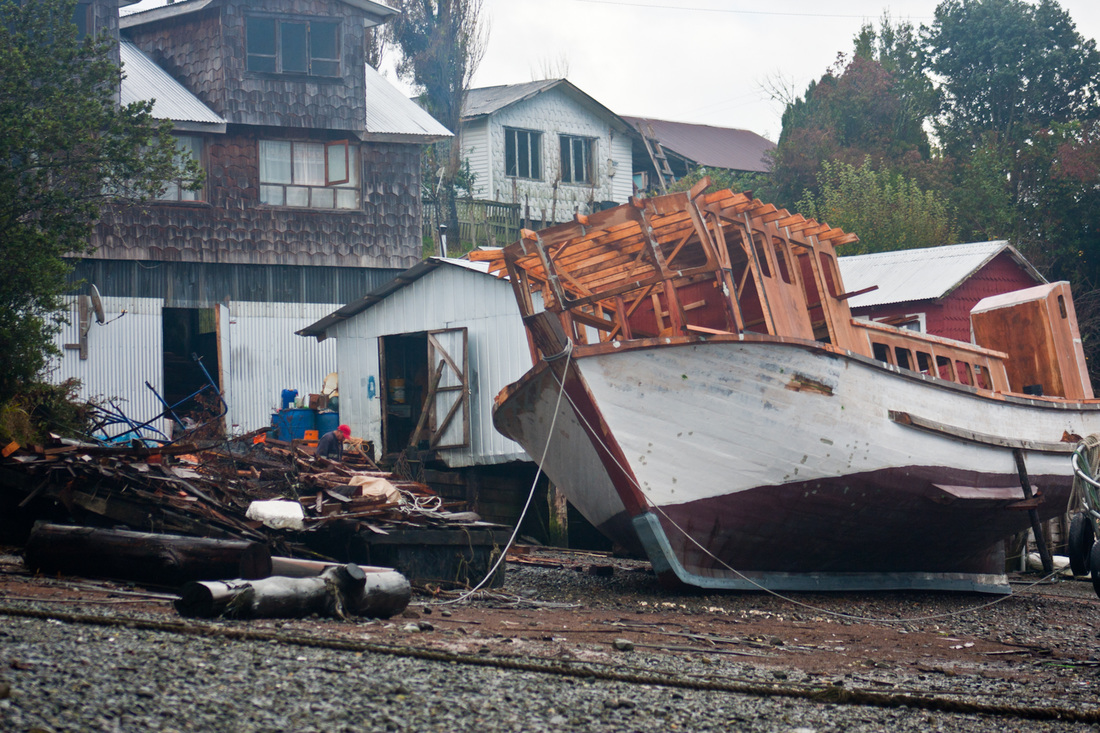
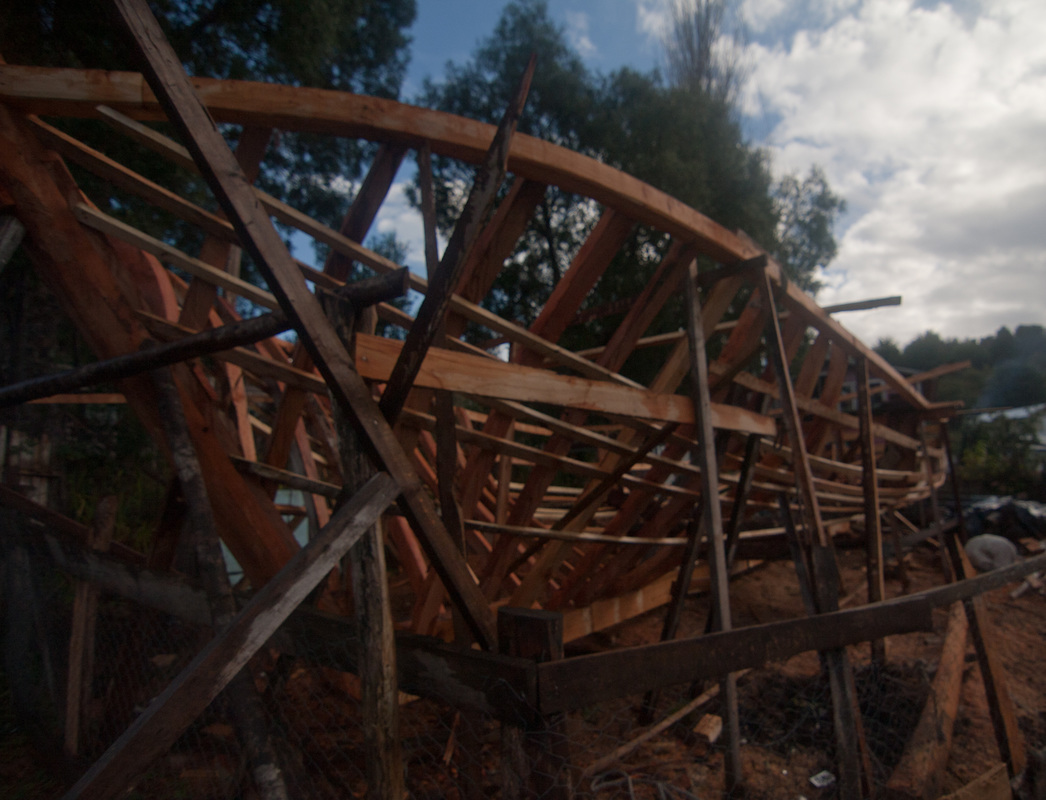
Some of these small towns have ship builders that've been practicing the trade for generations and they work right out on the beach.  The tool of choice is generally the chain saw and they work by sight and select all of the wood by hand.  I spent a few hours watching these guys and never once saw anyone take a measurement.  It was beautiful to watch them work and the finished product looked strong but also somehow graceful.  
Picture
Picture
Picture
While the islands didn't have the same dramtic beauty as the fjords, they do have a really cool history and charm about them that I haven't seen elsewhere.  
Picture
Picture
Picture
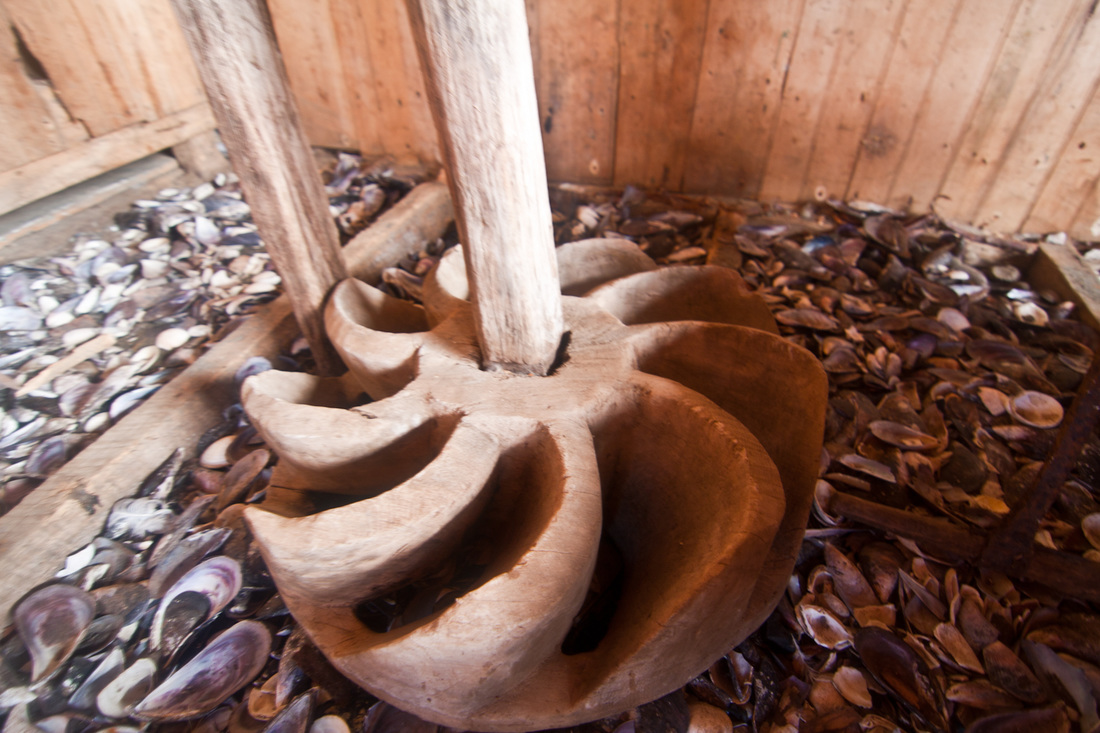
one of these things is not like the other...
Picture
A water turbine... carved out of wood.
The Fishes
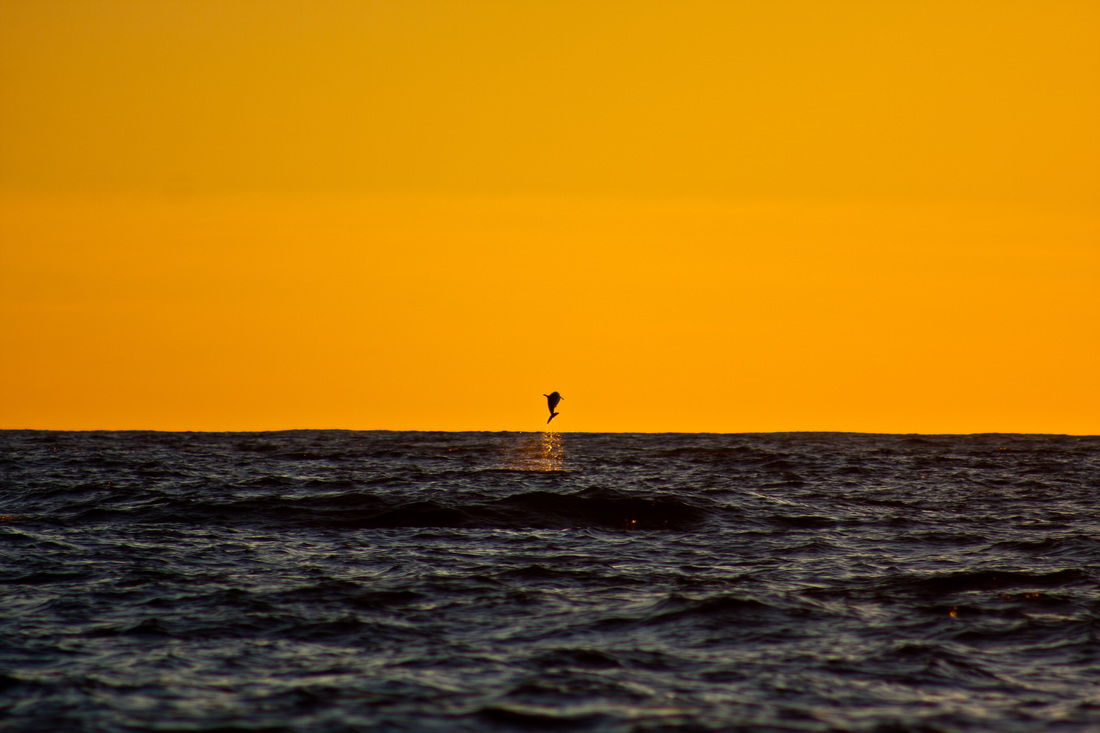
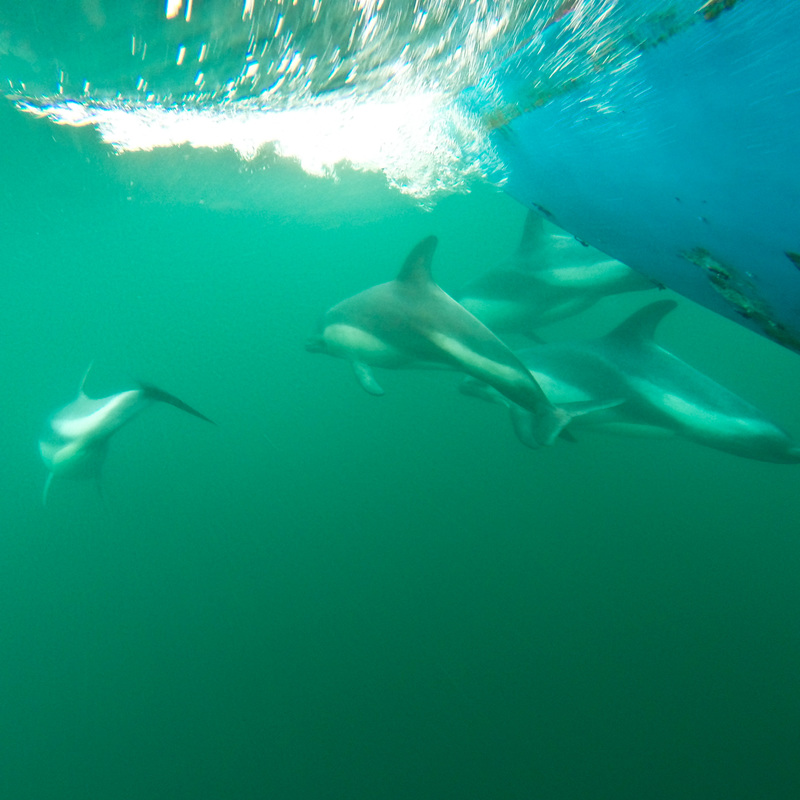
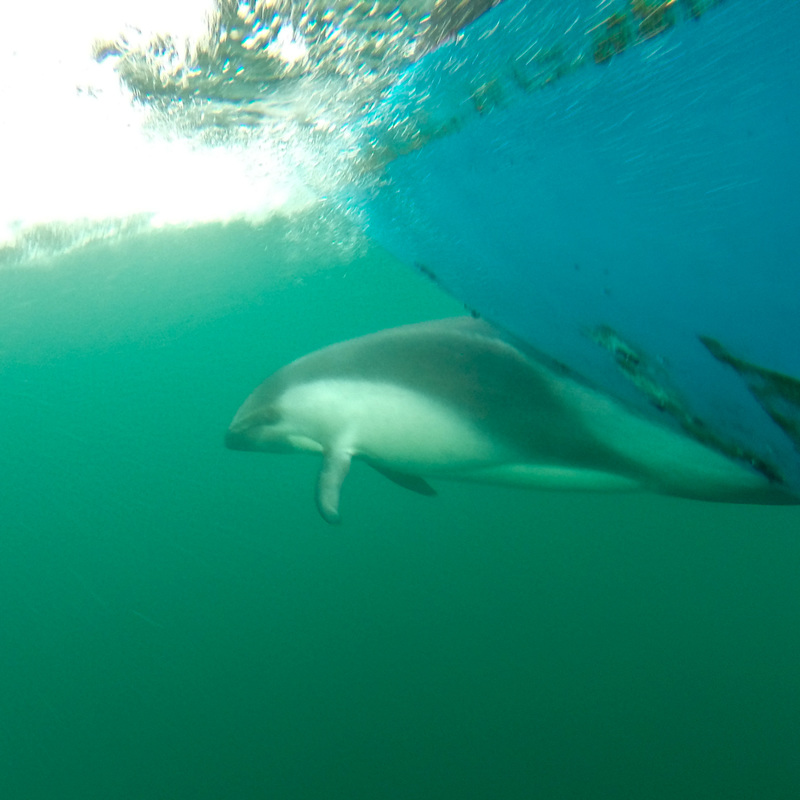
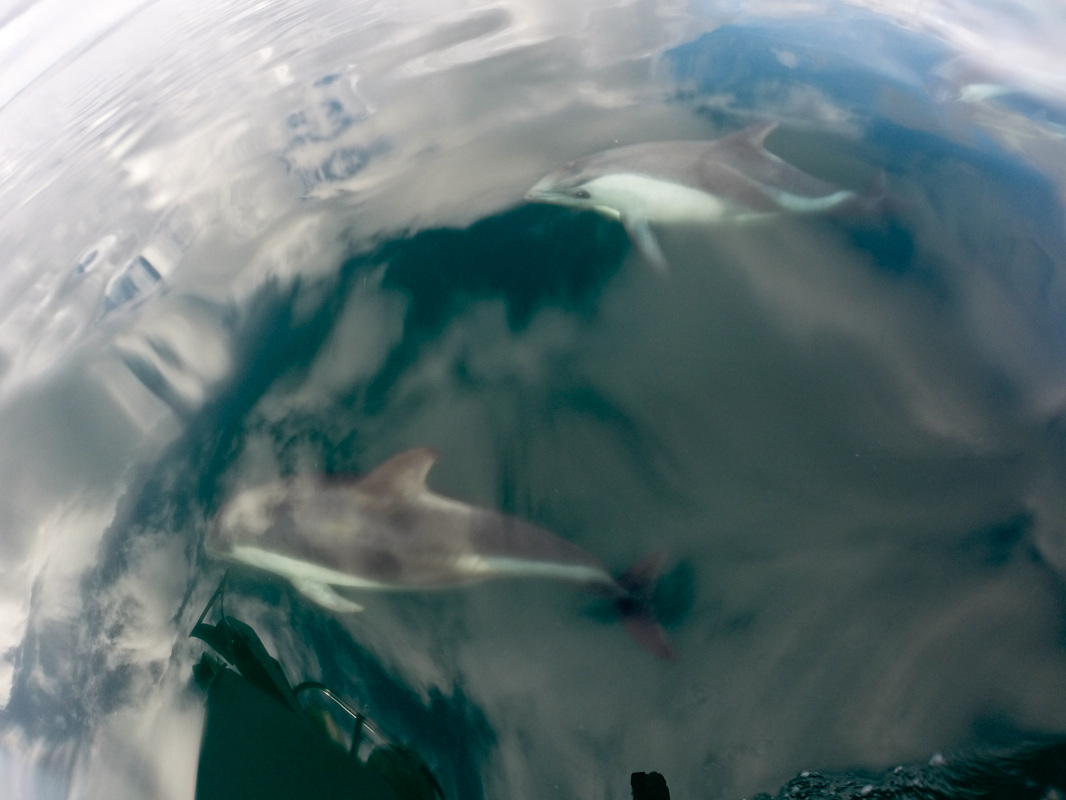
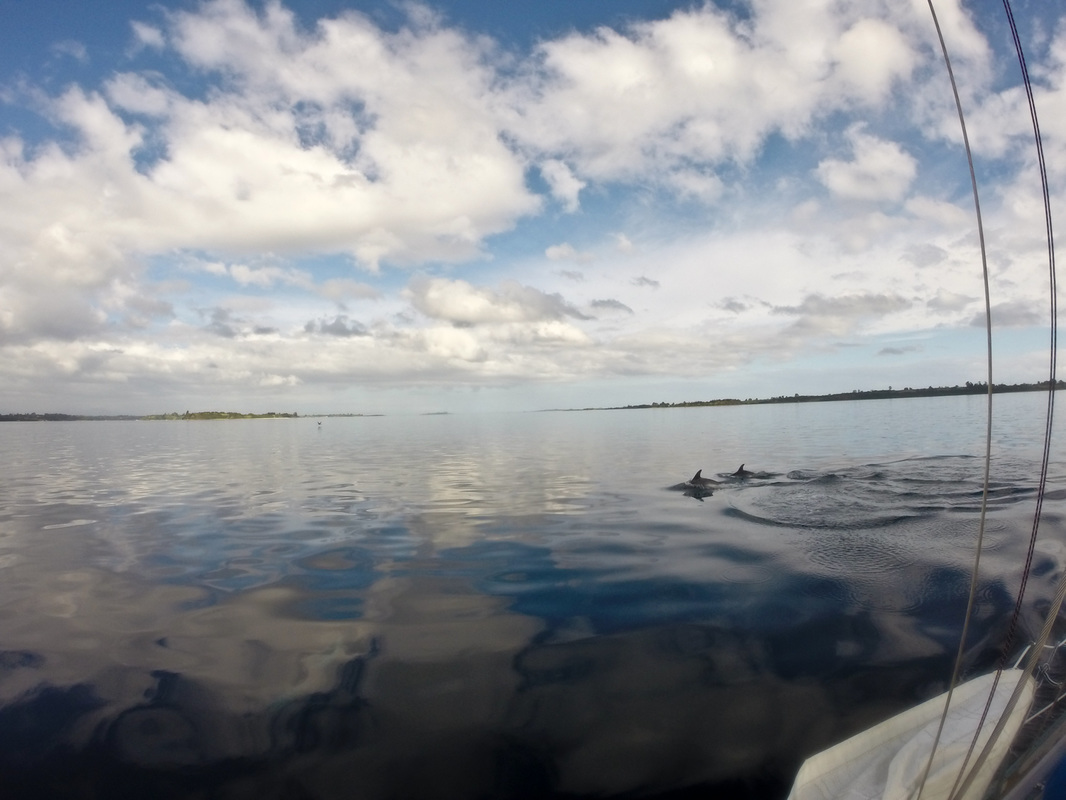
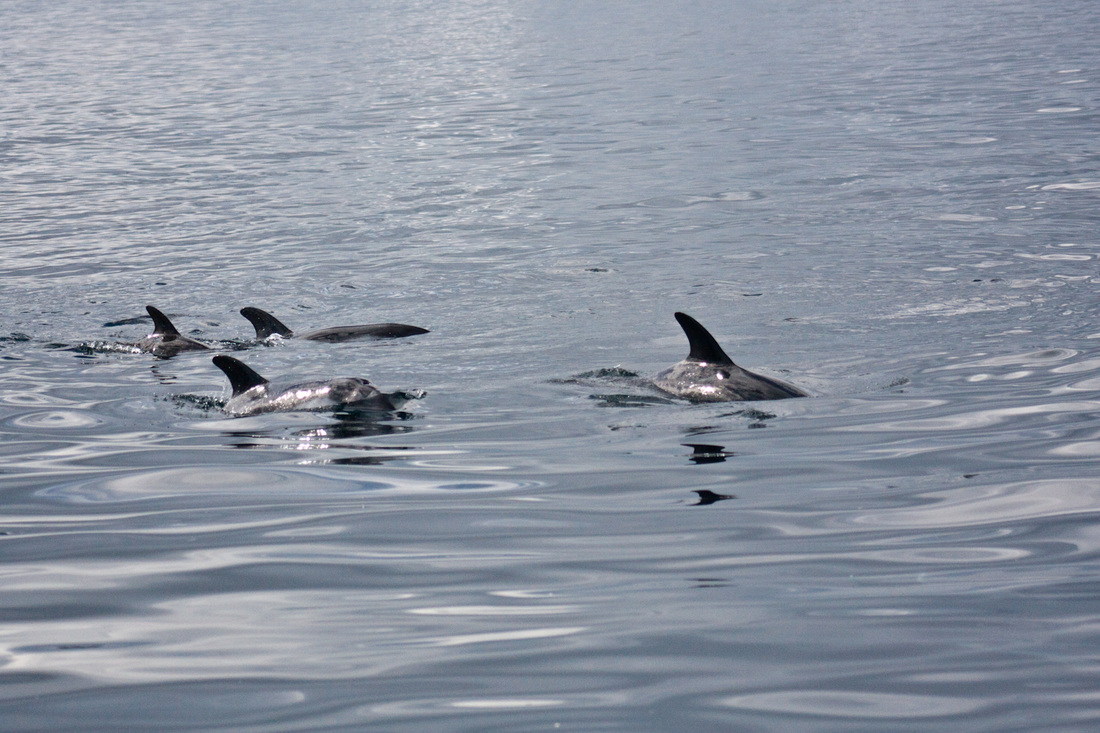
Before I started sailing, I always used to see pictures of dolphins and sailboats and think, “Wow, that must be a once in a lifetime experience!”  Ever since I hit the waters off of California, I’ve found that there are dolphins absolutely everywhere.  Despite their prevalence, I still squeal like a little kid when I see them coming and their beauty and grace is nothing short of astonishing.  I’ve had a couple of really tremendous dolphin experiences lately.
Picture
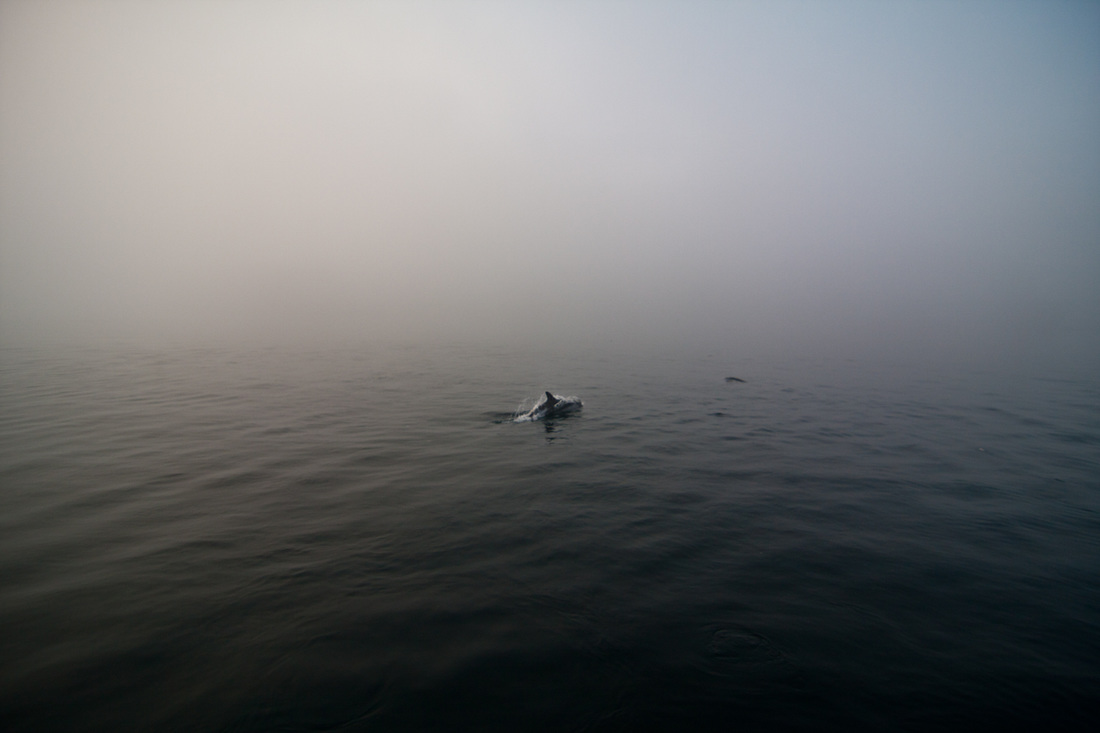
The first came at the end of one long day of sailing.  The wind suddenly dropped off and a really thick fog fell around the Rascal with just a mile or two between me and my anchorage for the night.  It was a place I hadn’t been before, there were rocks around the entrance, and I could hardly see past the bow.  I was pretty damn nervous about it all, but I very slowly motored in, ringing my fog bell, listening for boats, and watching my depth sounder like a hawk.  Silence and whiteness surrounded me like a wool blanket.  All of a sudden, I heard this loud PUFFF right behind me, and I whirled around to see a dolphin appear out of the ether to come and greet me.  
Picture
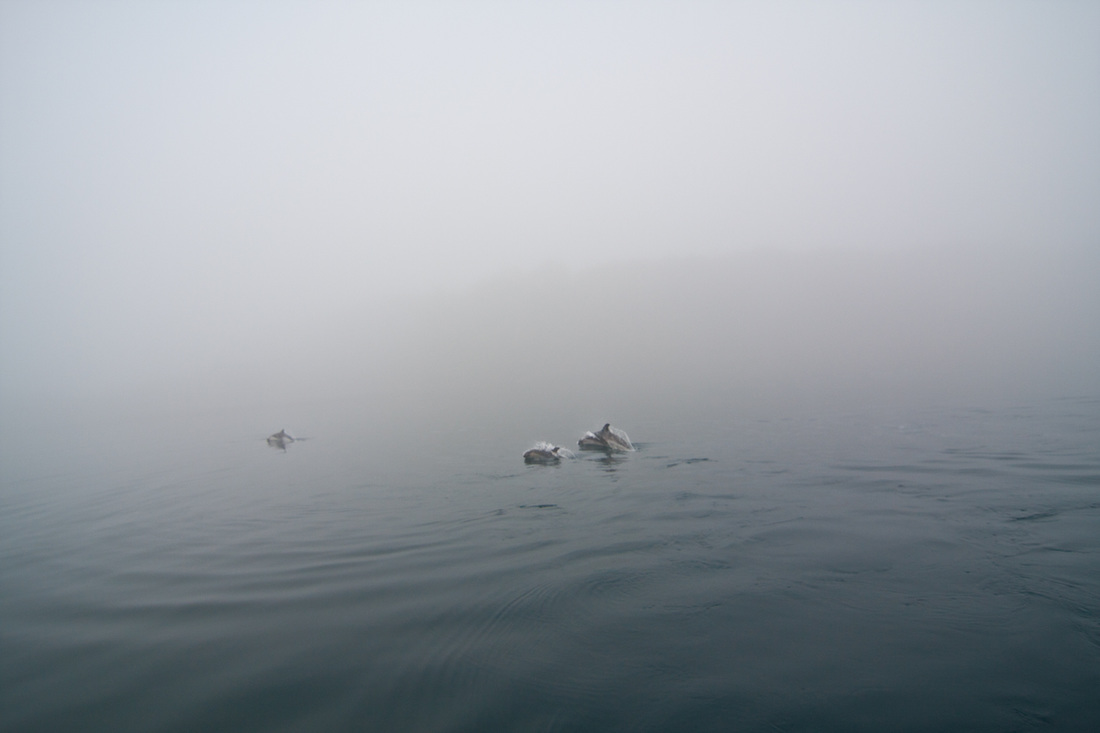
He squirted off in a hurry, but the rest of his family came and did laps around the boat.  
Picture
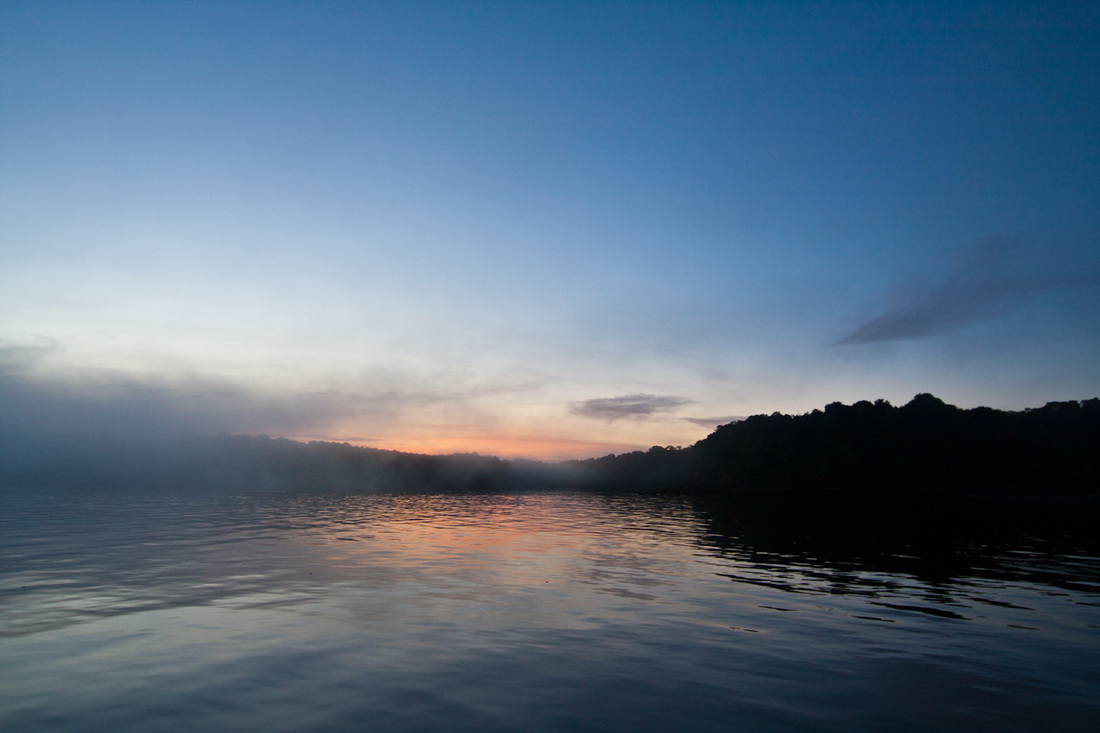
I eventually found a good spot to anchor (though I could only just barely see the coast) and as soon as I got the hook down, the fog lifted off and a lovely sunset replaced it!
Picture
Picture
My second cool dolphin experience came while I was exploring in the Superhighway, my inflatable dinghy.  It has a 4hp outboard, and I’ve found if I inflate it really full, balance my weight just right, and steer really smoothly, I can get it to plane.  It normally goes about 4-5kts, but when its planing, it’ll go 10-12kts.  That feels really fast compared to the Rascal, and it also allows you to explore places that’d be really tough or time consuming to get to in the sailboat. 

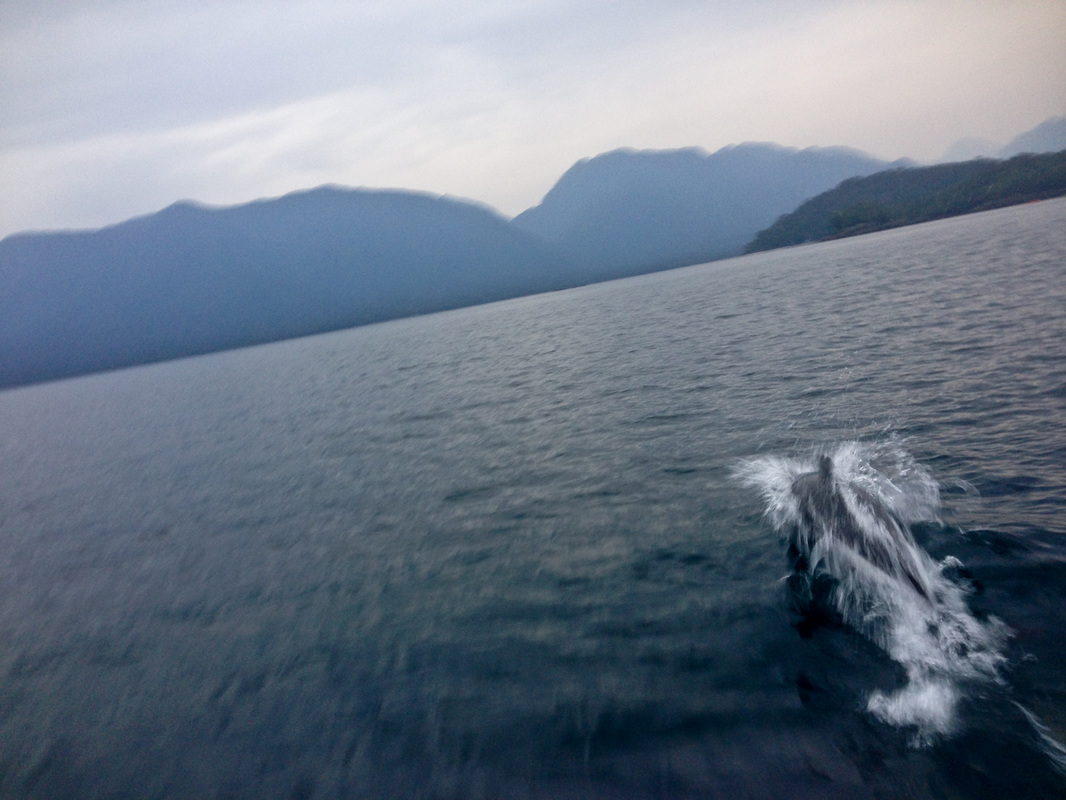
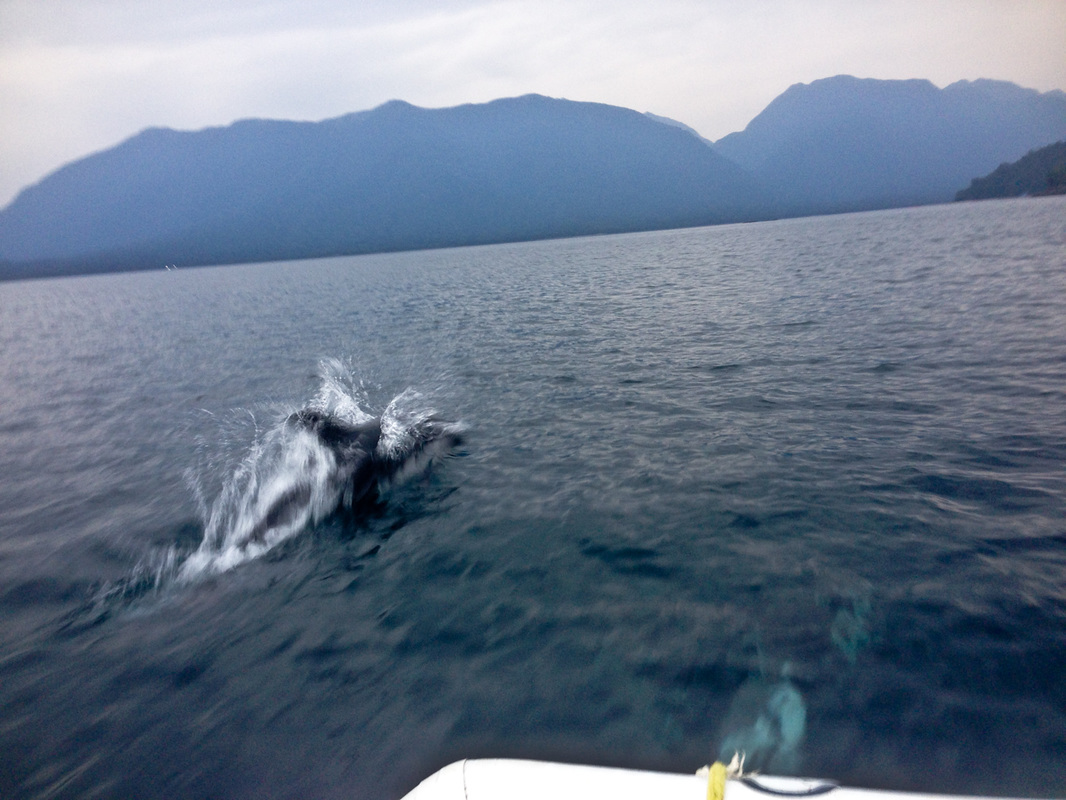
One day, I was headed for a river that was about 10 miles away to see if I could manage some fishing.  As I skittered across a big bay and into the fjord, I heard a big splash off to my right.  A big pod was about a hundred yards away and closing fast.  They seemed really energetic, and they were obviously moving much quicker than they normally do to catch up with the Rascal.  It was like I was at the Running of the Bulls and I was in the middle of the pack.  They were splashing on all sides of me and they were clearly charging for all they were worth!
Picture
It was totally surreal to be so close to them, basically sitting down in the water in the Superhighway, and I could’ve easily reached out and touched one they were so close to the dinghy.  We were moving so fast and I was so fired up that I only managed a few blurry cameraphone pictures, but it was a really incredible experience.
Picture
Picture
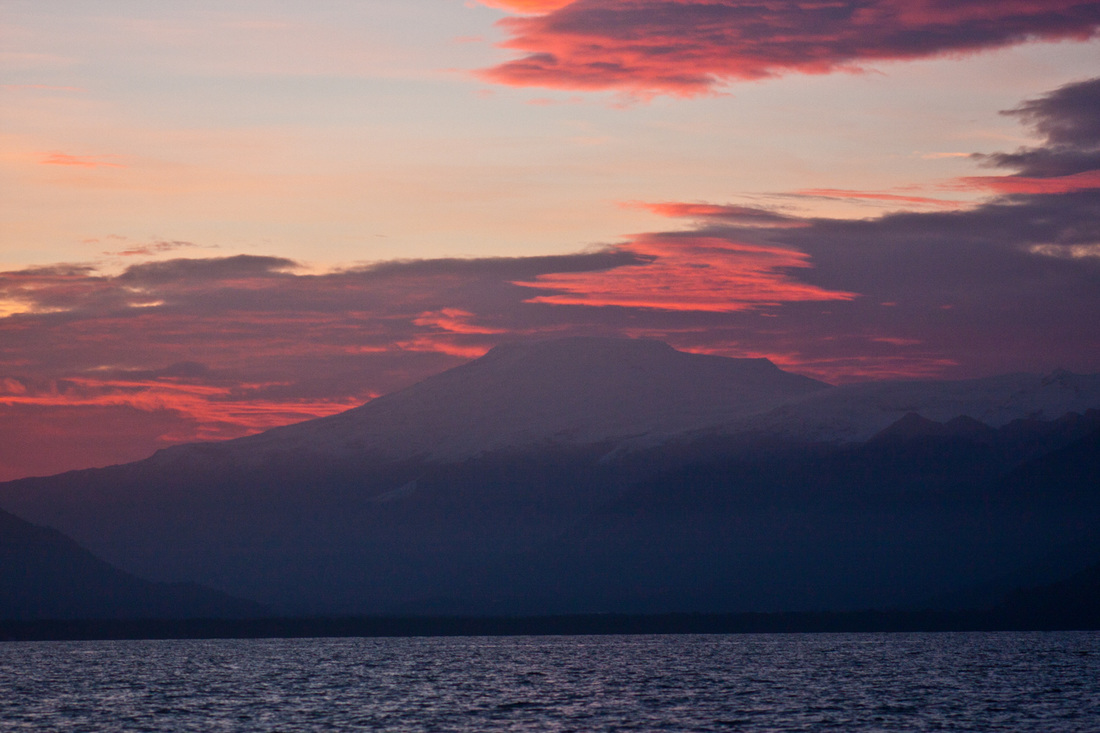
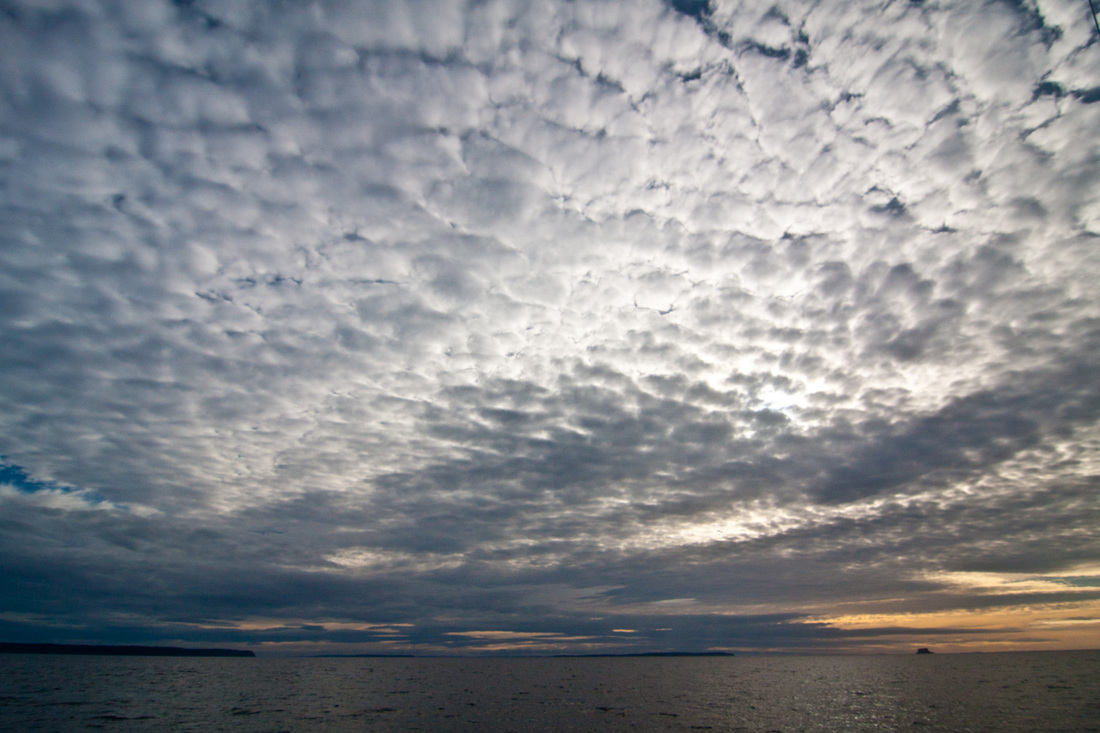
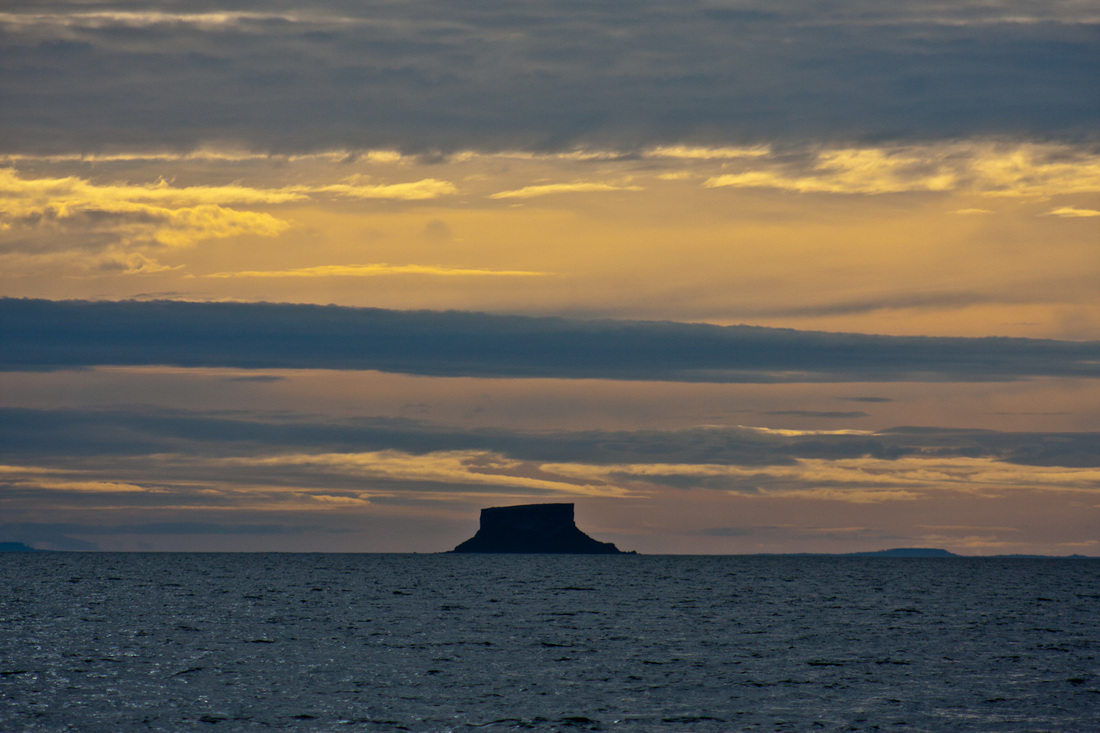
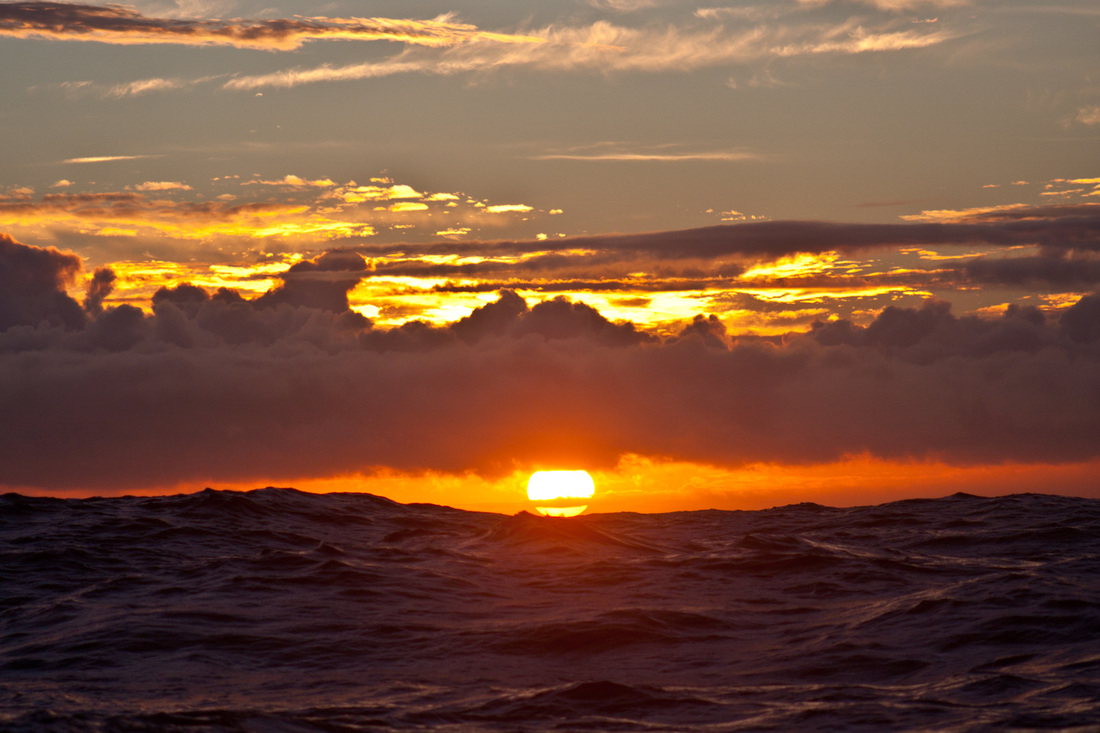
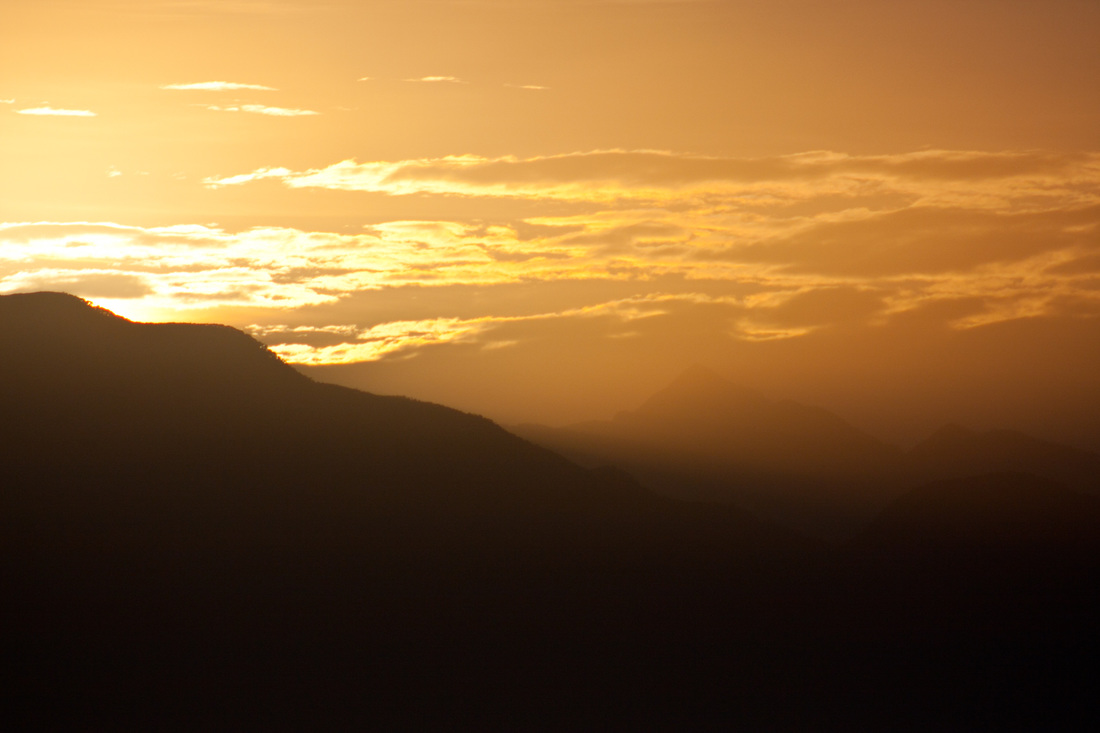
I also had some really fantastic whale watching experiences.  I had been waiting out a long storm in an anchorage to the south of Chaiten for four days and I was slowly sailing my way back north on a rare east wind that was blowing down out of the mountains.  It felt tremendous to be sailing again, and I got to enjoy a really spectacular sunrise as I hoisted sail and got the kinks out of my system.  
Picture
Picture
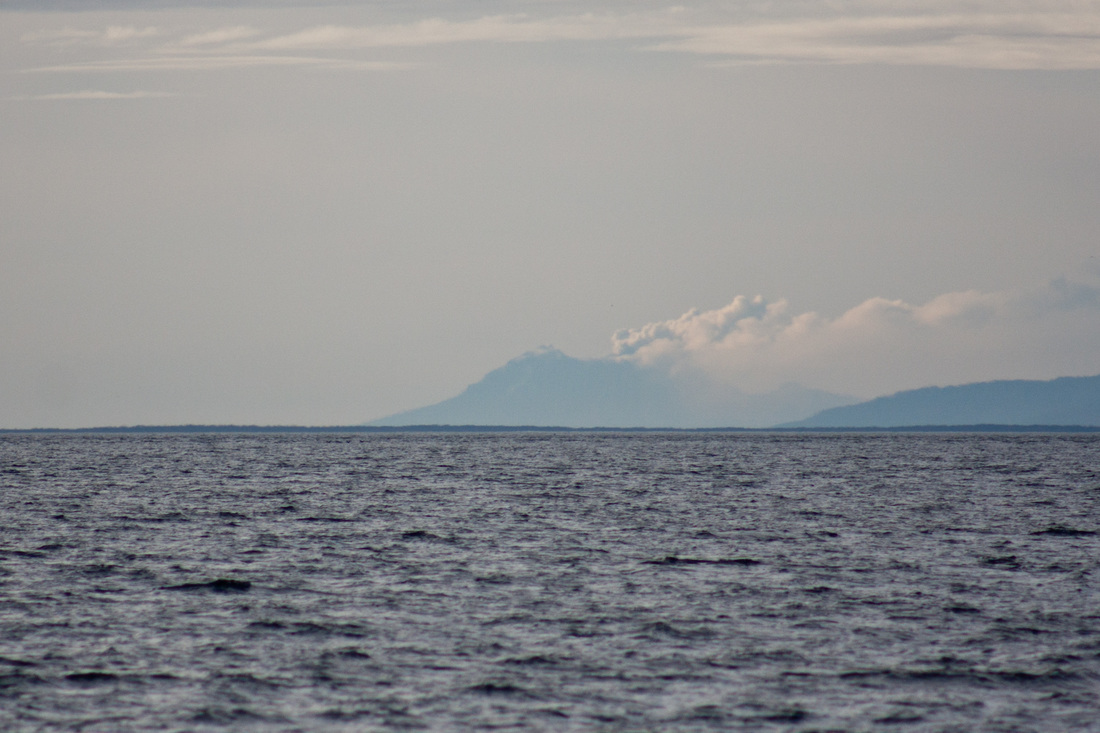
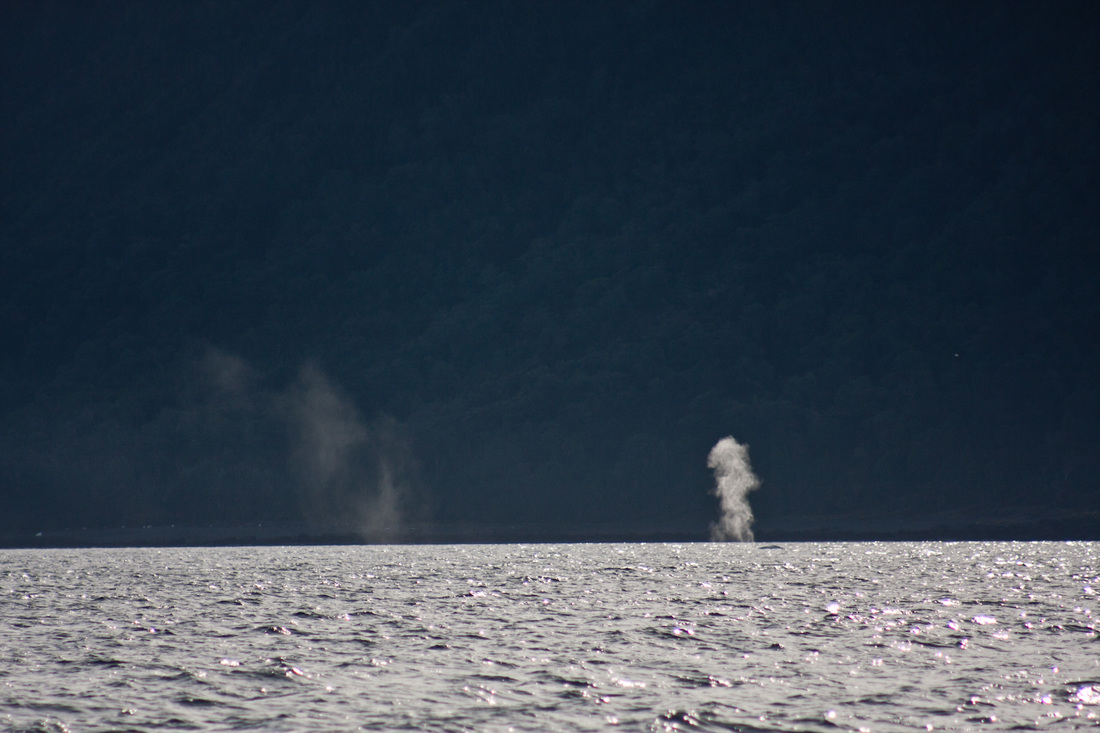
As I passed Chaiten, I noticed a few odd clouds on the horizon that quickly dissipated.  “Just your standard Native American smoke signals,” I reckoned... until I saw the next one form… and it was clearly coming from the sea, not the land!  “THAR SHE BLOWWWWSSS!!!” I bellowed like a maniac.  
Picture
I hadn’t seen whales in months, so I got really fired up about it.  
Picture
Picture
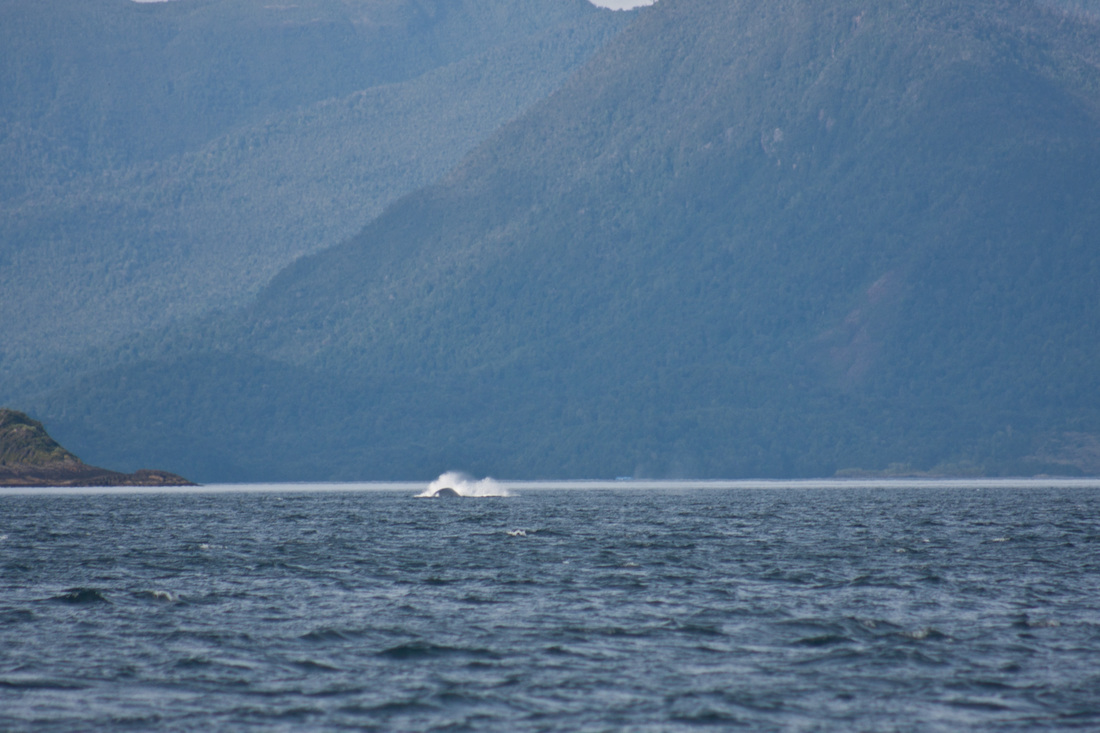
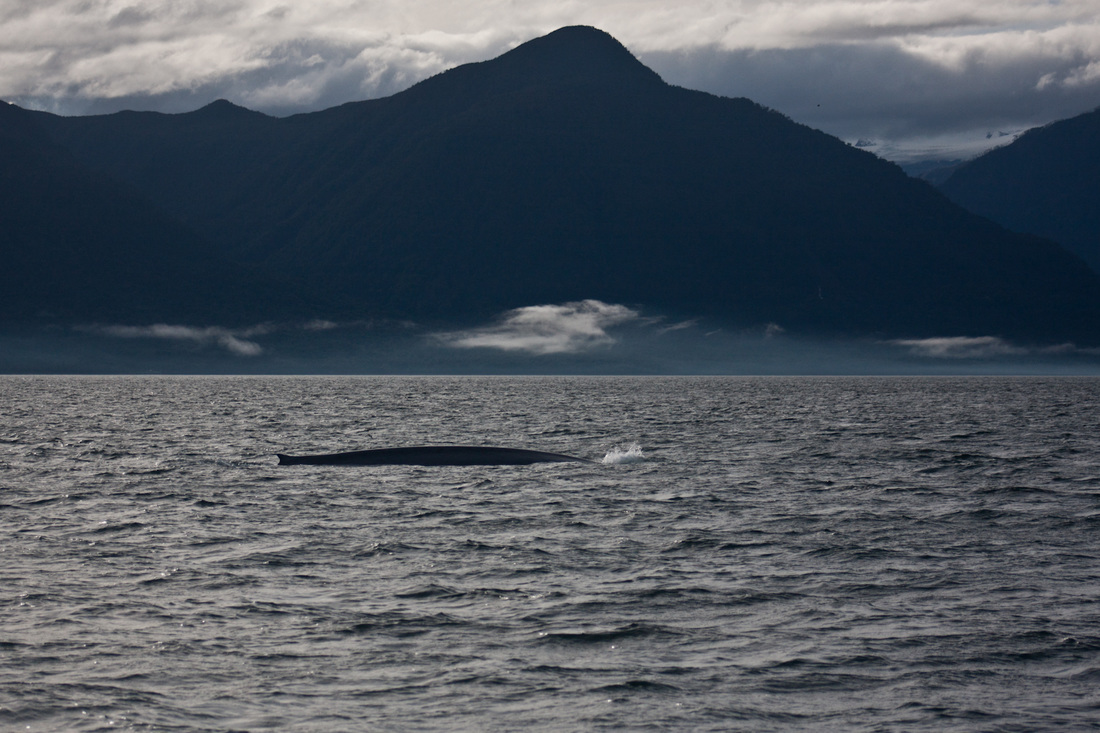
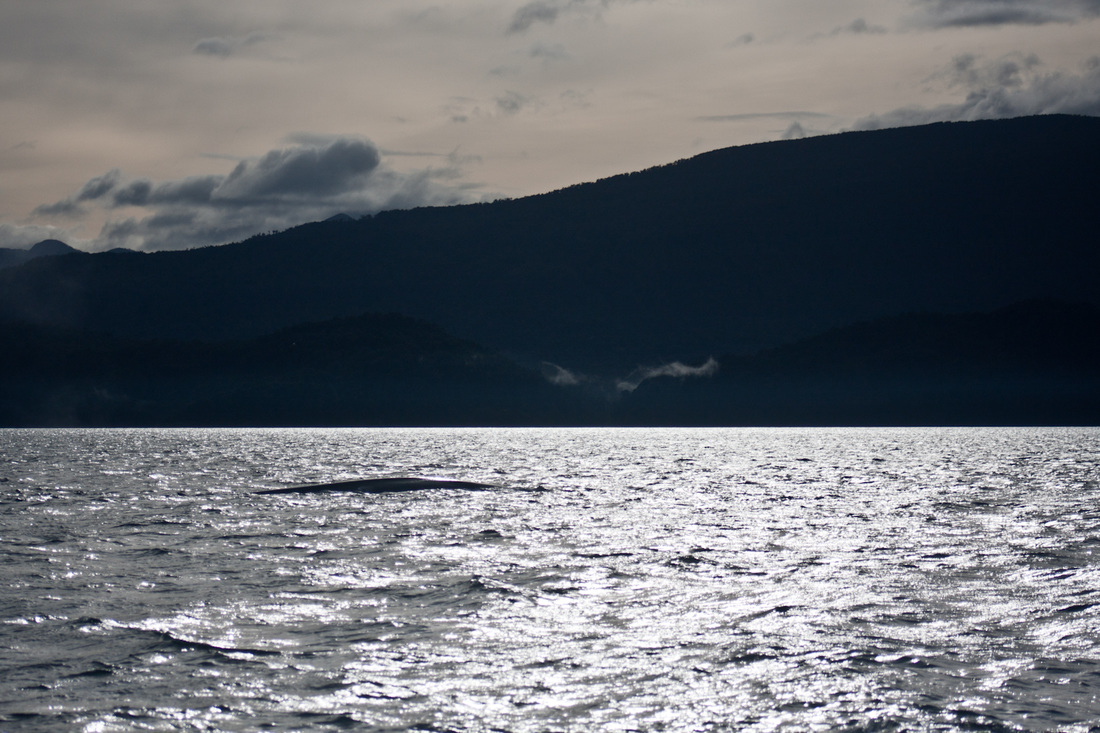
In all, I would imagine I saw at least two or three dozen whales that day and after chatting with a couple of marine biologist friends and consulting some whale watching guides, I reckon they were from three species.  Thus, I’ve termed that day a Whale Watching Triple Crown, which is, of course, a prestigious event worthy of celebration. 

The first species was the fin whale, which I’ve spotted before up off the Oregon and Washington coasts.  They’re the second biggest whale species and they’re a very long, graceful animal.  
Picture
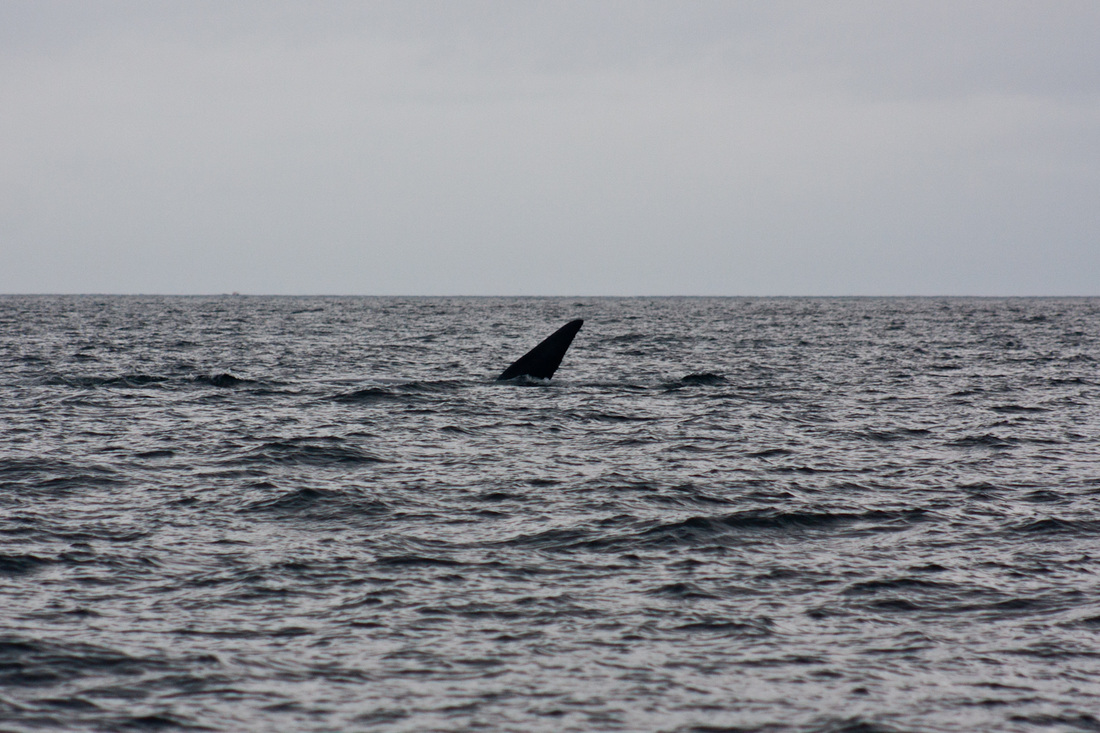
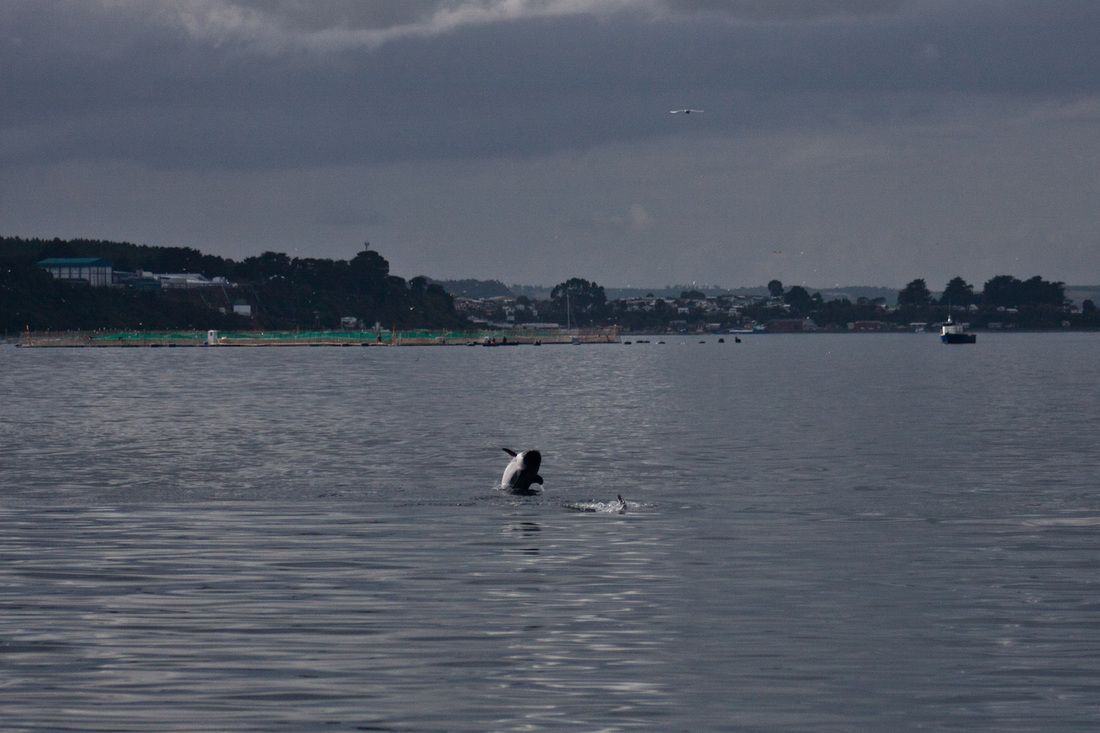
The second species I saw was the orca or “killer” whale.  They’re a a fair bit smaller than the other two species, and they’re actually not a whale at all, they’re really a dolphin.  That's beside the point, however.  

There is an excerpt I really love from a book about Antarctic exploration.
Spotting a seal, the creatures would dive to great depths and then smash through the ice, seizing the seal in it's mouth. The expedition found a hole 25 feet in diameter that had been created by a killer whale. As photographer Frank Hurley took a dog team over the thin ice, he would hear whales blowing behind him. He would quickly dash for solid, thick ice with "No need to shout 'mush' and swing the lash. The whip of terror had cracked over their heads and they flew before it. The whales behind...broke through the thin ice as though it were tissue paper, and, I fancy, were so staggered by the strange sight that met their eyes, that for a moment they hesitated. Had they gone ahead and attacked us in front, our chances of escape would have been slim indeed...Never in my life have I looked upon more loathsome creatures".
I didn't find them to be so loathsome, and I was quite impressed with the size of their ginormous dorsal fins.  
Picture
This fin was about the same height as me!
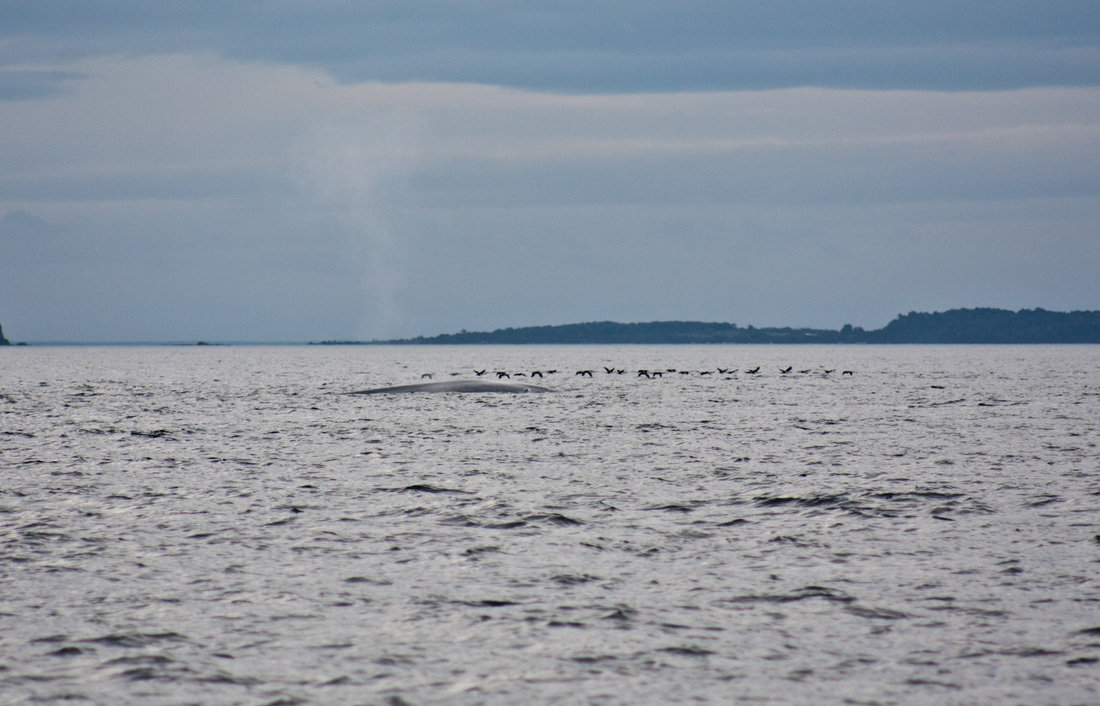
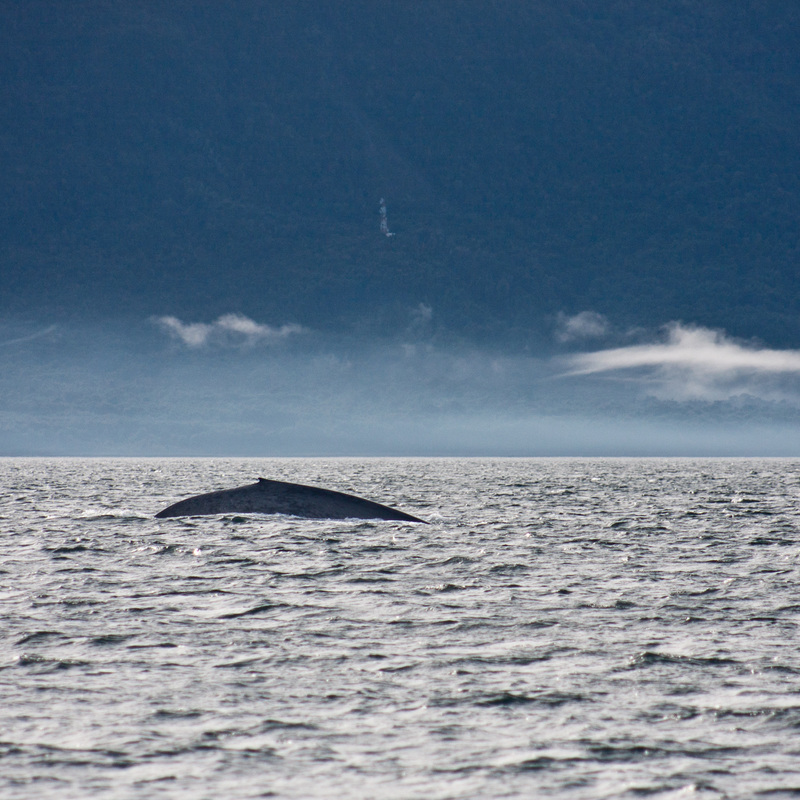
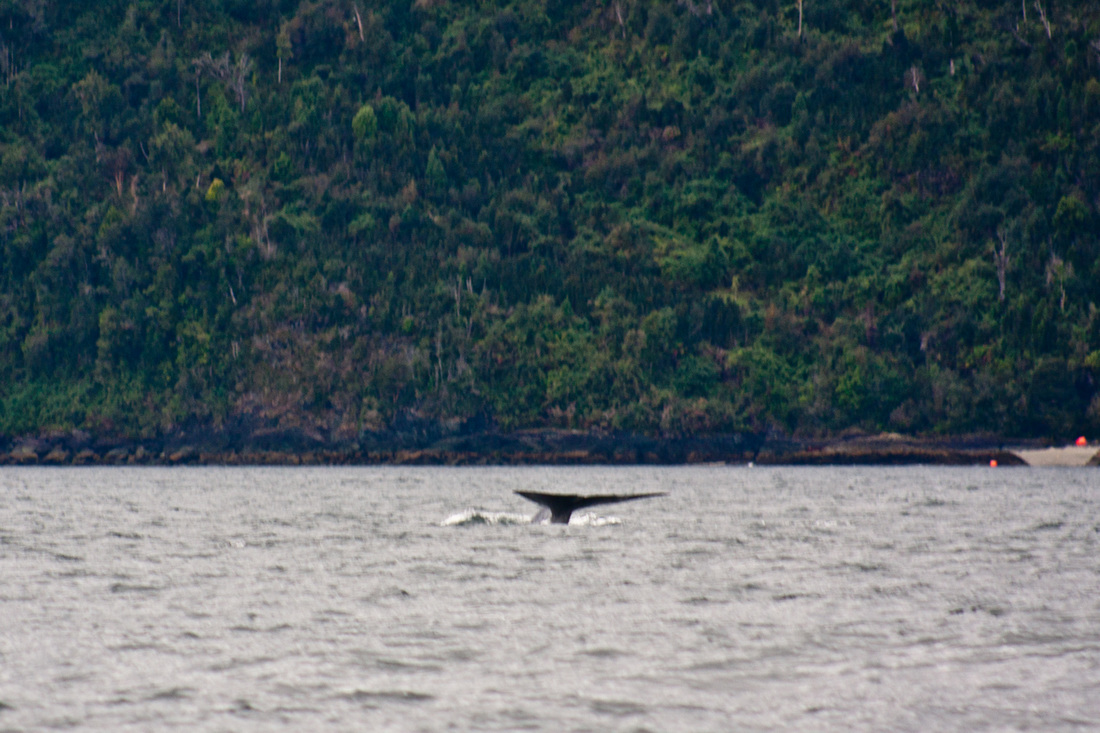
The third species I spotted on that day was the blue whale, which happens to be the largest creature that has ever lived on earth.  They're 100ft long, weigh 150 tons and they're 2.5 times bigger than a T-Rex.  They were hunted almost to extinction, but their population has been slowly rebounding.  Its exceptionally rare to see one and I was lucky enough to see one from about 100 yards away when it snuck up behind the Rascal.  He was so close that I could smell his breath when he exhaled and I can confirm that blue whales suffer from halitosis.  
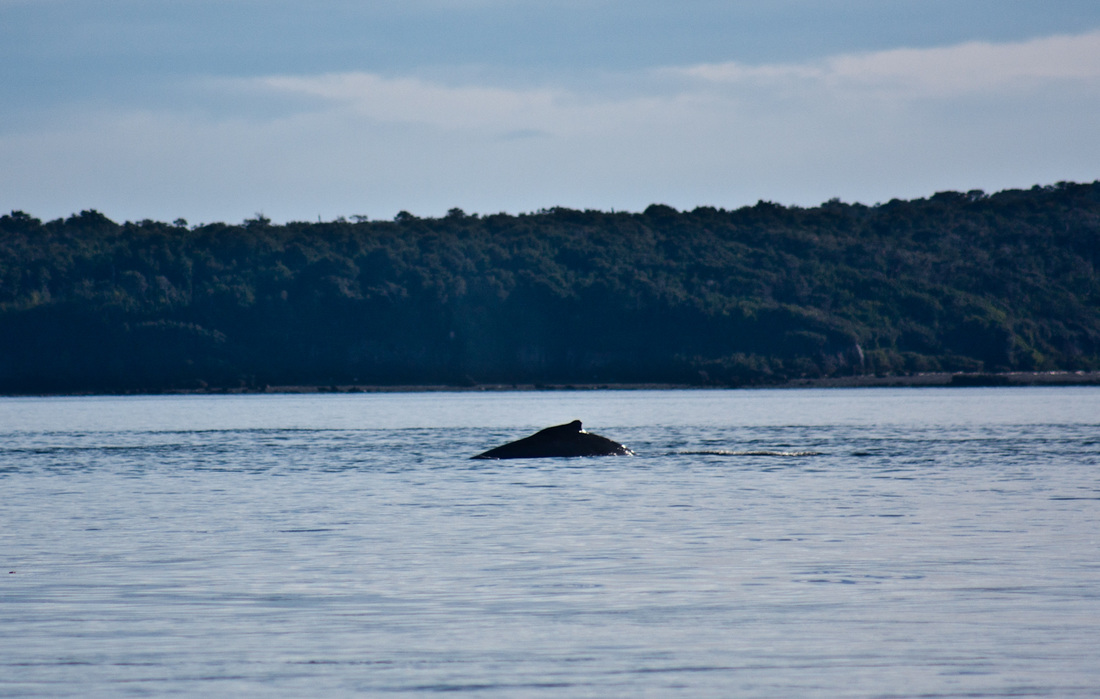
Picture
Picture
Picture
Picture
The other scenery on the day of my Whale Watching Triple Crown didn't exactly suck.
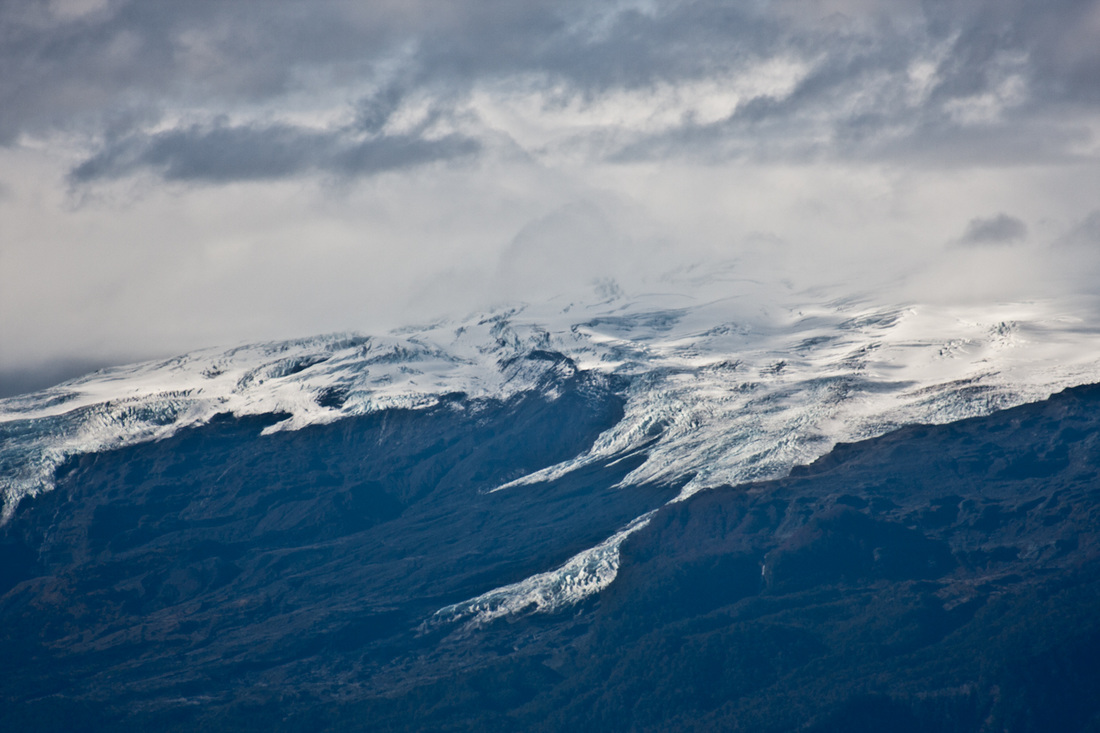
Picture
Picture
Picture
The Park
If you’ve ever seen the movie 180 Degrees South, you might remember the private park that Doug Tompkins (former owner of The North Face) started down here in Patagonia.  It’s called Parque Pumalin and I’ve gotten to explore a couple of different parts of it now.  All of the land is absolutely beautiful and it’s nice to know that it will be protected.  
Picture
Picture
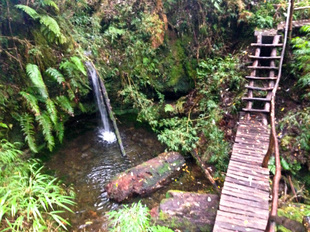
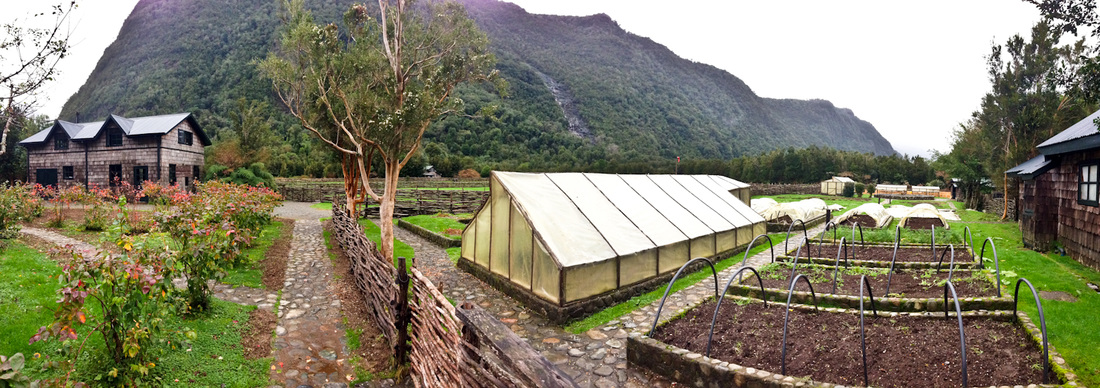
The park is left mostly wild and natural, but the infrastructure that they have put in is really well done.  You can tell they've really thought things through and designed systems with attention to detail and an eye towards sustainability.  
Picture
Picture
Picture
Most of the park is only accessible by boat and at their visitor center, they have a little organic farm that supplies park employees and visitors.  Its refreshing to contrast this approach with the massive car-based tourism thats prevalent at parks in the US.  
Picture
Picture
They really are doing something special in these parks and its more than just the conservation of the land.  Its also about educating people and planning for the future.  If you're curious about their philosophy, this is a good spot to learn more.  
Picture
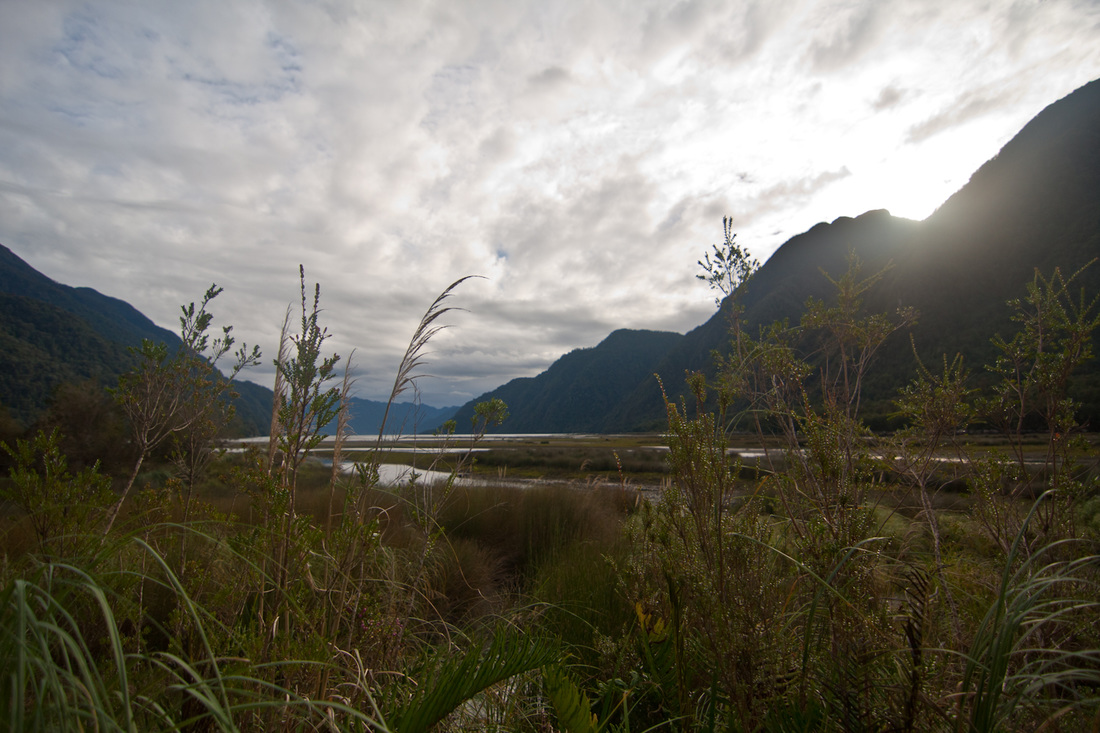
While its easy for folks in the states to applaud the efforts of Tompkins as a conservationist, lots of people in Chile have a really negative opinion of him.  His conservation efforts have definitely put a damper on economic development (environmentally ruinous economic development) and lots of people are unhappy about the amount of power he has due to his enormous landholdings.  I've even heard well educated Chileans claim that he is buying all of the land to create a new Israel within the borders of Chile... as we and a few other pretty radical conspiracies.  I'm curious to see how Chilean sentiment evolves as time goes on, but for now, I'm just happy that there aren't any strip mining companies excavating the hot springs. 
Picture
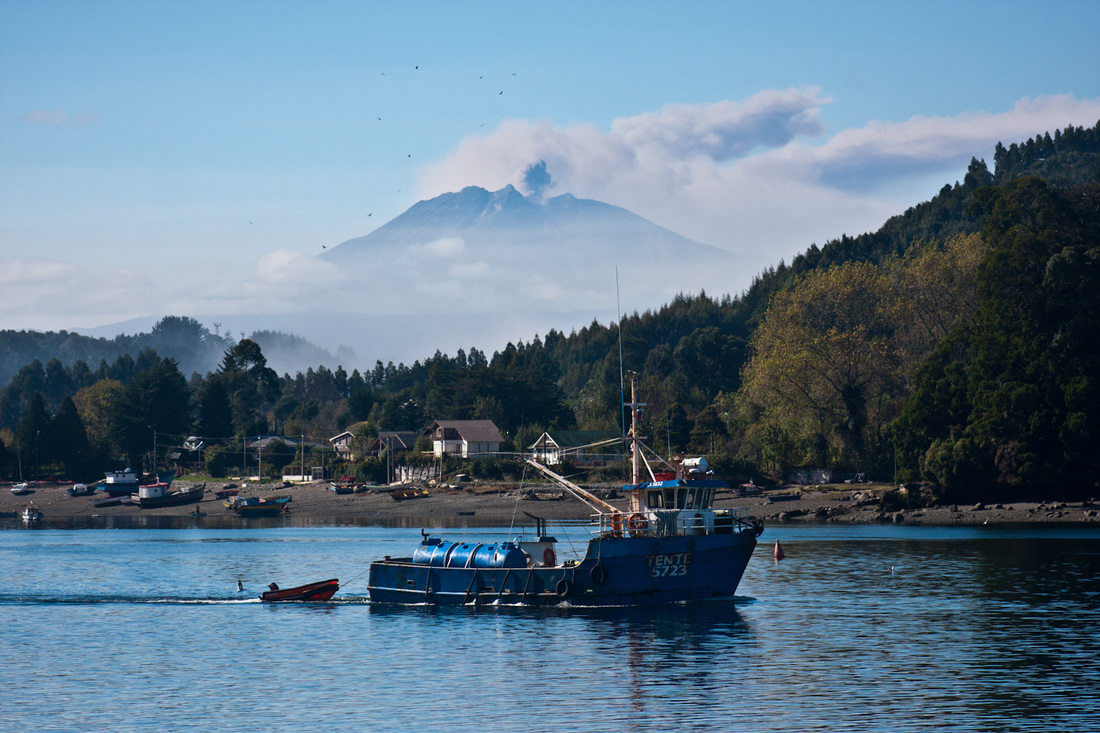
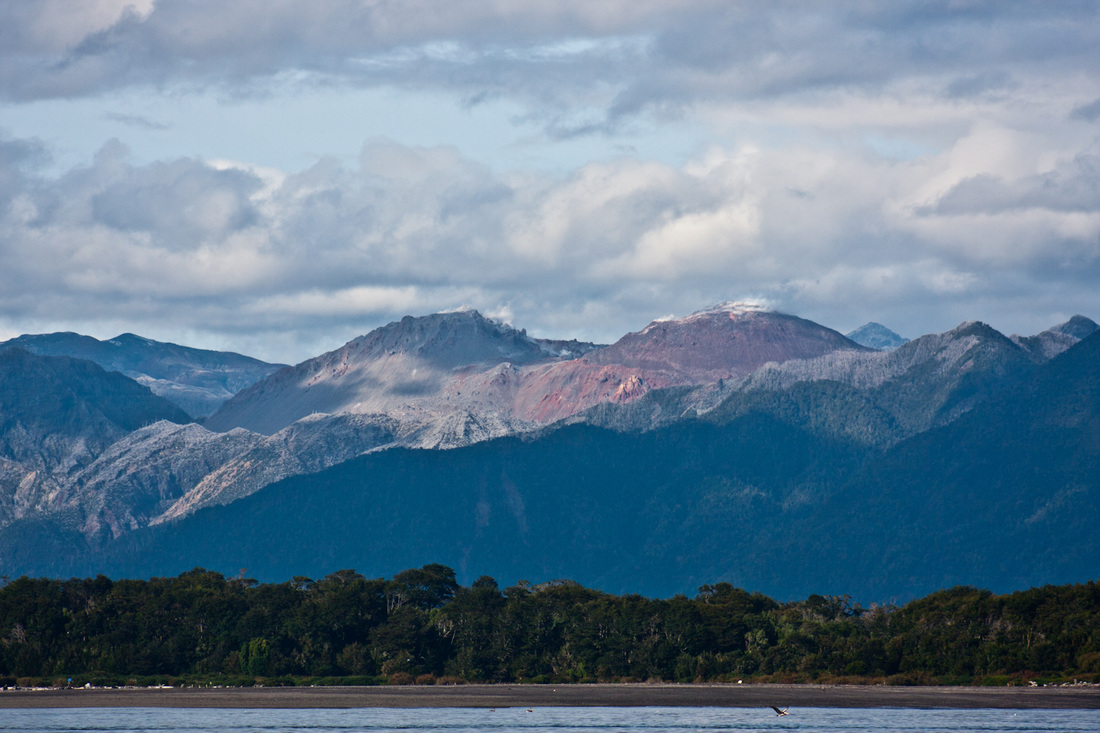
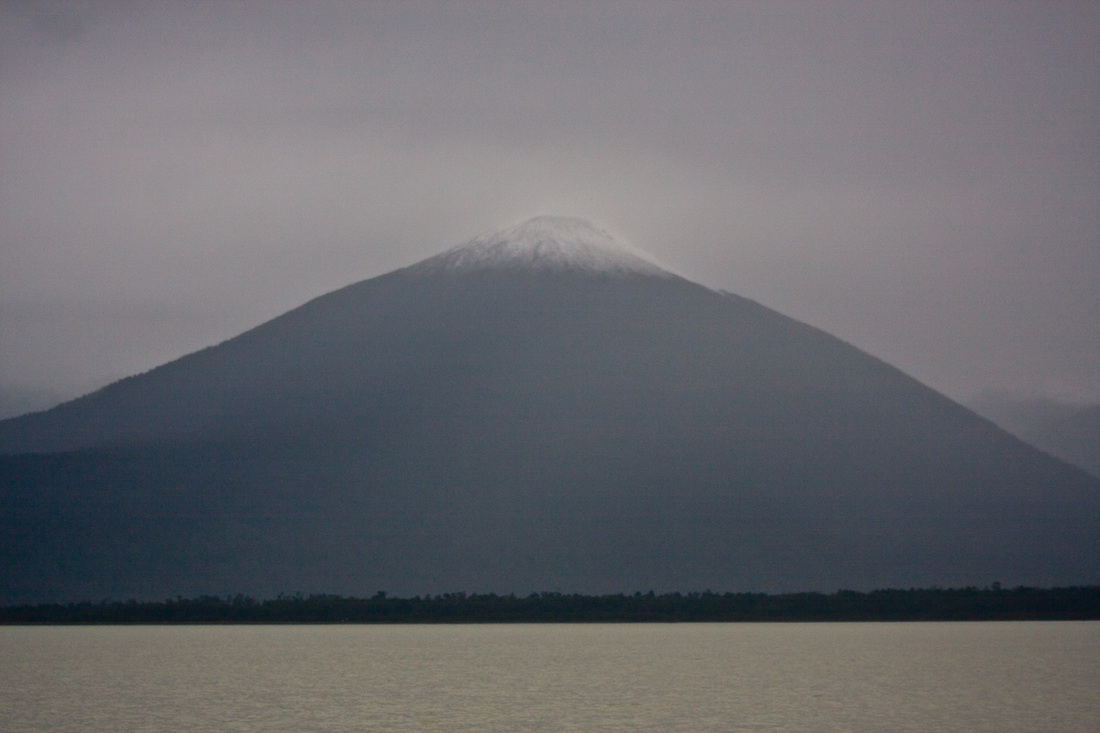
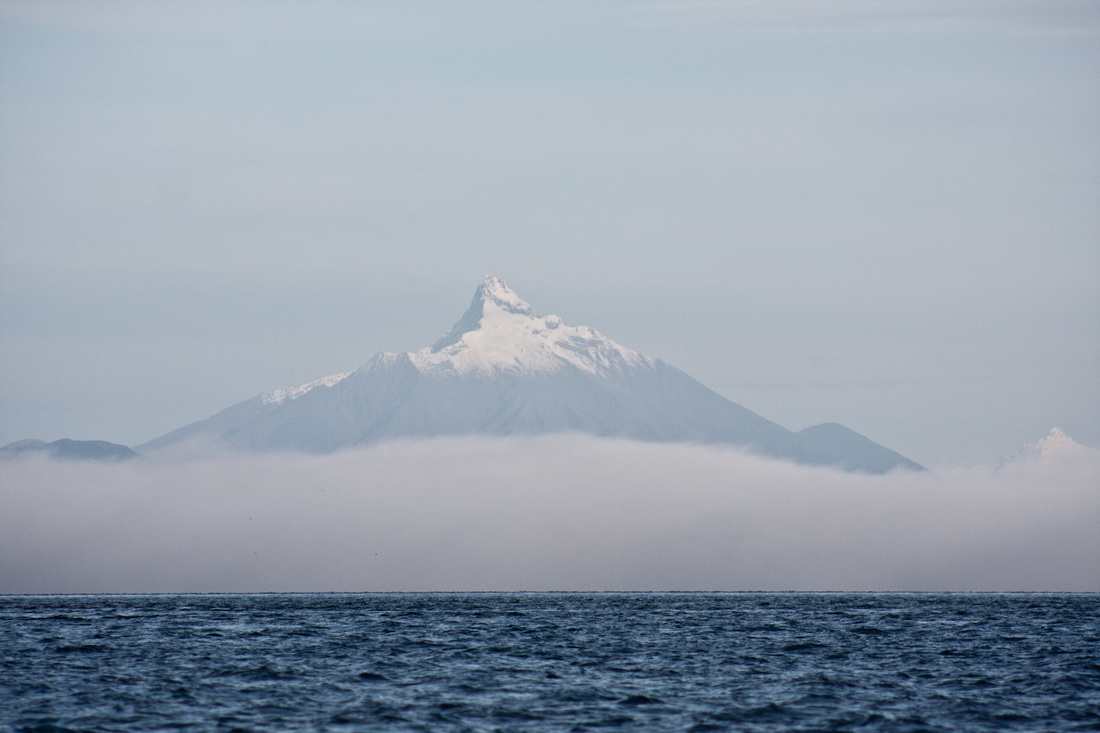
The Volcanos
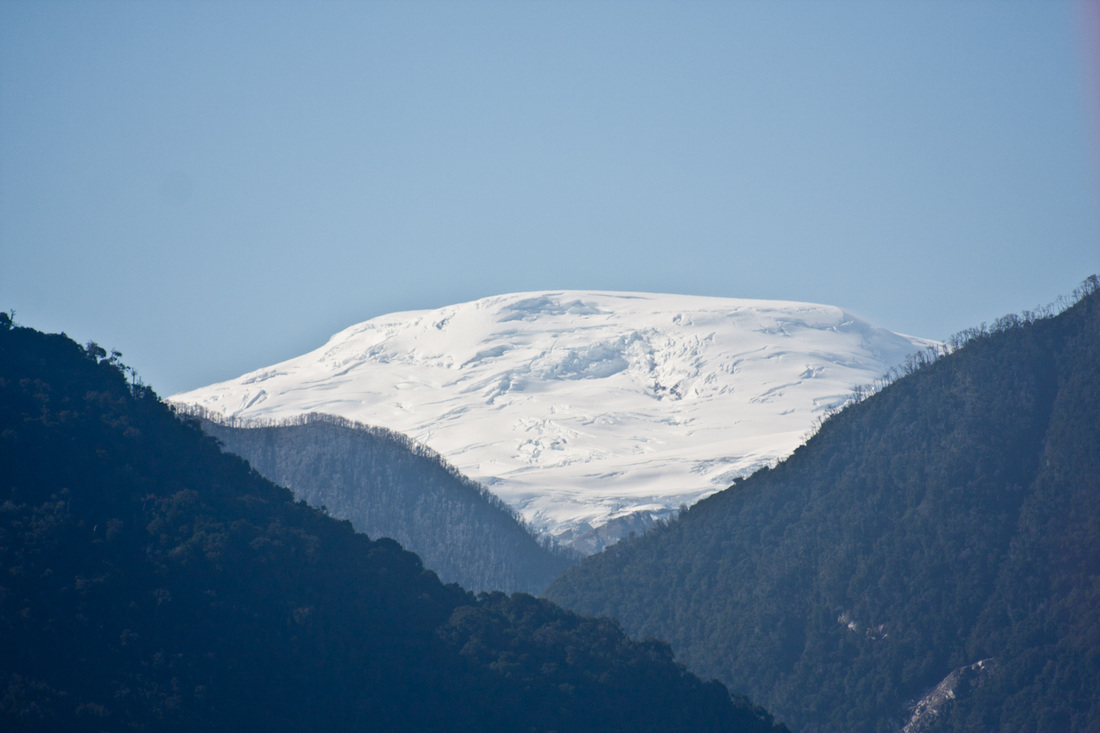
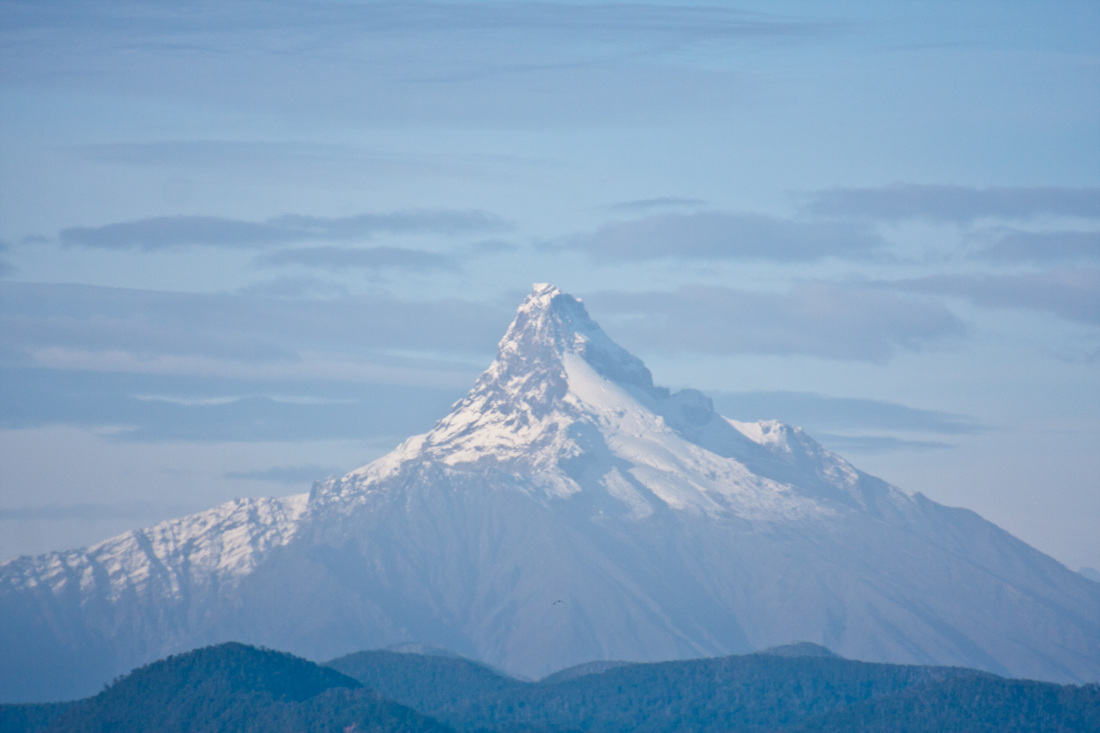
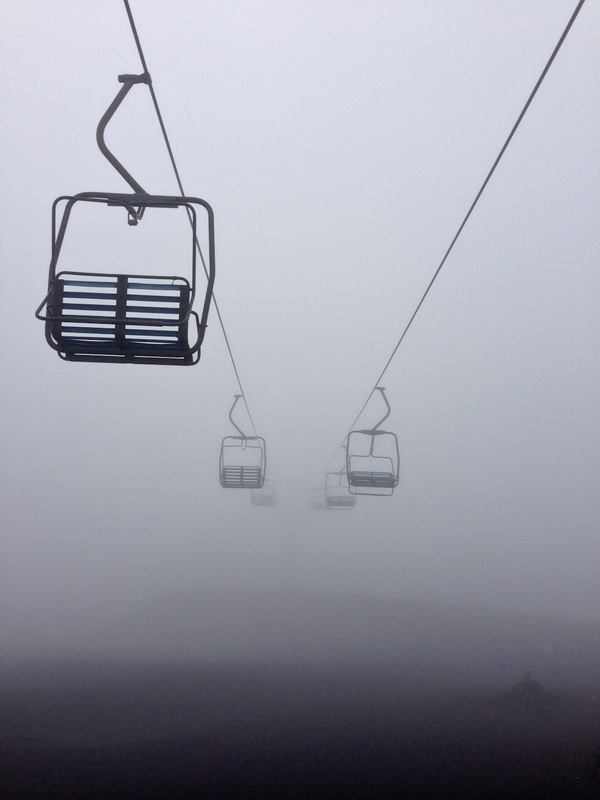
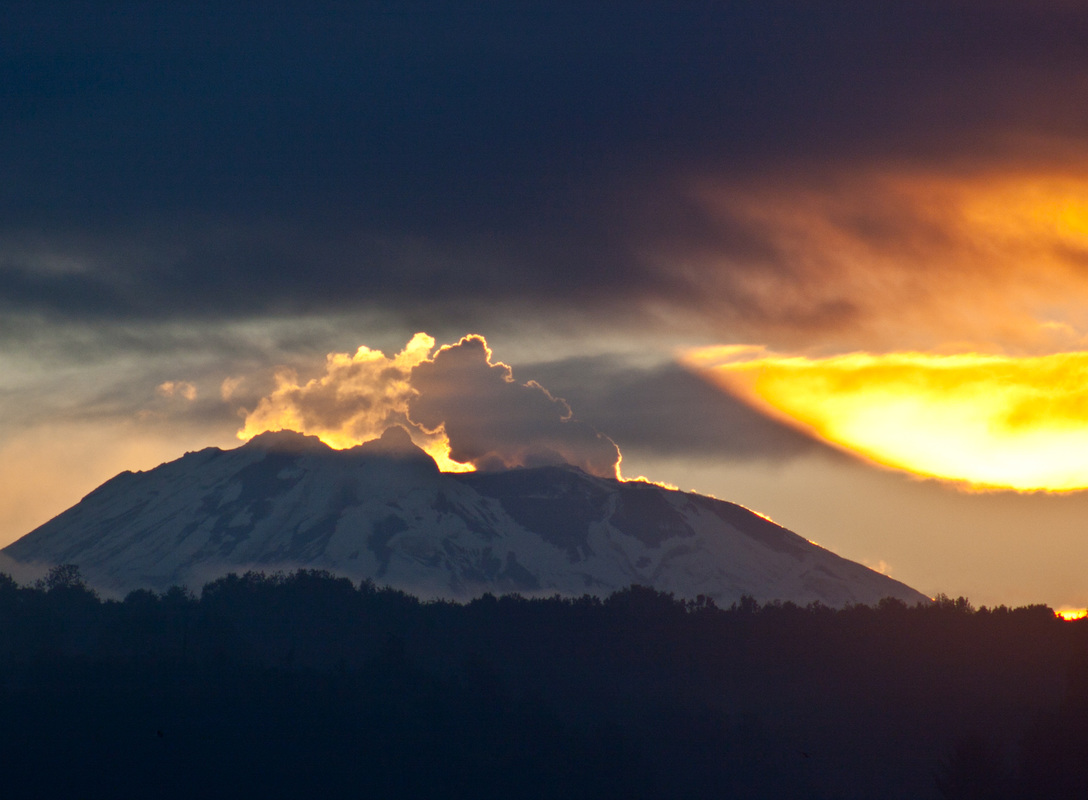
You can hardly look up in this country without seening a volcano.  They're all exceptionally majestic, ringed with snow, and just begging to be skied.  
Picture
Picture
Unfortunately, they're all quite challenging to access (until I can afford that chopper!) with lots of dense vegetation around their bases.  
Picture
Picture
You might also recongize this one (Volcan Corcovado) from 180 Degrees South.  It's the one they tried to climb with Yvonne Chouinard.  
Picture
Picture
The Storms
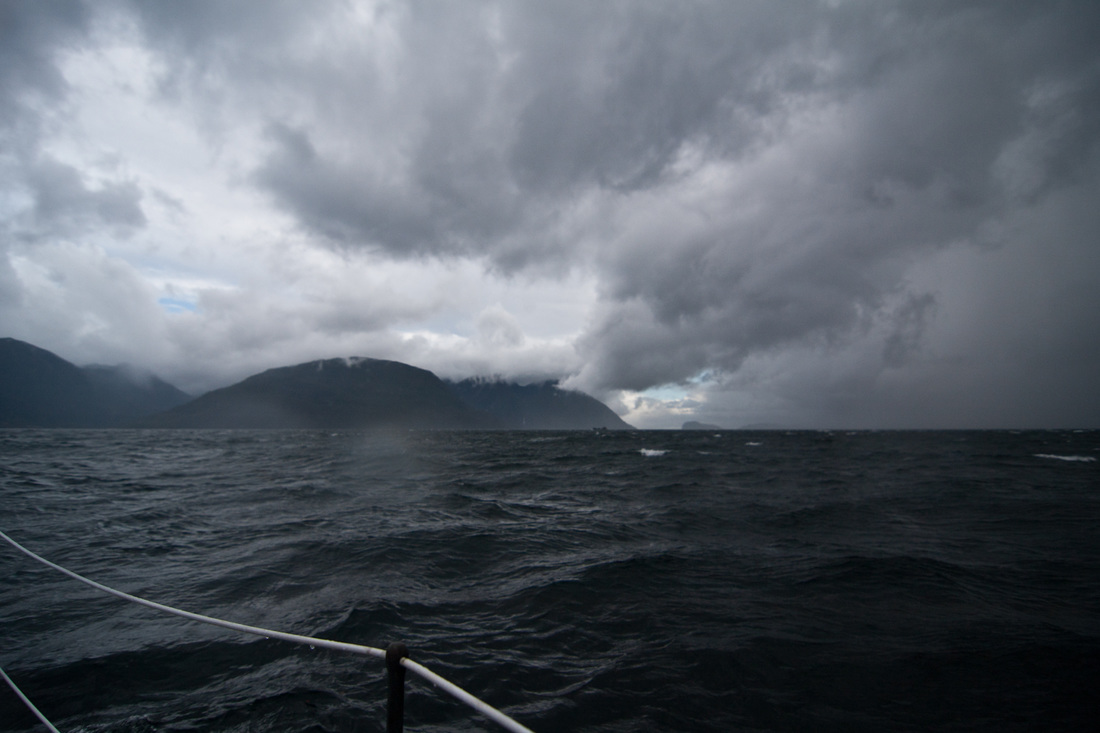
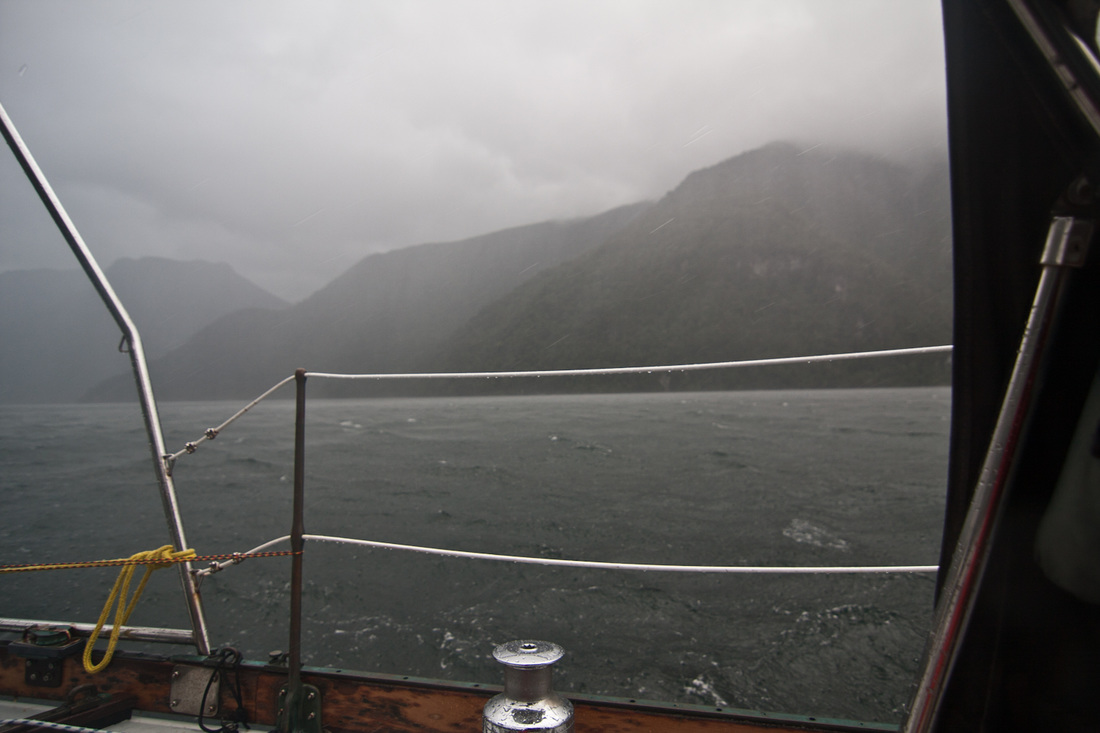
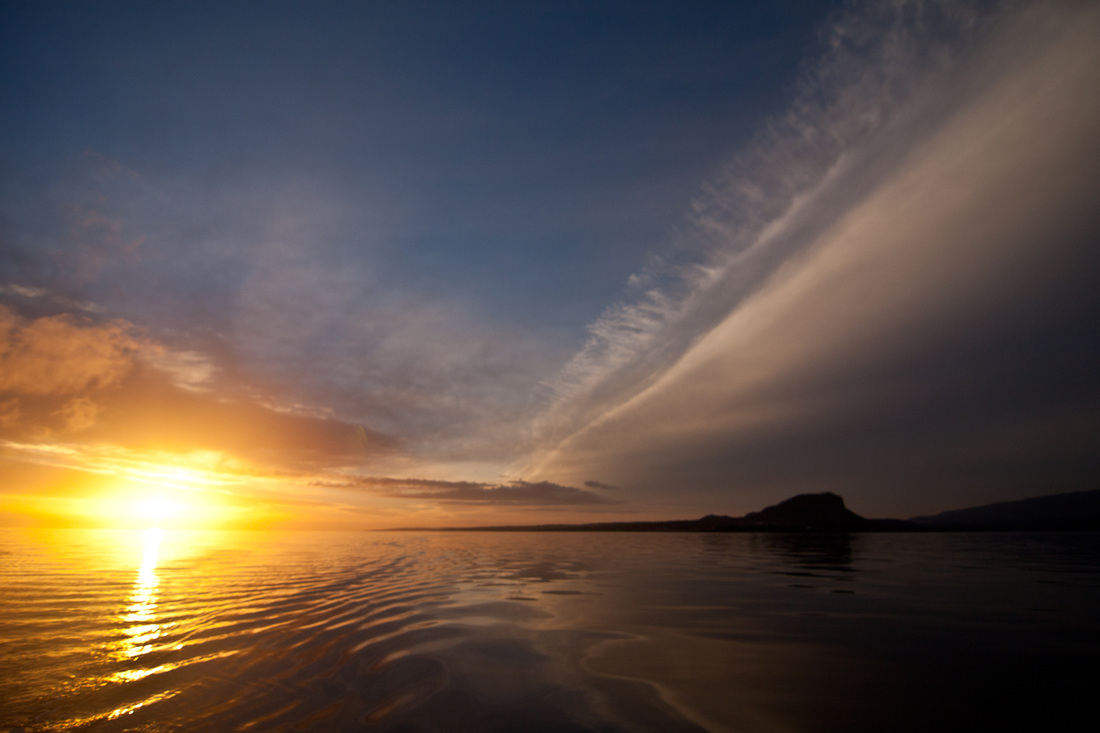
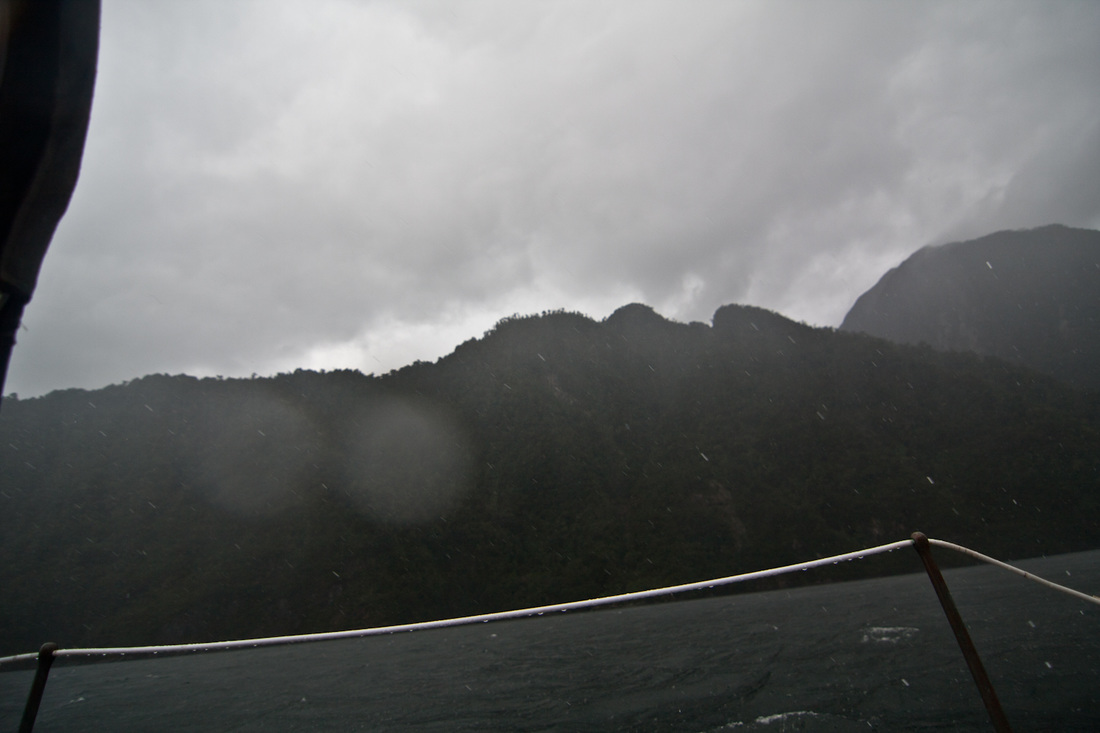
While the people and scenery have been absolutely awesome, the weather has been exactly the opposite.  This seems to be one of the universal truths of winter in Patagonia.  Cold.  Rainy.  Windy.  The weather in this part of the world is all dictated by an endless procession of low pressure systems that march across the southern ocean from west to east.  At this time of year, the wind is nearly always out of the north (or NW or NE) and occasionally it’ll fall dead calm after the passage of a front.  
Picture
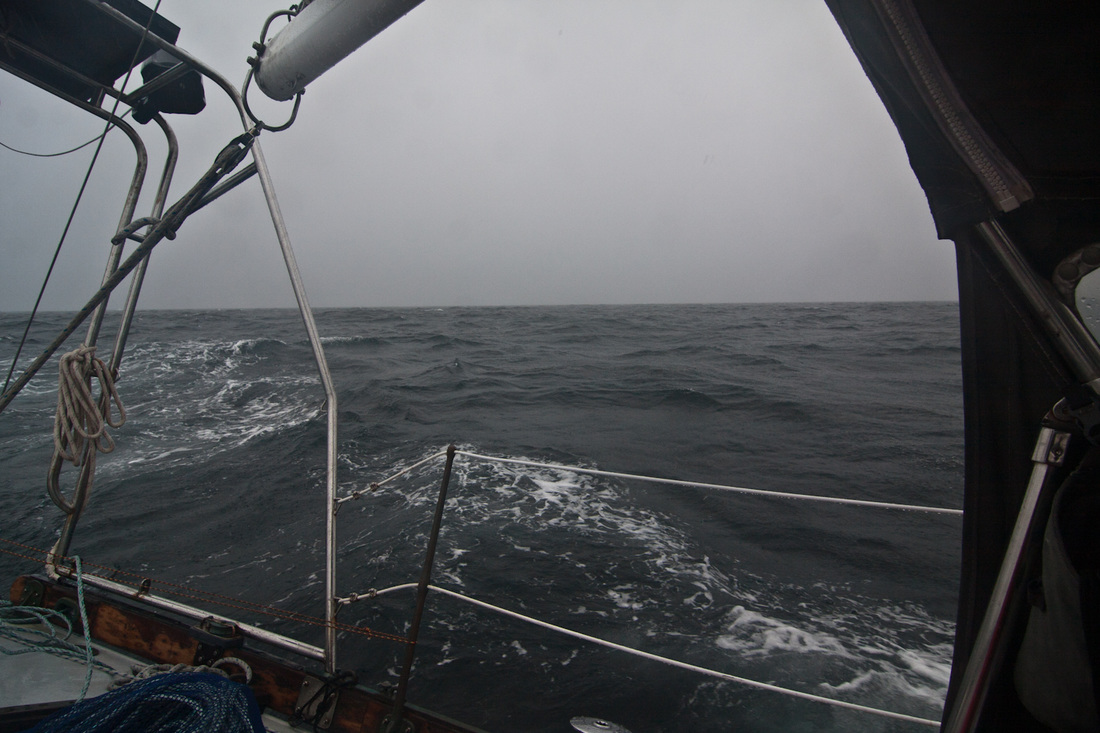
The weather changes fast and it’s rarely predictable.  There have been a few occasions where I’ll be motoring along through a calm and I’ll see some dangerous looking clouds approaching.  Within five minutes it will be blowing 25-30 knots with rain and sleet whipping all around.   I've definitely spent a lot of time sailing with just a double reefed main and the jiblet up.  
Picture
Picture
Depending on the topography around you, the wind will sometimes get rocketed down the face of a mountainside into your anchorage.  Other times, it will all get funneled down a fjord and it is invariably always a headwind.  
Picture
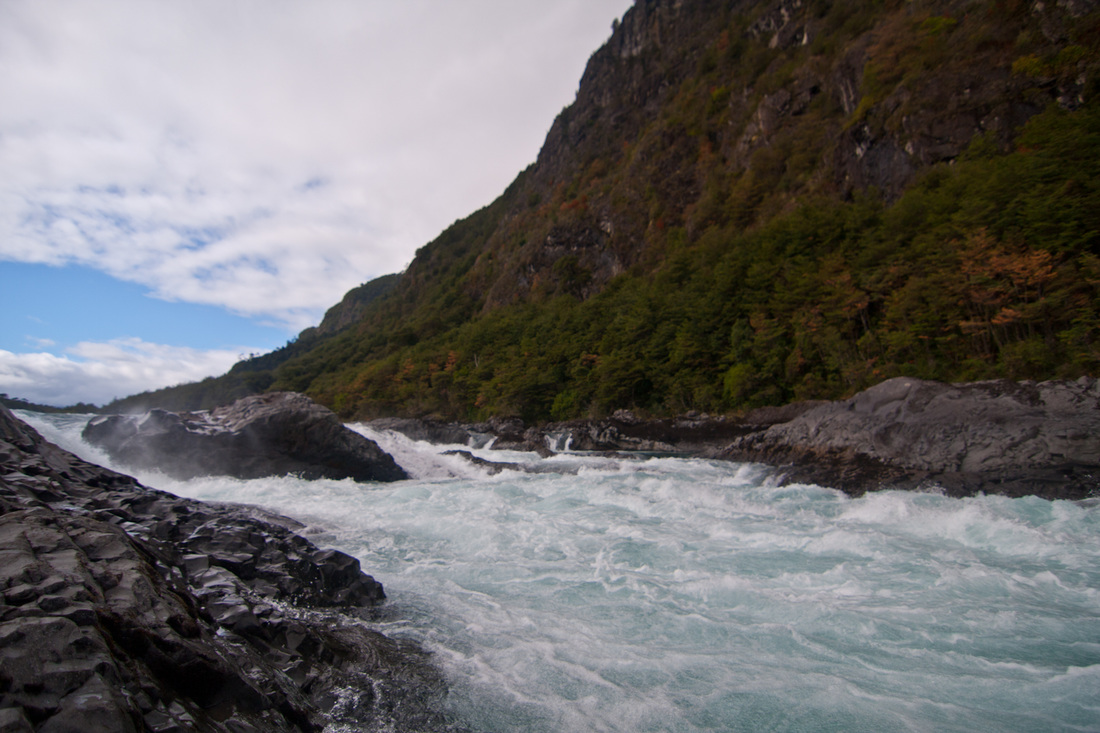
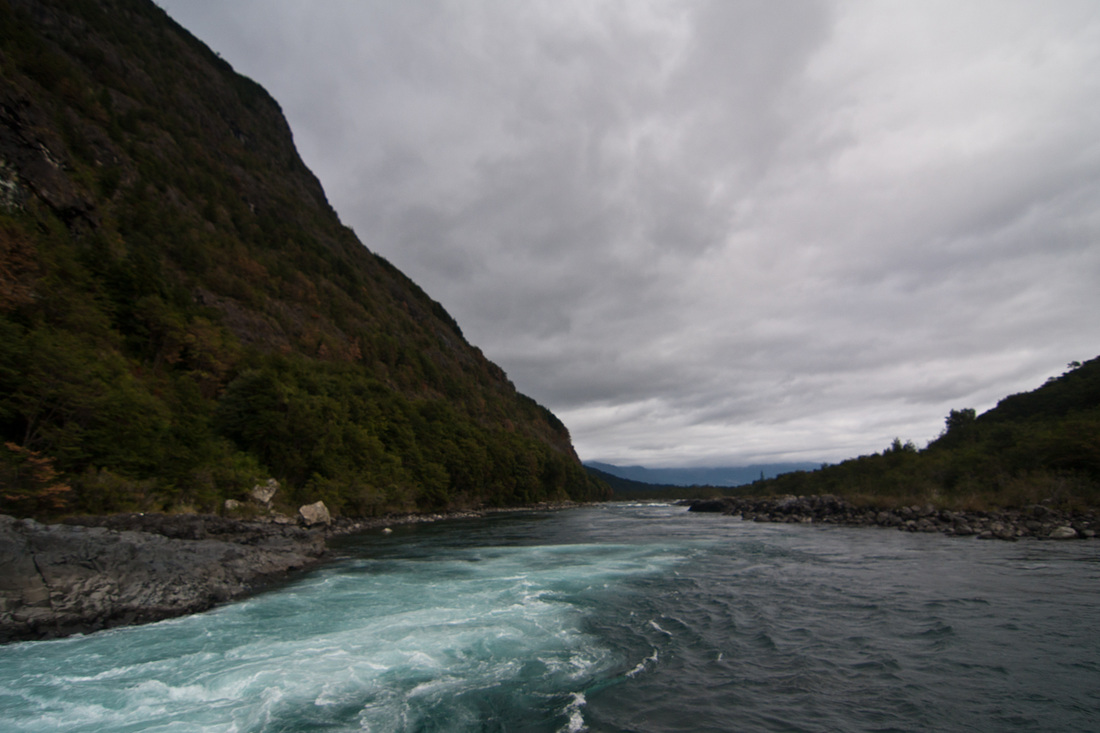
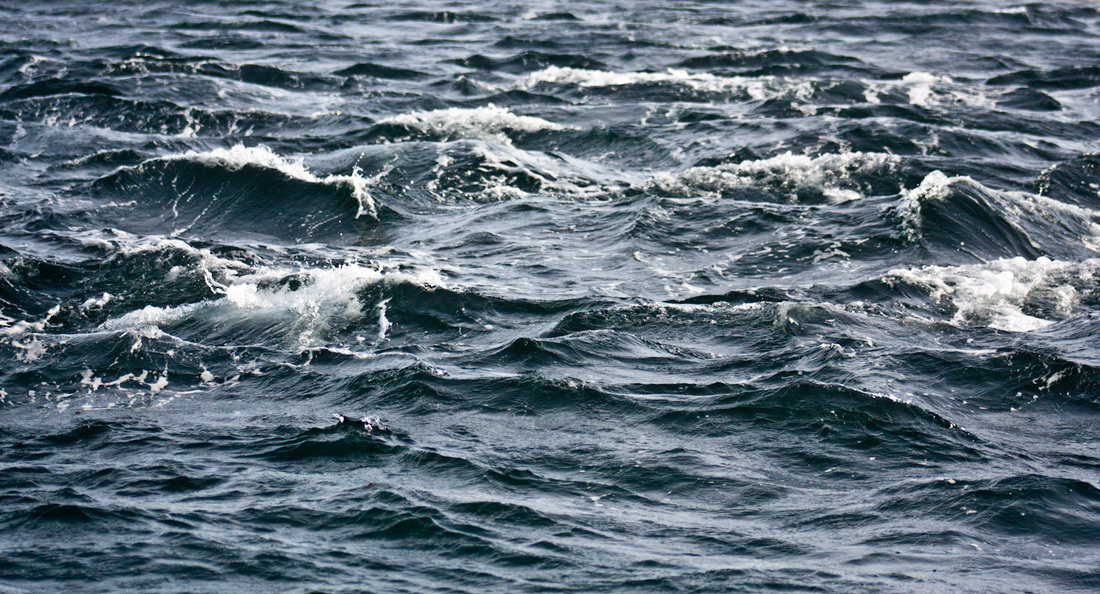
In addition to the strong, unpredicatable winds, there are substantial currents.  Most everywhere has at least a knot of current that will change directions depending on the tide.  In tight passes and narrow fjords, the current increases to 2-4kts which is oftentimes a challenge for the Rascal to manage.  You've definitely got to plan carefully if you are trying to cover long distances.  
Picture
One of the tide rips
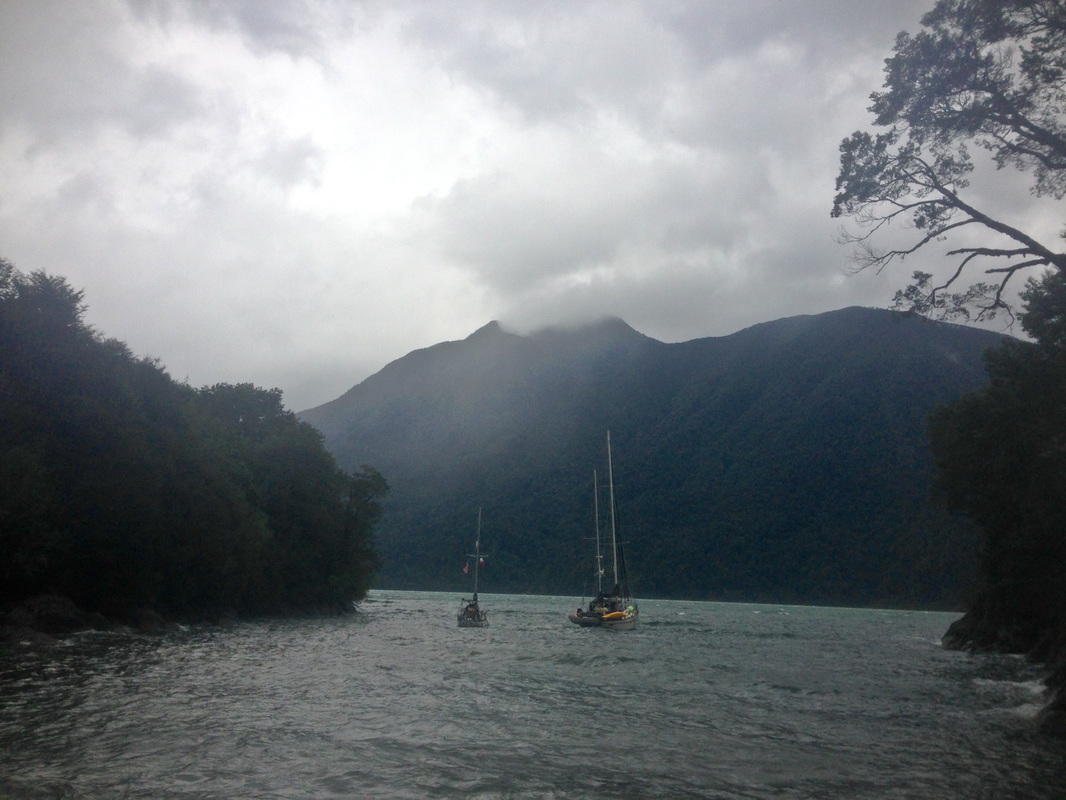
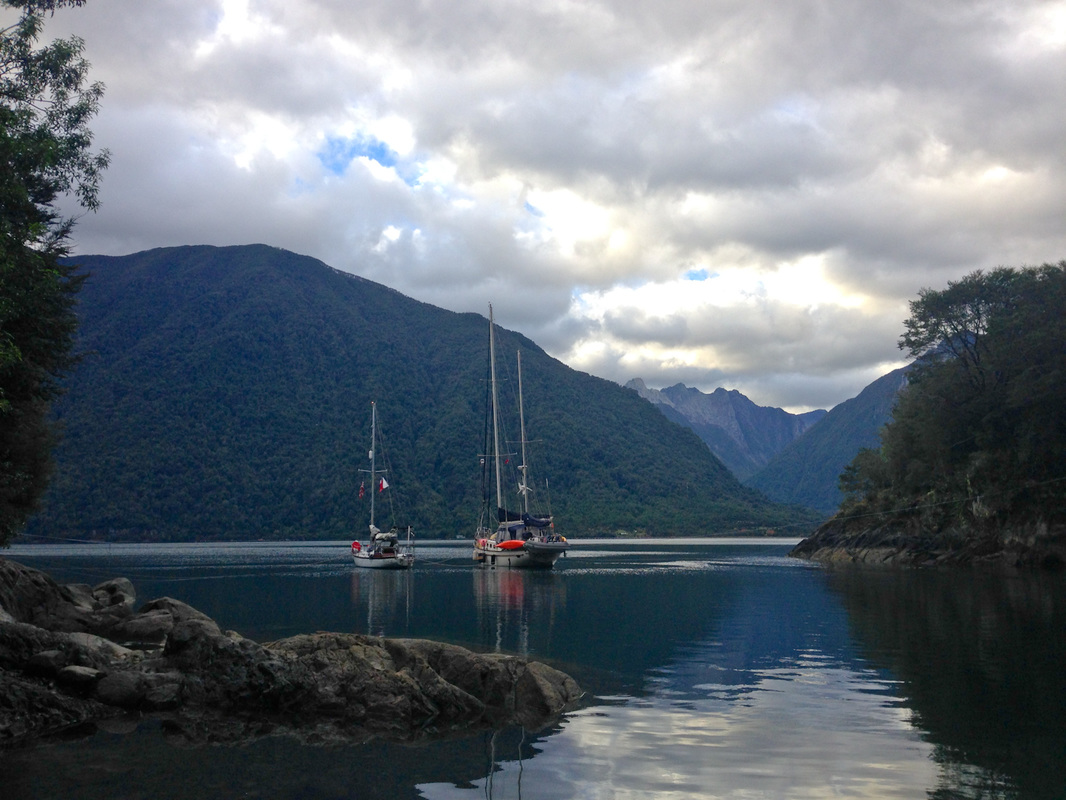
There have been a couple of really nasty storms with predicted winds up to 70kts.  I don’t have a wind speed indicator on the Rascal, but there were definitely some gusts approaching that neighborhood.  Luckily, I was able to find good anchorages (with great company) in time to weather each of them.  The anchoring technique down here often involves tying lines from each corner of the boat to a stout tree or rock on shore.   Thus, narrow, deep anchorages are prized and I've happened into a few gems already.  
Picture
Picture
Picture
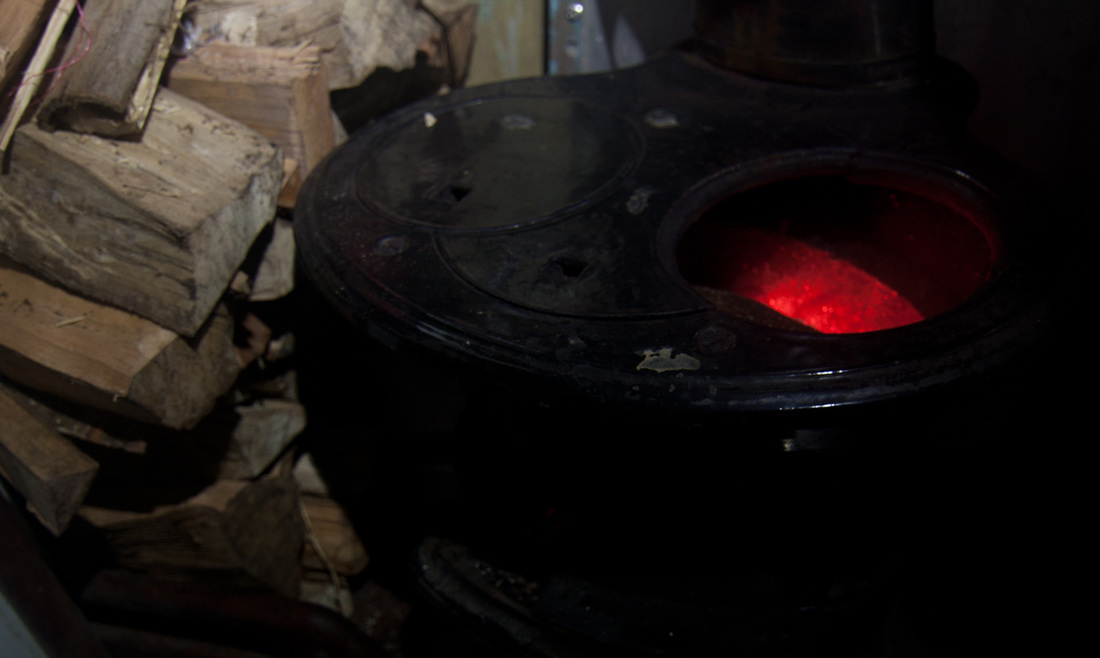
Luckily I can keep the wood stove roaring when its really nasty out, and quickly step from the wet, bulstery, freezing cockpit down into a warm, dry, cozy Rascal.  
Picture
All-in-all, it was a hell of a trip and I feel like I've finally gotten a swig of the delicious brew that is Patagonia.  It wasn't enough to quench my thirst, though.  I'm gearing back up in Puerto Montt for some more exploration and scouting.  
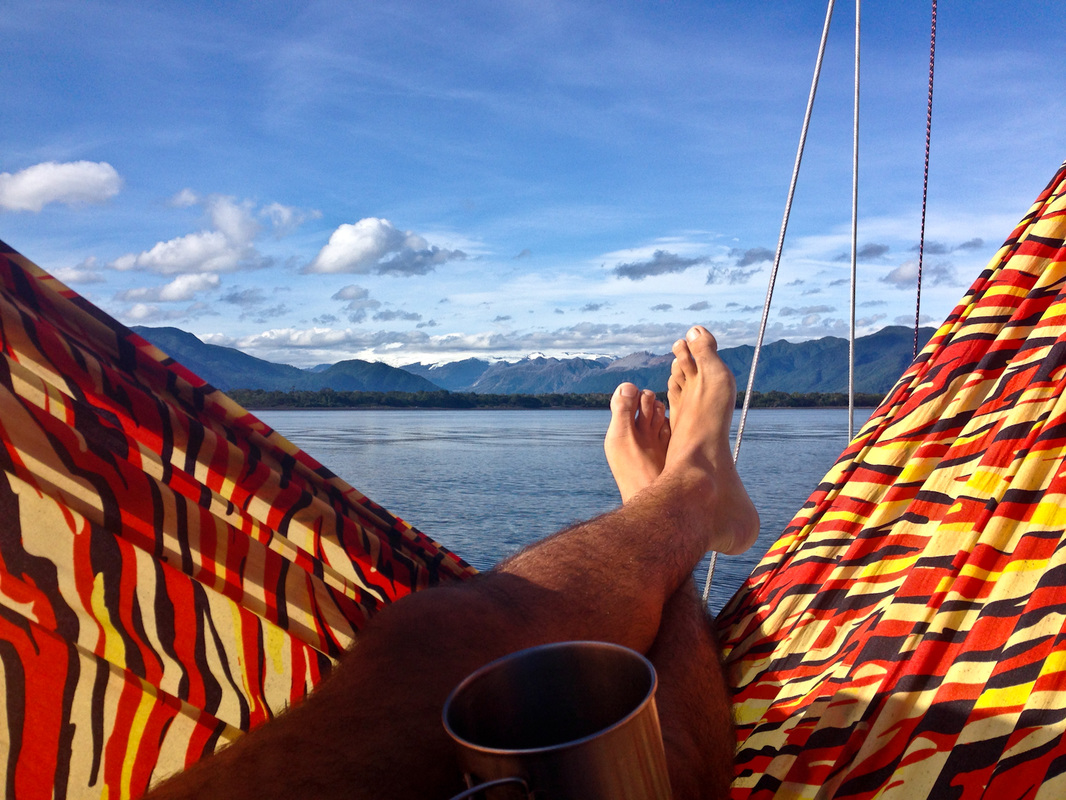
Picture
2 Comments

How to Retire at 25 and Live the Dream

5/23/2015

20 Comments

 
Picture
18 months ago, I quit my job, sold all my possessions, and decided to buy a sailboat.  It was the hardest decision I’ve ever made and it took me almost a year before I finally built up enough courage to take the leap.  I’ve had a handful of friends over the past few months ask what that process is like.  Instead of giving mediocre responses to each of them, I decided to spend some time ruminating on it, and I put together a guide (of sorts) describing the process I went through.  This guide is aimed at people like me: educated twenty-something, a few years out of college, building a career, making good money, etc.  If you don’t fit that mold, hopefully you can still glean some insight out of it.  
​
Step 1: Save Some Moolah
A lot of people are complete dumb-asses when it comes to managing money.  My parents were fairly frugal as I was growing up and they gave me enough education to understand and control my spending.  This doesn’t appear to be the norm, so I’ll try and impart some of the mindset that has allowed me to live off of savings for a couple years.

A lot of people in the US complain about not having enough money to “make ends meet”, but a lot of people in the US also have $600 smartphones, buy bottled water every day, and pay a hundred bucks a month for TV subscriptions that rots their brains.  Over the course of my travels, I’ve met and talked with people that live on a couple of dollars a day.  Lots of these people are totally satisfied with their lives.  When you examine the lives of “poor” people in the US through the lens of people that are truly poor, you find that they’re actually living like kings.  It is this perspective that sets you free.
Picture
If you’re constantly comparing yourself to pop culture icons and professional athletes, your hunger and consumption will be insatiable.  This is what modern media and marketing work towards in the US.  If you compare yourself with a Chinese farmer or a Chilean fisherman, you’re suddenly living a life of tremendous excess.  If you’re serious about saving money, this change in perspective will help you re-evaluate your spending.  Eventually you’ll realize that most of the things you “needed” to buy were really just things that you “wanted” to buy.

A good place to start is your bank statement.  Take a real look at where your money goes!  How much do you spend a month at coffee shops?  How much is your cell phone bill?  What do you spend every year on gas for your car?  Do these financial expenditures bring you proportional amounts of happiness?  Fulfillment?  Add all these figures up and make pie charts and really wrap your head around where all of your money goes.  A couple of dollars a day add up to substantial amounts of money over the course of a year.  Is your Diet Coke habit really worth 4% of your income?

Once you have a good understanding of where your money goes, you can start making decisions on where you can spend less.  Maybe you’ll move into a smaller apartment.  Maybe you’ll sell a bunch of the clothes you bought on a whim.  Maybe you’ll trade your car in for an older one or start riding a bike to work.  Try to cut out all of the expenses that don't truly enrich your life!  These are the parts that won’t be fun or easy, but they’re also the parts that will enable you to live your dream in the end.  Find a balance between austerity and happiness and don’t lose sight of the light at the end of the tunnel.
Picture
Easy for you to say, you’re probably thinking.  White, male, well educated, healthy, etc.  Fair enough.  I’ve definitely had a lot of advantages in life. 

But you’re fooling yourself if you think you can’t achieve some financial independence.  Maybe you’re even cheating yourself.  Because if you truly want something bad enough, and you exercise enough will power and hard work, you can get it.  The only obstacle to your financial freedom is your own mindset.  
Picture
Step 2: Make a Plan
You’ve got to make sure you’ve got a legit parachute before you jump out of the plane.  Quitting your job with just the vague notion that you’re going to “travel the world!” or “ride a bike to India!” would be a pretty rash move.  You should do some serious research, develop a budget, come up with a timeline, and really know what you’re getting yourself into. 

The internet is goddamn incredible.  People have done pretty much anything you can imagine, and they’ve blogged about it.  There are so many inspirational stories out there.  Read books, send emails, and learn as much as you can about your new life.  People are always eager to share their experiences, so take advantage of that.  You need to try and understand the nuances of what your new life will be like.
Picture
The next step is cracking open a spreadsheet to figure out the financial realities of your dream.  What will your living expenses look like?  Will you have any residual income from investments?  How much does food cost in Tibet?  How many kilometers can your motorcycle go on a liter of fuel?  How much will health insurance cost?  Will you have a monthly cell phone bill?  What is rent on a beach cabana in Costa Rica?

Chances are, your new life is going to be totally different financially from your old life, so there will definitely be some guesstimating and back-of-the-napkin calculations.  Do your best, but be realistic.  Based on all of these costs, figure out either how much you need to save, or how long you’ll be able to unplug.  Plan to have some cushion money stashed away for your return back into the world of work in case it takes a while to get a job again.  
Picture
This can be one of the most challenging and confusing parts of developing a plan.  When I was trying to figure out how possible sailing to Chile would be, I found a handful of cruisers’ blogs that were totally transparent about how much they spent, what they spent it on, and exactly how they live.  It was super helpful to me, so I figured I would return the favor here to some degree.  People have this preconceived notion that sailing is a wildly expensive activity reserved for elites and millionaires.  Some people certainly spend fortunes on huge boats and electronic gadgets, but the Rascal and my way of life are really pretty reasonable (though I’m sure they’d still seem extravagant to the Chinese farmer).  
The Rascal cost about as much as a nice used car and I put a couple thousand bucks into her before she was ready to leave.  She is the perfect boat for me and she has performed beyond my wildest dreams.  To give that some perspective, most of my friends drive cars that are worth more than my home and transportation combined.  I could’ve probably spent something like $5,000 USD for a plastic pocket cruiser that was big and strong enough to explore Central America and the Caribbean for a year or two with a slightly higher level of risk.  The cost of entry isn’t high. 

Before I departed, I was expecting to spend something like $10,000 USD per year in living expenses based on all of the budgeting I did.  I’ve found that I’m actually spending closer to $15,000 USD per year.  Perhaps 35% of that is spent on food and drink which are certainly my greatest vices (but also the ones that I take great pleasure in).  Another 30% is spent on boat stuff like replacing ropes that wear out, filling up gas tanks, and buying miscellaneous gear.  About 20% is spent on traveling fees that you have to pay to marinas, immigration/customs departments, and port captains.  The remaining slice of the pie is spent on random incidentals like health insurance, cell phone service, and clothing.  To put that in perspective, I spend the same amount of money each year (living a pretty damn awesome lifestyle if I do say so myself) as a minimum wage worker would earn in the US ($7.25/hr = roughly $15,000/yr).

There are a few specific things I’ll mention that help me save money in my life on the Rascal.
  -  Health insurance is way cheaper outside the US
  -  I’m traveling in places where the cost of living (food, basic services, etc) is very low
  -  When I spent the initial lump sum on the Rascal, I knew I was paying for years of rent and transportation in one fell swoop
  -  I go without a lot of things: freshwater showers and laundry, for instance, only happen about once a month on average
  -  I have a very small boat – a 40ft boat could easily cost 5x as much
Picture
Once you know roughly how long you’ll be gone, give yourself some milestones – things you want to accomplish and a date to accomplish them by.  This will all depend on your goals.  My initial milestones involved buying a boat and learning to sail and eventually evolved to things like sailing to the Sea of Cortez before hurricane season and arriving in Chile before winter set in. It’s important to stay motivated and focused, because it’ll be all too easy to just veg and relax once you’re not working every day. 

If at all possible, try to get a real taste of the life you’re contemplating.  Take some vacation time to crew on a cruising sailboat.  Spend a few weeks hiking the PCT.  Sign up for a yoga retreat in Thailand.  Make sure you truly enjoy what you’re planning to do, as opposed to just enjoying the idea of it.  I didn’t actually do this to be honest, but it seems like solid advice (haha).
Alright – you’ve thrown some money in the ole piggy bank, you’ve built a rock solid plan, and you’re getting ready to burst at the hinges with excitement.  What’s next?
Picture
Step 3: Retire with Tact
Everyone around you probably thinks you’re going to keep busting your ass until age 65 before taking a break.  Your boss, your friends, and your family are probably all making plans based on this assumption, so when you break the news you’ve got to do it gently and hope they’re supportive instead of angry for “changing the plan”. 

What you’re doing isn’t “normal”, so people won’t necessarily understand or agree with the decisions you’re making.  The research you’ve done, the plan you’ve developed, and your realistic budget should help to persuade your friends and family that you haven’t totally lost your marbles.  If they truly love you and care about your happiness they’ll support you and help you succeed.  You are in charge of your life.  You can’t let other people’s opinion’s dictate your happiness.  
Picture
As far as your job goes - I figured the best route would be working really hard before departing and being really open and honest with my boss. This has the benefit of making for a less awkward conversation when you resign and also leaving a good taste in your employers’ mouth if you wind up needing a job again in a year or two.  Giving short notice or leaving before an important project / deadline is obviously a bad idea and chances are it will come back to bite you.

It took me a long time to build up the courage to actually hand in my resignation.  It can be a really, really scary thing and the finality of it is resounding.  After you quit, there is no going back.  It’s the build up to taking that step that is the hardest part, without a doubt.  I was lucky enough to have a few friends as role models, and they gave me the confidence and support I needed to go for it.  If you’ve managed to make enough money to quit working for a while, you’re probably going to be leaving some money on the table (impending raises / bonuses / etc) when you go, which obviously makes it even harder.  You’ve got to take a step back, however, and think of all the experiences you’re not having as you continue to amass your savings.  You can’t put a price on your time.  
Picture
Once you grow the balls to quit, it’s all downhill from there.  Deep down inside, everyone is thinking (or has thought) about doing something like this and when they see you doing it, a little piece of them rejoices and they applaud you.  It’s like a switch has flipped and the entire universe is conspiring to help you towards your goal.  People will come out of the woodwork to lend advice, or introduce a contact, or just give you a pat on the butt when you need it.  Knowing that it will get easier definitely makes it easier to take the big step.  Don’t be afraid to throw a big “retirement” party to thank folks and provide a symbolic end point to your old life.  
Picture
Step 4: Live the Dream
This is the easy part.  Go out and put your plan into action!  The first few weeks are kind of a rush as the truth of your new life sinks in.  You’ll end up with some growing pains somewhere along the way, so try to remain flexible.  It’s good to leave your plans a bit open ended as you adjust to realities that might be a bit different from your plan.  The most important thing, in the end, is to have fun, and enjoy yourself.  If you find that you need to alter your plans to realize the dream that you envisioned, leave yourself the flexibility to do that.  
Picture
Take plenty of pictures and make sure you don’t forget to sit back and smell the roses occasionally.  Try to include your friends and family in your plans, as sharing your adventures always makes them sweeter and more memorable.  It might be important to you to break away from your old life, but don’t lose touch with the things from your past that are important to you.
Picture
Step 5: Reap the Benefits
Each adventure will teach each individual something different.  I’ll describe my experience to give you some idea of what you’ll get out of it in the end.  I chose cruising on a sailboat for a number of reasons.  A sailboat seemed like it would allow me to explore some beautiful parts of the world.  I figured it would challenge me and stretch me beyond my comfort zone.  I also reckoned that it would reduce my impact on the world around me.  These precepts have all proven true over the course of the last year and a half, but there have been other benefits as well. 

You frequently hear people saying how unhealthy it is to be constantly stressed out.  I’ve always quietly figured it was true, but it has also seemed like a bit of an abstraction.  How, specifically, would my well being improve if all my worries melted away?  After making a fairly abrupt change from a stressful job (though not nearly as stressful as most of my friends’) to a really slow-paced, relaxed lifestyle, I can honestly say that there is a night-and-day difference.
Picture
When I sailed away from the dock I immediately started losing weight and feeling healthier.  I used to come down with a cold or something every 3-4 months and in the last 18 months, I only got sick once and that was only after a long stint of too much partying and eating in some pretty sketchy Mexican food stands.  I can dedicate as much time as I want to exercise and without a car I end up walking much more than I used to.

I think my mental health has improved as well.  My sense of self-worth used to be really closely tied to my job performance and I found I’d get really frustrated and anxious if things weren’t going according to plan (even if it was totally beyond my control).  I’ve learned a lot about what really matters to me out here and I think I’m a more confident, balanced person because of that. 

My mind is free to wander when I’m out on the open sea and I’ve had the chance ponder lots of things that I never would’ve taken the time to consider when I was working full time.  I’ve spent a lot of time reading and new ideas that I picked up along the way have evolved my view of the world to a large degree.  
Picture
I’ve met some fantastic people during this voyage and built some friendships that I really treasure.  Most cruisers you run into are really warm and welcoming, and I’m sure I’ll keep in touch with them for years to come.  There is a lot that you can learn from living in foreign countries and when I eventually head back to the states, I’ll have a different perspective, for sure.  There are some really messed up, backwards things happening in the states and I worry about what my native country will look like by the time I’m 60 years old.  
Picture
I’ve been lucky enough to have several friends and family come down to visit me over the course of the last 18 months.  There is nothing quite like spending a week or two on a 30ft boat to really bond with someone.  I’ve built memories and relationships that are so much richer than they would have been with the occasional long weekend back in the states.  
Sailing across oceans in a small sailboat teaches you a lot of skills.  There are obviously the hard skills, like learning to be a diesel mechanic, an electrician, or a navigator.  But more important than these hard skills are the intangibles that build within you along the way.  It took a long time to cultivate my will power, manage my fear, and focus my concentration enough to convince myself it was a good idea to cross the South Pacific in a 30 ft boat.  Perhaps I already had an excess of confidence, but the sense of independence I’ve gained seems invaluable as well.
Picture
Picture
Picture
I tried to think on a pretty grand scale when I was hatching my plans for this voyage, and I truly wasn’t sure if I’d be able to make it to Chile.  I haven’t let on to many people, but there have been times along the way where I came really close to giving up and there have been times along the way when I’ve been truly scared.  In looking back on these last 18 months, it is exactly those experiences that have helped me grow the most. 

Go big, you won’t regret it.    
20 Comments

Welcome to Chile

4/27/2015

1 Comment

 
My first few weeks in Chile have been tremendous.  The people have been universally friendly and helpful.  The fare has been absolutely delicious with plenty of scrumptious seafood, tender beef, and delectable wine.  Even the volcanic eruptions have been colorful and non-threatening.  
Picture
The Final Approach
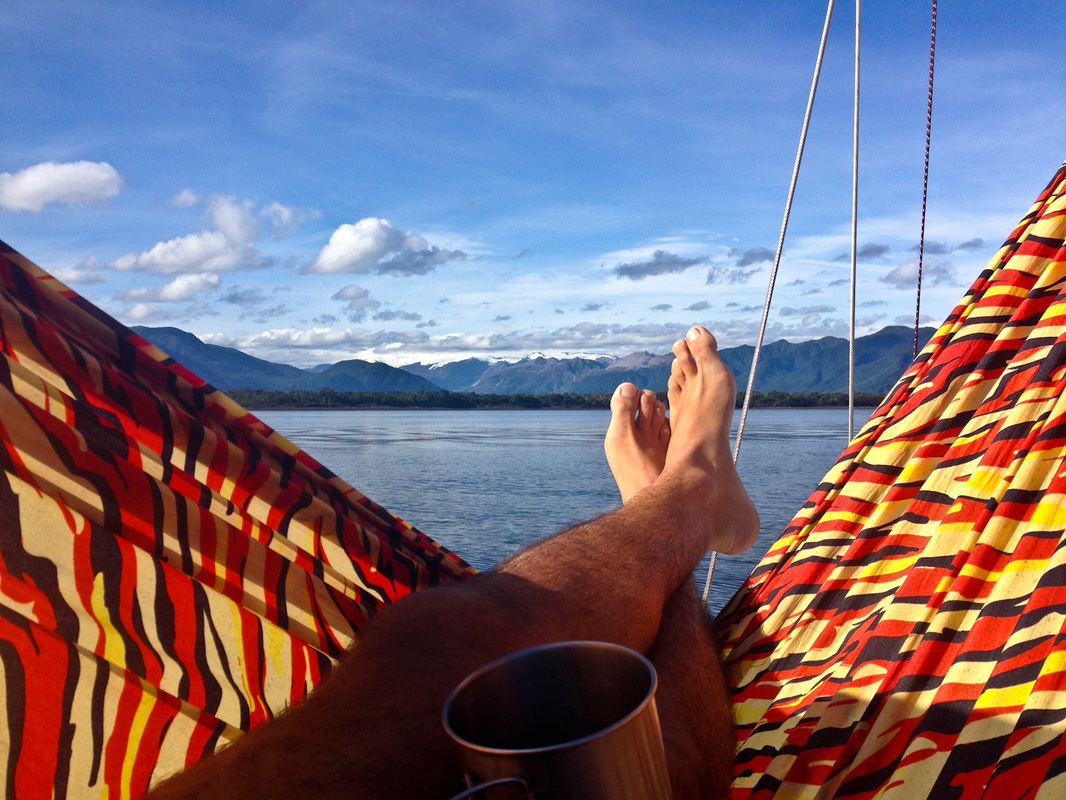
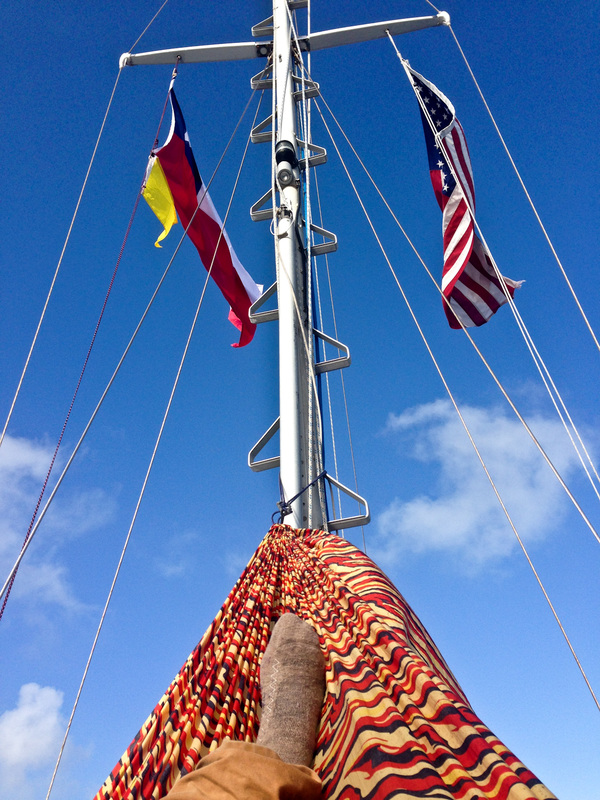
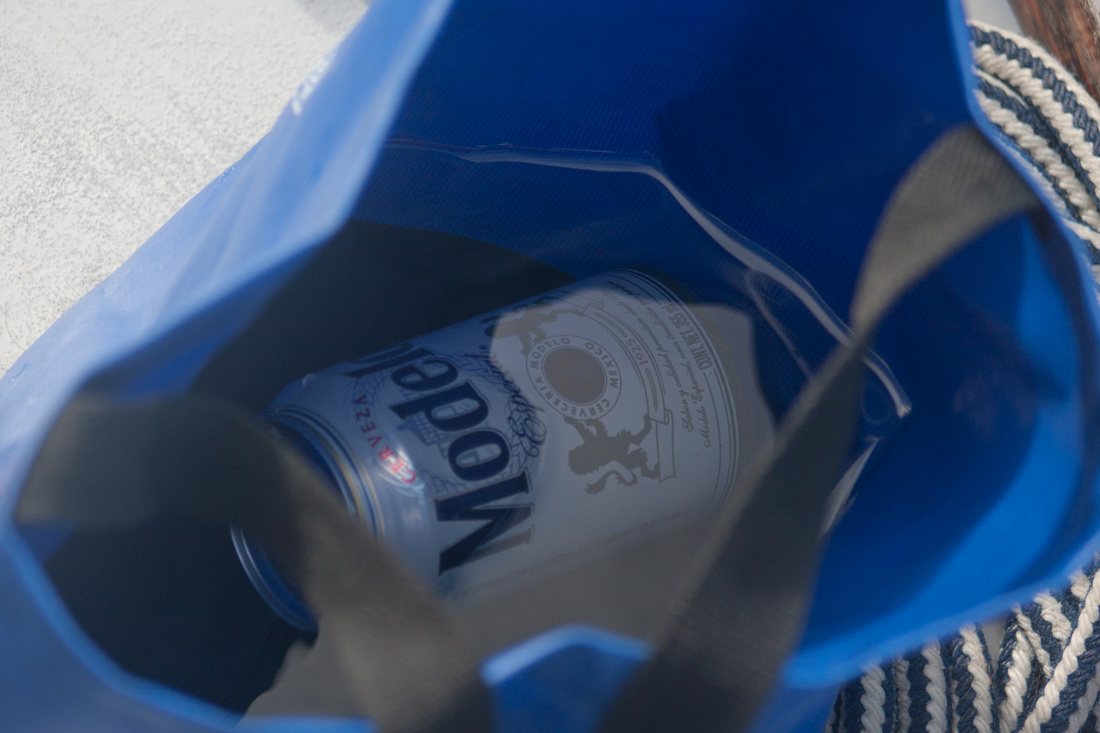
It felt like a million bucks to finally have my anchor dug into Chilean soil.  I had lots and lots of leisure time during the passage, but never absolute relaxation.  I was always on duty to some degree.  That first night at anchor felt tremendous.  I had a little celebration with my last beer, slung my hammock on the front of the boat, and took in a glorious sunset over the farms of Puerto Ingles.  
Picture
Picture
My final beer - chilled in seawater!
Picture
Picture
I slept like a zombie that night and woke up feeling very well rested and ready to tackle the notorious Canal Chacao.  Canal Chacao is a narrow channel that runs between the Chilean mainland and the huge island of Chiloe.  It drains an enourmous portion of inland water, and its narrow width coupled with 20 ft tidal ranges means that currents can often exceed 8 or 9 knots!  Thats obviously much faster than the Rascal can go, so I knew I needed to get my timing just right.  The proper flood tide came midway through the following morning and I pumped up the superhighway (to use for auxiliary propulsion if the engine had issues during the transit), pulled up anchor and started heading towards the channel.

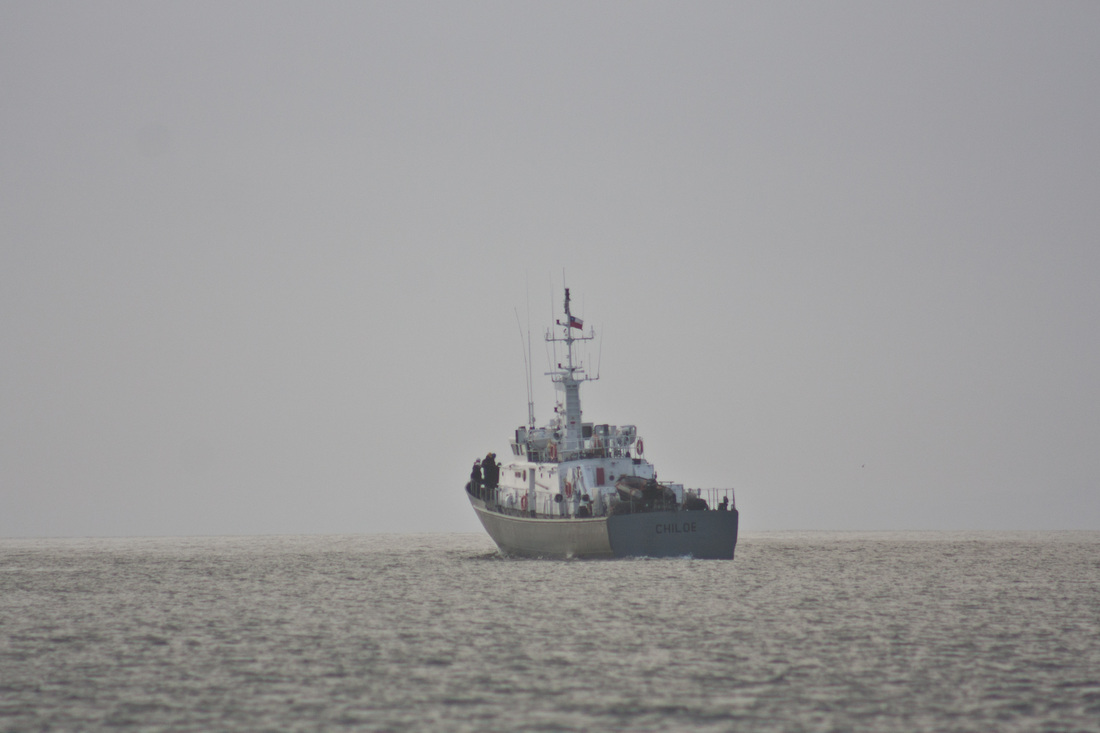
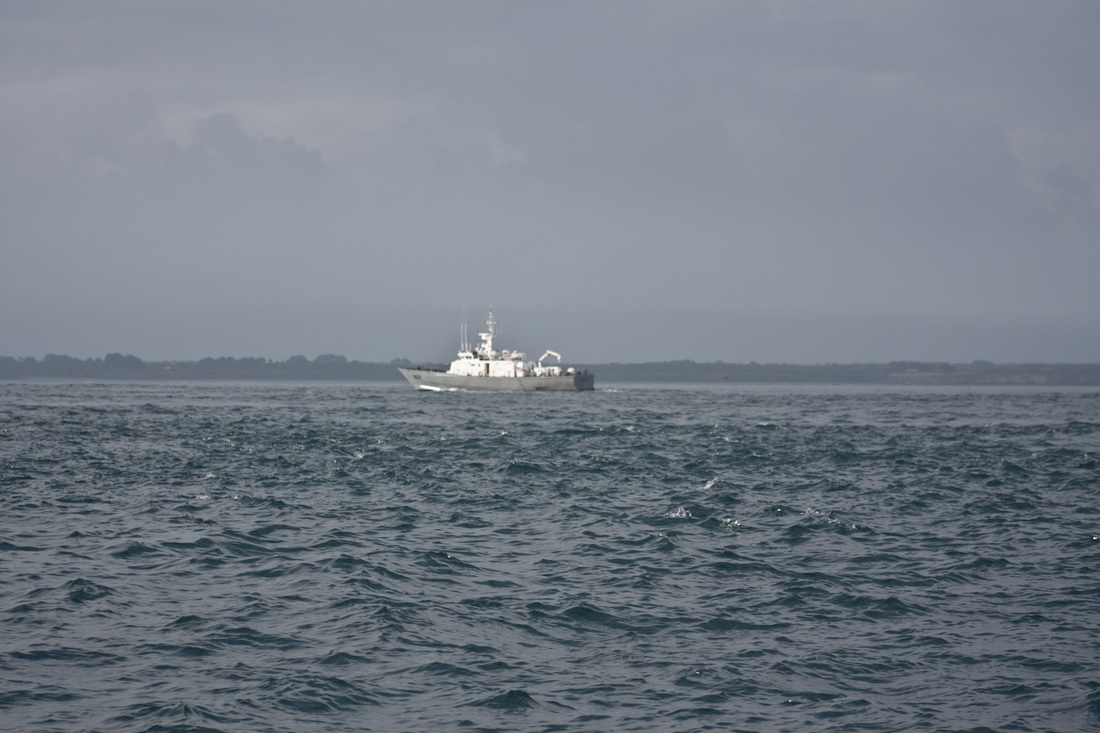
For a country that hasn't fought any wars in a very long time, the Chilean Navy (called "La Armada" which literally means "The Armed") has a very substantial presence.  True to form, just five minutes after leaving the anchorage, I found an Armada gunship across my path and heard a hail on the radio.  I fumbled my way through a spanish explanation of my situation, who I was and where I was going.  It is a requirement for all foreign yachts in Chilean waters to check in with the Armada twice a day via radio, if possible.  They were very polite and efficient and I continued on my way towards the neck of the channel.
Picture
When I started getting close to the entrance to the channel, I saw my speed increase and the water started swirling around the boat, just like you see at the head of a rapid while you're whitewater rafting.  The water was starting to pull in towards the canal and it was swirling with the water of the bay around Ancud.  Even though there was no ocean swell in this area, the water was whitecapping with the speed of the current.
Picture
Picture
The transit of the channel ended up being much more casual than I expected, though the Rascal managed to get up to 10.2 kts around Roca Remolinas where it gets narrowest.  No large waves ever developed, I had a nice light wind, and there were even sea lions playing around the boat!
Picture
I alternated between sailing and motorsailing throughout the day, with generally cloudy weather, but a few breaks of sun.  I was really eager to get to Puerto Montt as fast as possible, but knew I'd never be able to manage it until the next day.  
Picture
I passed through a bunch of small islands and saw a few little towns scattered through them.  The land and terrain reminded me a lot of the Canadian Marritimes that I went camping in as a kid.  Small, green, hilly islands - alternating between green pastures and evergreen forests that were really reminsicent of Nova Scotia.  It was also pretty similar to the San Juans - the cruising grounds that I learned to sail in a year ago!

There were lots of fishing boats working back and forth as well as some cargo carriers headed into the islands.  I also got my first tastes of the salmon and mussel farming that is such an enormous part of the economy along the Chilean coastline.  
Picture
Picture
I soon came to the relatively large town of Calbuco and was somewhat astounded to see so many houses and people after more than a month at sea.  
Picture
Picture
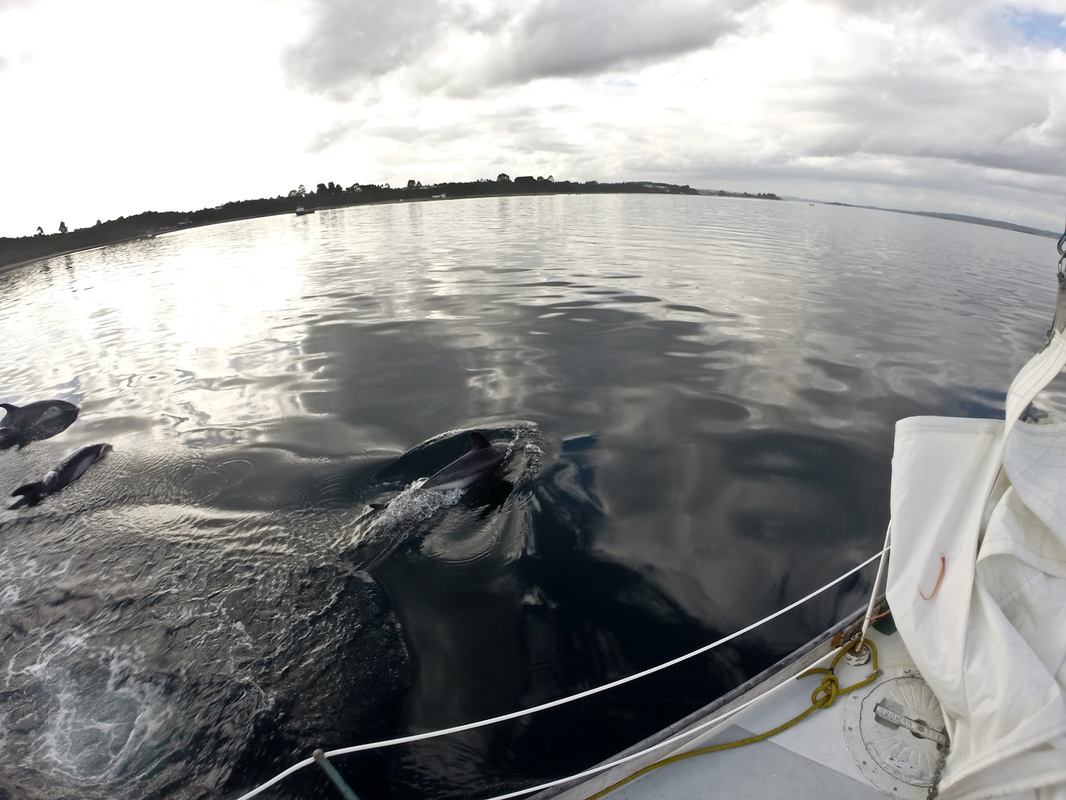
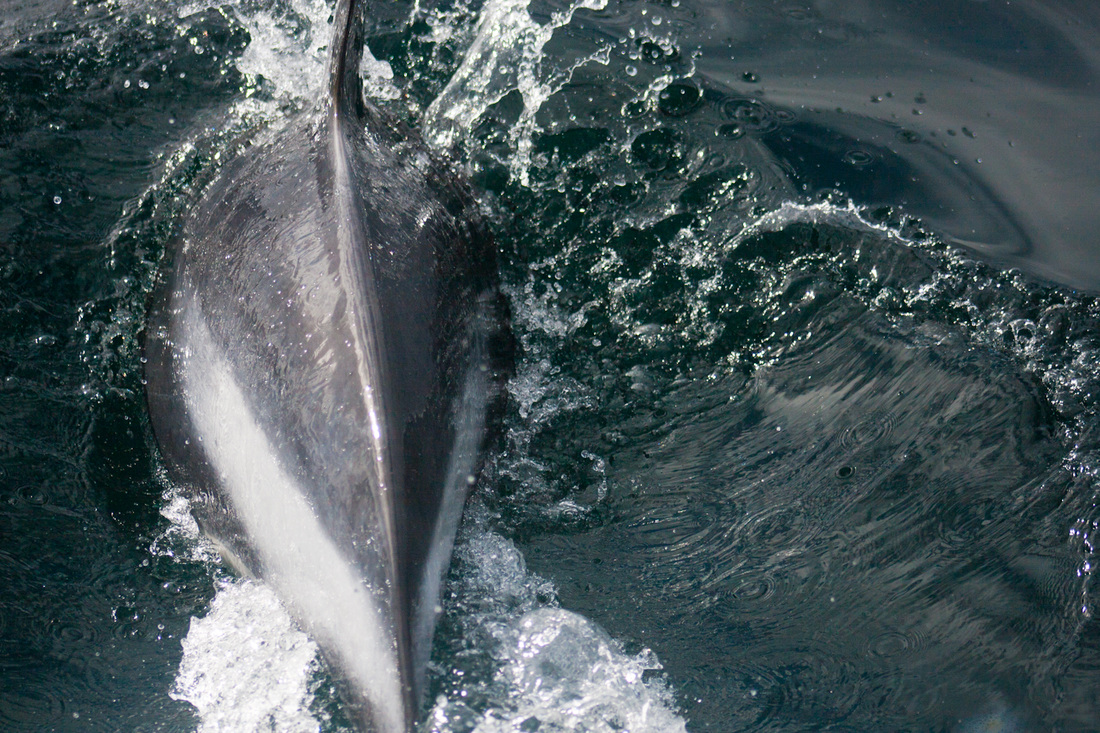
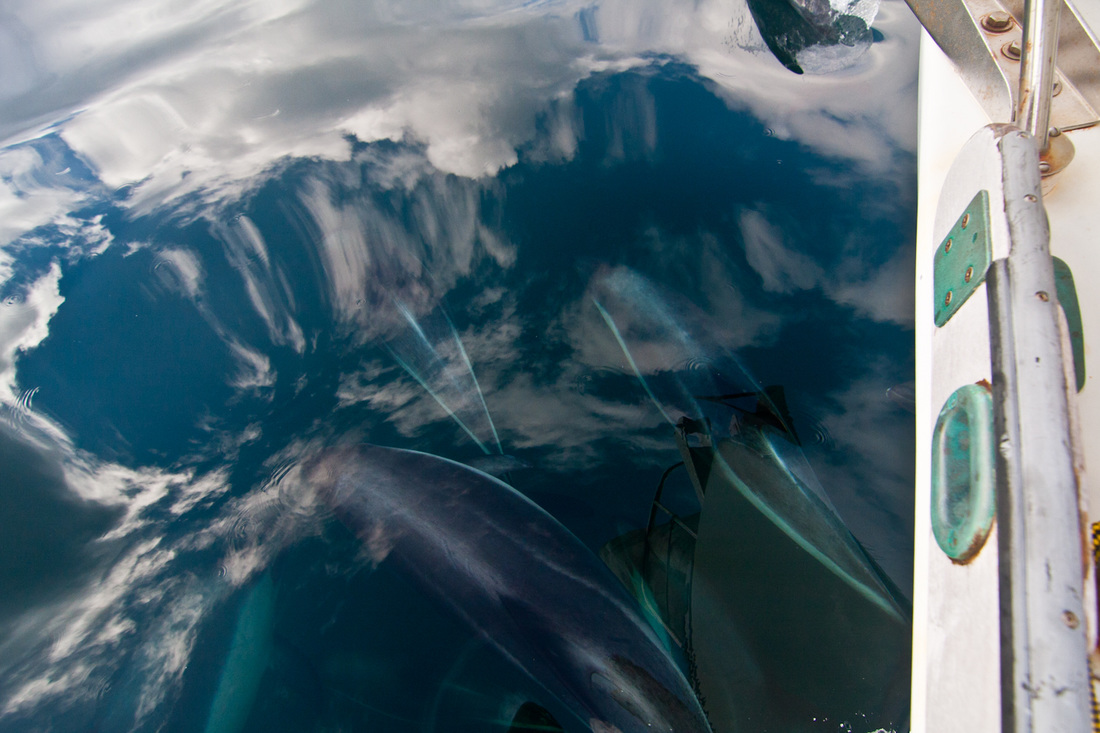
I had just passed Calbuco when I heard a splash behind the boat.  I turned around, and to my surprise, I was greeted by the Chilean Welcoming Dolphins!
Picture
Picture
They were frollicking their little hearts out and raced their way up to the front of the boat to play in the bow wave.
Picture
Picture
They zipped and whirred in front of the boat for nearly a mile and it was an absolute joy to have such a friendly, playful creature to interact with after the lack of animal life in the South Pacific.  
Picture
Picture
Picture
Picture
I continued twisting and turning my way through the islands until sunset and anchored in the lee of Isla Huelmo to give myself a short sail to Puerto Montt the following morning.
Picture
Picture
Checking In
I pulled into the marina around noon the next morning after a short sail and a quick tidying of the boat, and I was immediately met on the dock by a pair of friendly smiling faces!  I was unsure of the direct Galapgos to Puerto Montt route in the beginning, but another sailor in the Galapagos had put me in touch with Clint and Reina on S/V Karma who had completed the sail just before me.  They had sent me a bunch of info before I left (that was encouraging enough that I decided to sail the direct route) and they happened to be in the marina in Puerto Montt when I arrived!  It was my first time talking with people in 37 days and it felt great to be back in civilization!  It was also great to be meeting them in person for the first time after all the great advice they gave me for the passage.  

I went up to the marina office and started the proceedure of checking into Chile.  You need to wait on the boat until customs, immigration, agriculture, and the armada officially allow you to enter, but my friends on Karma offered me a cold beer and waiting around for an afternoon isn't such a big deal after waiting around for 37 days, especially when you're drinking an ice cold Escudo!  I also had internet, so I was able to get in touch with my friends and family via skype.  All of the government officials that came out to the Rascal were very efficient and friendly and several of them struck up conversations and asked me questions about myself and the voyage. 

It was around 9pm before all of the officials  were done checking me in, and one of my marina neighbors invited me over for a glass of wine.  Richard had all sorts of great stories and info for me.  He just recently transited the northwest passage (sailing around the top of Canada!) and is planning to sail his red steel schooner down to Antarctica.  Clearly there is a different caliber of sailor down in Chile!

Puerto Montt
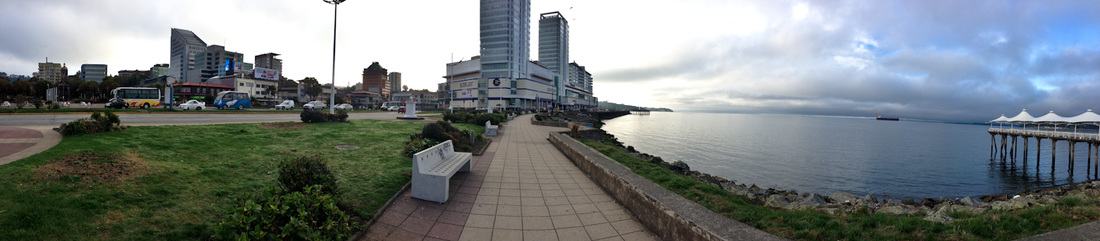
I took the bus into town the following morning (a man I met at the marina gate let me borrow bus fare to get to the bank!) and I finally got my first taste of Puerto Montt.
Picture
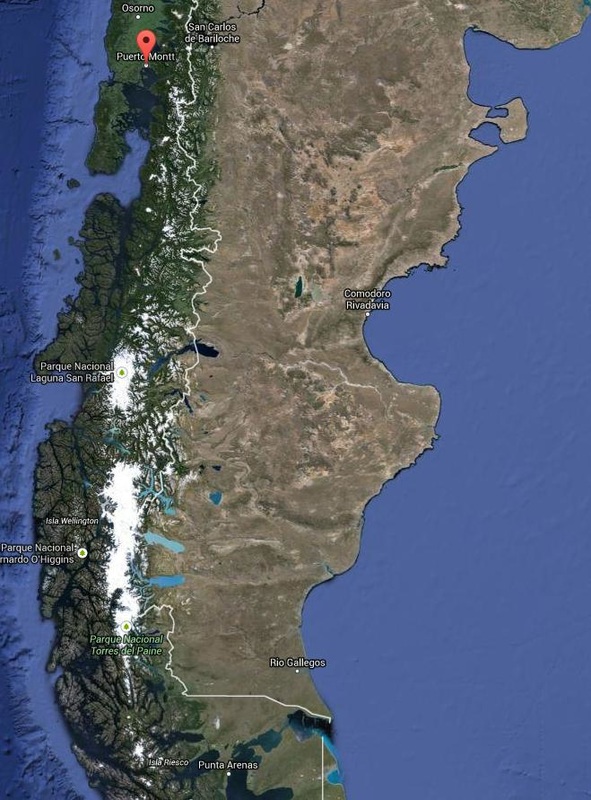
Chile is a very very long country, more than 2300 nautical miles as the crow flies from the Peruvian border to Cape Horn.  For some perspective, this is the same distance from Sitka, Alaska to Cabo San Lucas, Mexico.  The climate varies greatly from north to south, with exceptionally arid desert in the north and glaciers in the south.  The northern half is a fairly featureless coastline, but the southern half is all islands and fjords with lots of narrow channels and tall mountains.  Because of the rugged climate and terrain, the southern half is sparsely populated and Puerto Montt is the last big town.  Thus, the entire south half of the country depends on Puerto Montt for food, building materials, transportation, and a huge host of other things.  It’s truly the gateway to Patagonia.  
Picture
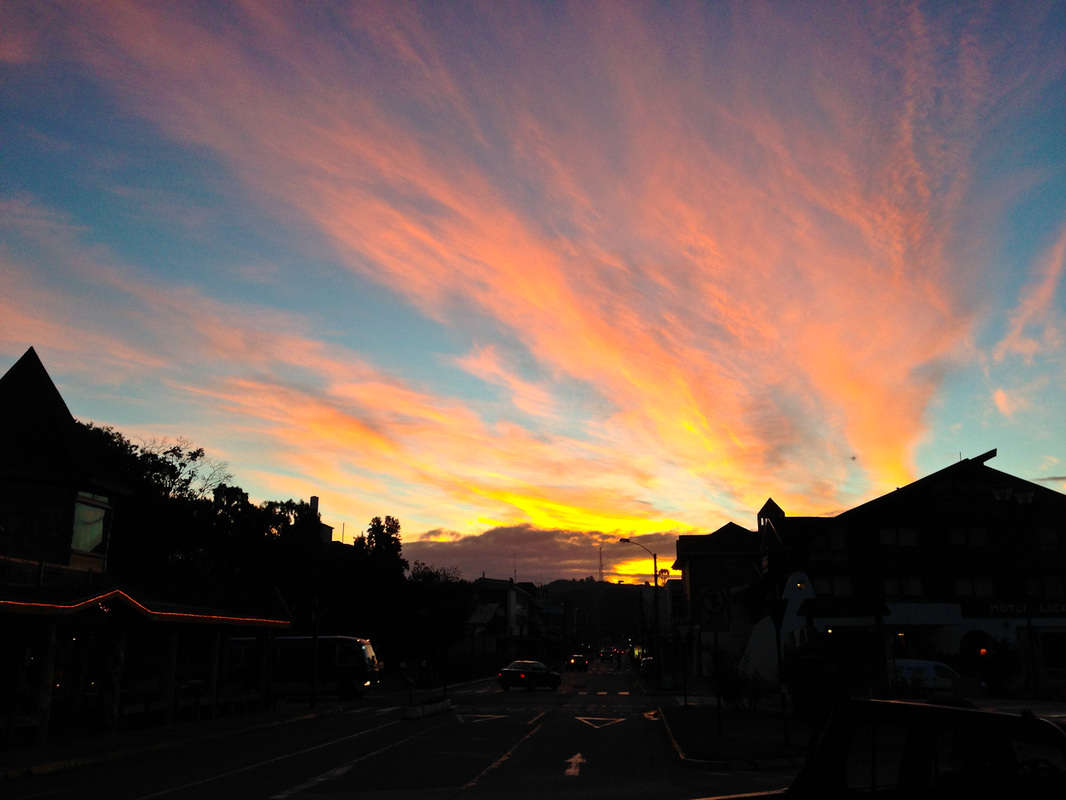
This part of Chile was settled by lots of Germans and the city of Puerto Montt feels kind of like a cross between Bavaria and Mexico.  There is a good bit of German architecture and the butcher shops will knock your socks off.  At the same time, it has a decidedly Latin American flair, as the markets and music will attest.
Picture
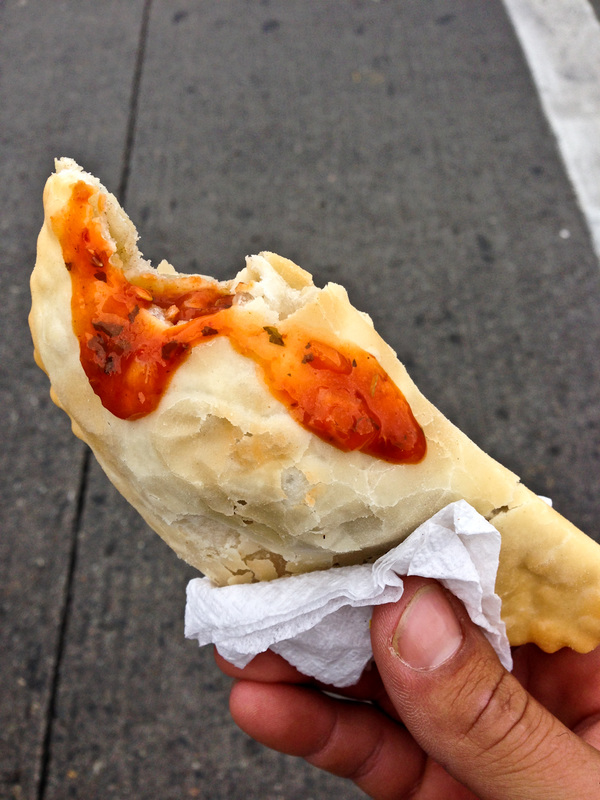
I walked around town for a couple of hours, looking into shops, exploring markets, and perambulating along the waterfront.  I dove into street food with reckless abandon and had more than my fair share of empanadas that morning. 
Picture
As I started to make my way back towards the marina, I noticed that my feet were starting to hurt really bad.  I was stricken with a case of “sea legs” that would plague me for the next couple of weeks.  My feet and legs had atrophied very severely during 37 days at sea.  I paid a heavy price for that first morning jaunt, and I couldn’t walk more than a couple hundred feet at a time for a week afterwards.  It felt like both of my feet were cramping all the time and I was worried I had thrown a blood clot or something.  They’ve since slowly come back into shape.  I think plenty of red meat and hiking has been good for them!
During those first few days, Clint and Reina really took me under their wing, showing me all sorts of shops around town, introducing me to super helpful people, and answering a huge host of questions.  One night, we went to visit some Italian friends of theirs that are cruising around on a gorgeous catamaran.  The dinner was spectacular, with homemade bruschetta, glorious Chilean wine, and some Italian empanadas that were to die for.  I’ve gotten to hang out with the Italians and their Australian friend several times since then and I’m hoping to do some cruising with them later this winter.  They’re all really warm, welcoming people.  
Picture
S/V Karma heading for Chiloe
They also introduced me to Raul, a Chilean sailor I’ve been spending almost every day hanging out with.  Raul has had dozens of different businesses over the years, from leading tourist trips down to the glaciers to inspecting salmon farms with an underwater robot.  He is fascinating to spend time around, and he is always explaining little bits of Chilean culture and history.  For instance, did you know that the town of “Aysén” is a corruption of the English “ice-end” because it’s where the glaciers stop showing up along the coast?  He is a wealth of knowledge about the territory south of here and has given me all sorts of advice on islands to explore and different anchorages to check out.  Raul has a vast library of guides and charts of the south and he has been super generous in letting me borrow whatever I want.  He is even letting me use his mooring in the channel, a 3000lb steel anchor that keeps the Rascal good and secure!
Picture
Sunset from the mooring
Every day is a great adventure with Raul and he has been helping me immensely with errands around town.  For example, one afternoon Raul needed to collect firewood for his house (the vast majority of Chileans heat their homes with wood) and he knew I needed some for the Rascal as well, so he drove by the mooring and picked me up.  We drove first to visit a friend of his who knew where good firewood might be found.  His friend, Mario, invited us in for tea and we spent a little while chatting with him.  It turns out that Mario has a small organic farm and we went out to explore around it.  In the end, he sent us packing with a bunch of fresh tomatoes, cabbages, squashes, and artichokes!  From there we proceeded to down a dirt road into the woods and met up with an old farmer that was quite apparently drunk with his buddies after a morning of drinking ciders.  We loaded up the back of his truck with wood and continued down the road.  We were close to the Italian’s catamaran, so we stopped in there to pick up an outboard engine they’d sold to Raul and they invited us in for tea and interesting conversation, as well!  Finally, on the way home, we decided to stop and grab some delicious beef empanadas from a roadside stand.  What started as a quick run for wood turned into meeting a bunch of interesting people, learning about organic farming, and several tasty cups of tea.  

Over the course of the last two weeks, I’ve been able to fix my engine (reassembled the heat exchanger with the proper seals and rewired the starter with appropriate connections and protections) and I had a new part cast and machined for the tiller.  There were also a handful of other little projects around the boat, including a malfunctioning auto pilot that was fixed simply by laying out in the sun – a prescription that has been enough to fix me on a number of occasions. 
Picture
Picture
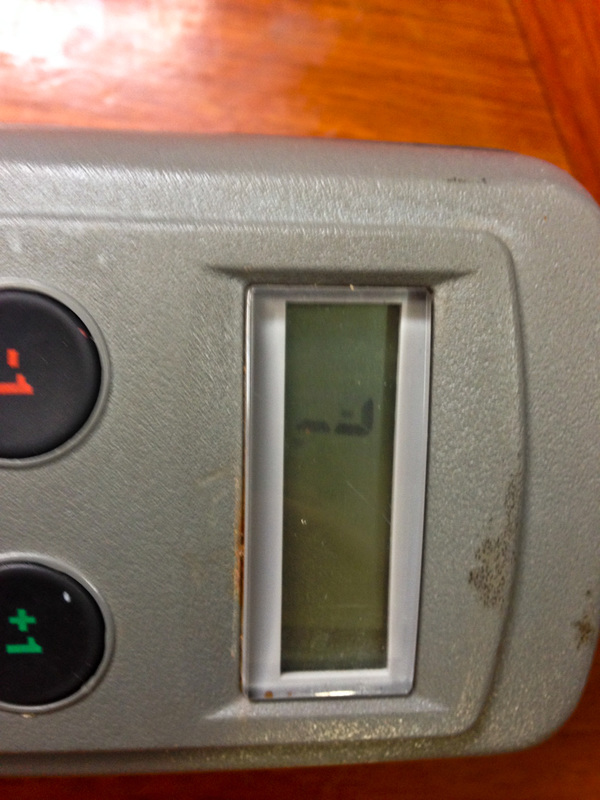
The autopilot story is pretty classic, so I figured I ought to tell it here in detail (and to help anyone else thats having similar issues in a foreign port with access to the interwebs).  It is the electrical instrument that steers the boat on a magntic course for me while I'm motoring.  Its a Raymarine ST2000+ and it started turning itself off on its own a couple months ago, with the display flashing off occassionally.  It seemed like maybe a loose wiring connection on my part, so I totally rewired the system with great connections and everything heat-shrunk.  I flicked it on to find that the screen was even more garbled than before and it wouldn't respond to any button presses any more.  A quick exploratory search of the interwebs didn't reveal any answers, so I checked to see if there was a Raymarine dealer in Puerto Montt.  The closest was hundreds of miles away in Concepcion.  "Perhaps their call center will be of help," I sarcastically thought to myself.  After holding on skype for 20 minutes, someone picked up.  I gave them my symptoms and they said, "Sounds like the board is bad, better send it in".  This would obviously mean a ton of cash in shipping, months without an autopilot, and I asked if it might be possible to crack it open to troubleshoot it over the phone.  "DEFINITELY DON'T OPEN THE UNIT!" was the resounding answer and I was left with the option of either shipping it back to the states or driving a couple hundred miles to Concepcion where they had no repair services and none of the auto pilots in stock.  "Thanks for your help," I tried to say without too much angst, and I hung up. 

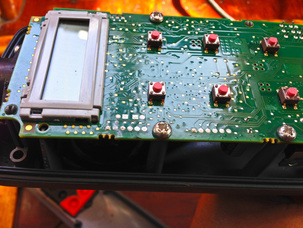
Naturally the first thing I did after hanging up was cracking the unit open.  It was immediately clear that the "waterproof" tillerpilot had a bunch of moisture inside.  I spent five mintues wiping droplets up with a papertowel and set it in the sun to dry.  I assembled it later that afternoon and it worked like a charm - as good as new.  
Picture
7? What does 7 mean?
Picture
Brain surgery
Picture
The soggy compass
I’ve gotten to know Puerto Montt fairly well, and though it can be a little rough around the edges, it has a pleasant authenticity and all the people have been genuine and kind.  I’m glad to have such a perfect home-base for my adventures over the course of these next several months.  
Picture
Picture
Puerto Varas
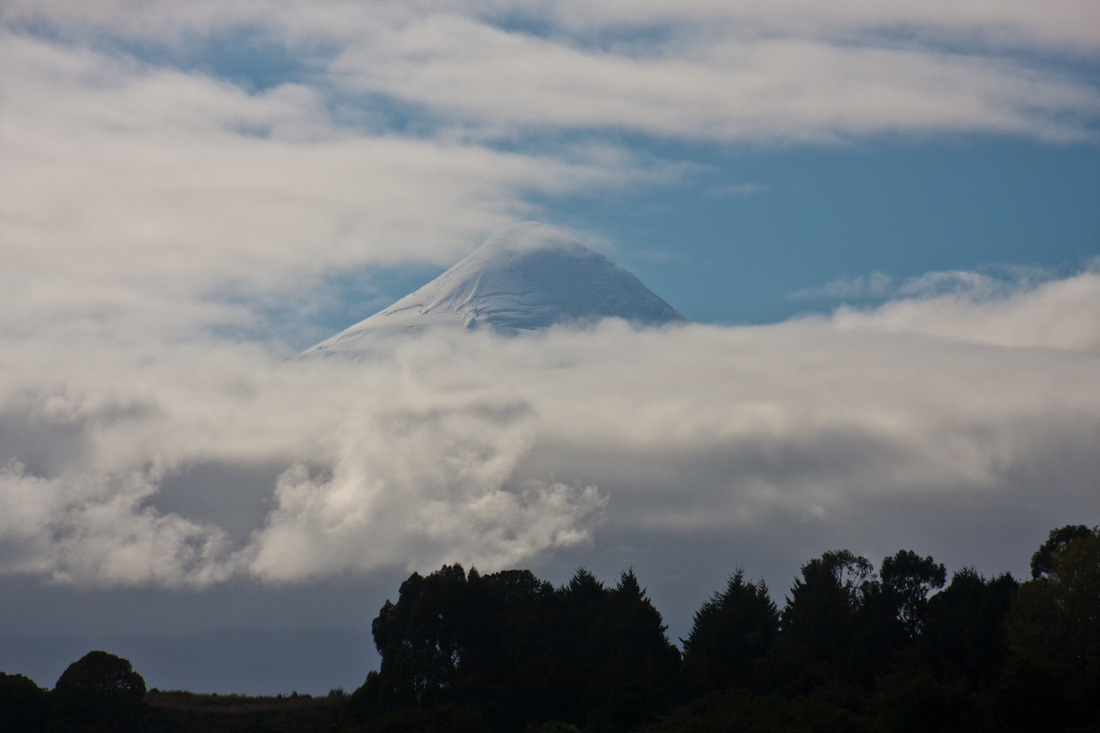
A friend back in the states also put me in touch with a Bucknell grad who has been living down in Chile since we graduated (we were in the same class year, but didn’t particularly know each other back then).  Jess lives in Puerto Varas which is a lovely little tourist town beside a lake that is about a half an hour north of Puerto Montt.  Puerto Varas seems to have even more German influence than Puerto Montt and it’s a very clean, charming town.  From the center of town you can see two enormous volcanoes rising above the lake, Volcán Calbuco and Volcán Osorno.  You’ll hear more about them later!
Picture
Picture
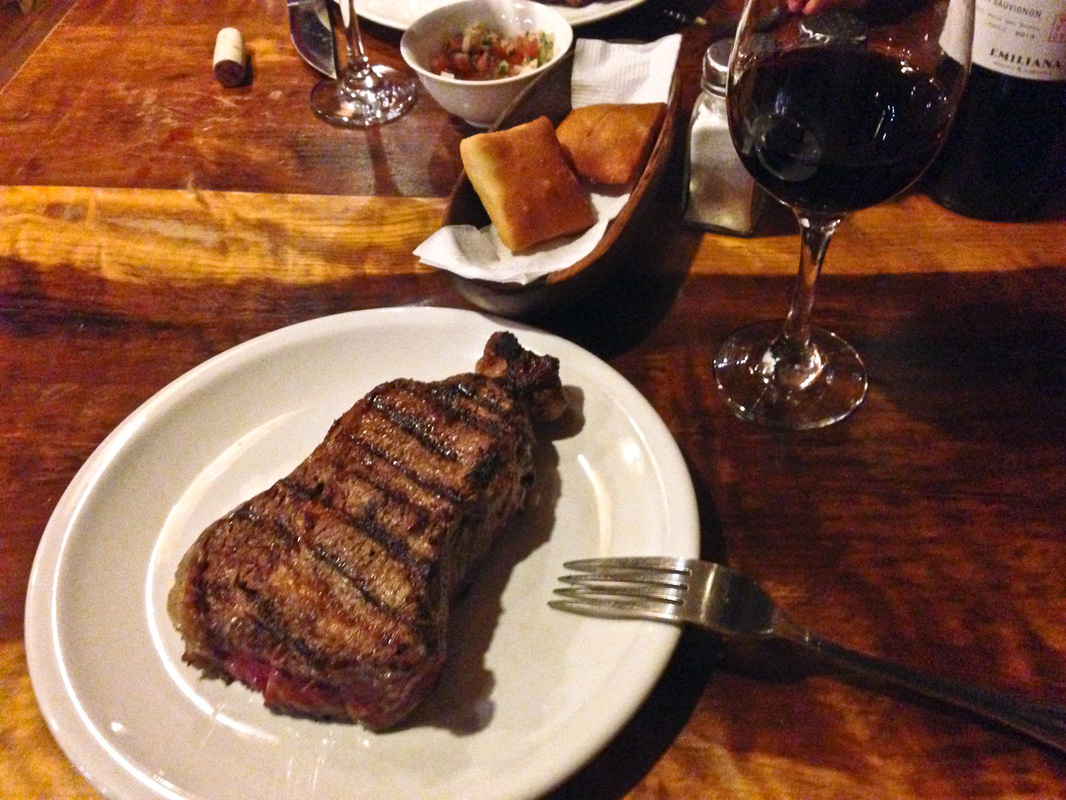
Jess started working for a Chilean startup incubator shortly after she graduated and opened an organic baby food company with a business partner three years ago.  They’re growing by leaps and bounds and they distribute in North and South America, so she spends a fair bit of time traveling.  We met up a few days after I arrived and went out to a nice Chilean steakhouse.  I’ve had more than my fair share of ribeyes over the years (as those that know me will attest), but this one was truly spectacular.  Easily within the top 5 – as you might expect, Chilean grass-fed beef is no joke.  
Picture
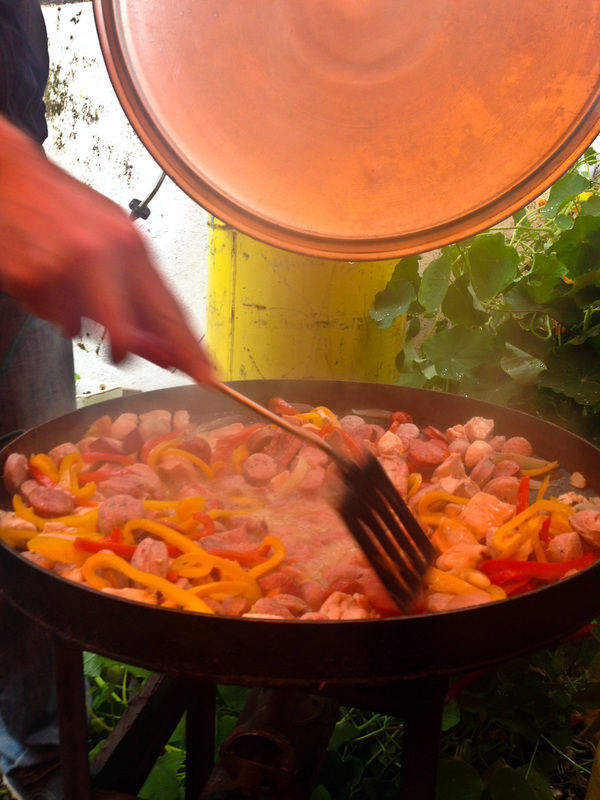
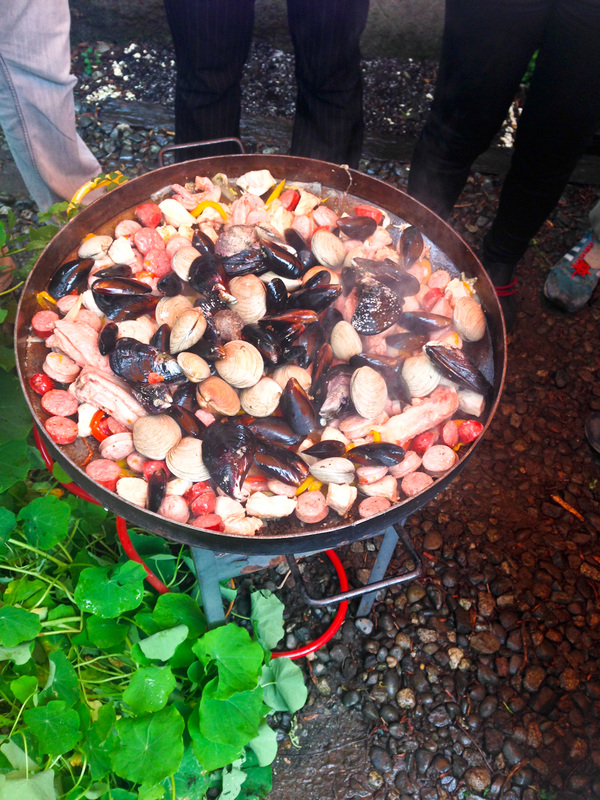
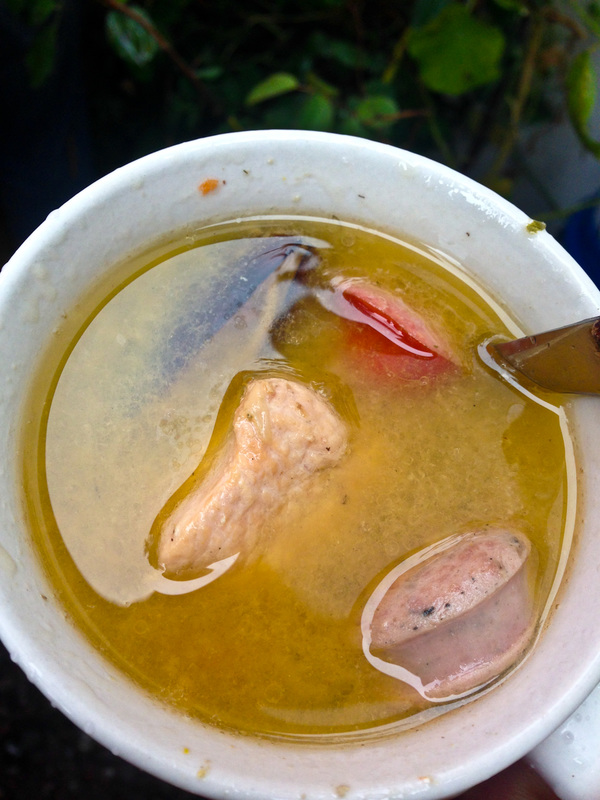
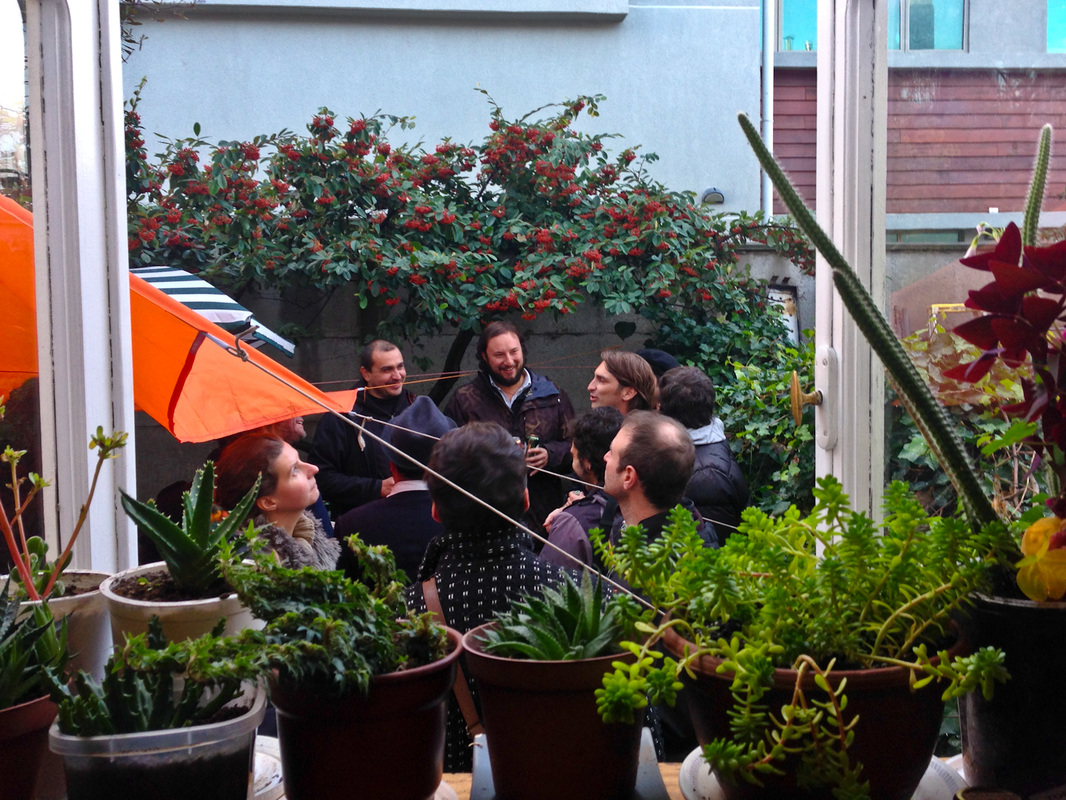
Jess has a wonderful group of friends and she has been kind enough to include me in a bunch of different social functions around town, from pisco sours & an art opening to a big birthday cookout!  I’ve been traveling for so long that I really miss having a solid group of friends and getting to join into the festivities was a blast.  The food at the cookout was next-level and very Chilean from what I’m told.  It started with ribs, chicken, sausage, peppers, and onions all roasting in a huge pan.  Once everything was cooked through and starting to smell delicious, a couple liters of white wine were added and mussels and clams were scattered on top.  As you might expect, the finished product was absolutely delicious and I could easily drink nothing but the broth for the rest of my life.  
Picture
Picture
Picture
Picture
Puerto Varas has a lot of tourism during the sunny summer months and most of it centers on outdoor activities like kayaking or hiking in the surrounding mountains.  The land all around town is green and gorgeous, with a couple little villages tucked between the hills and the lake.  
Picture
Picture
Picture
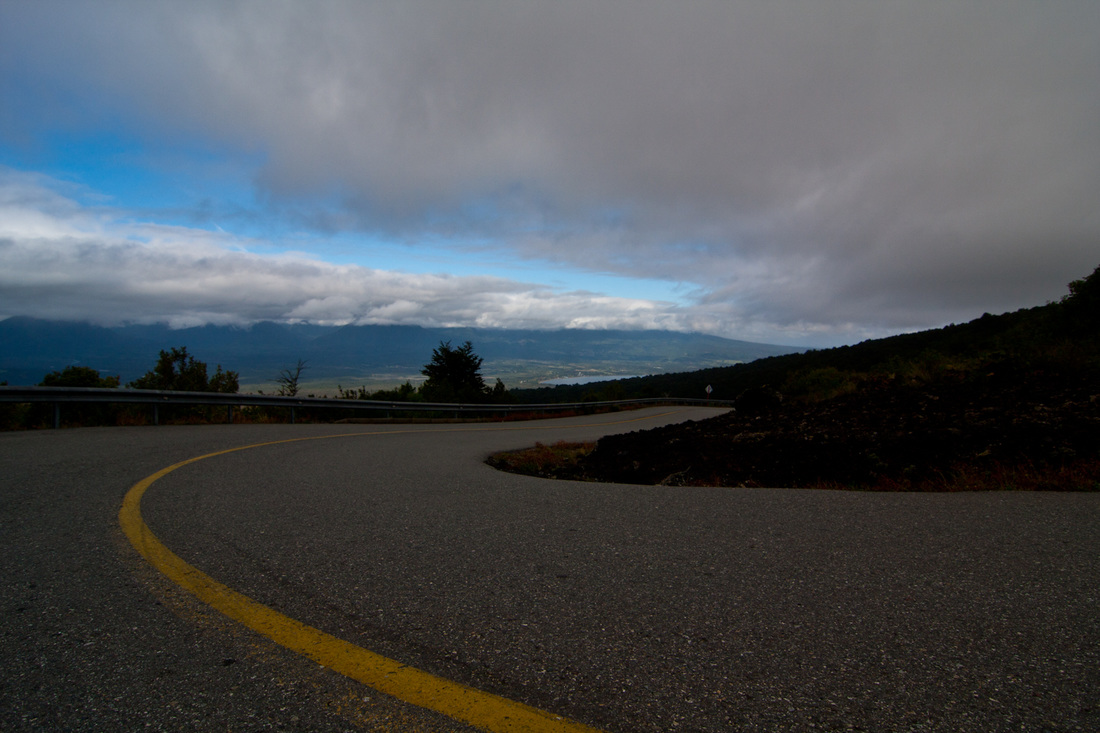
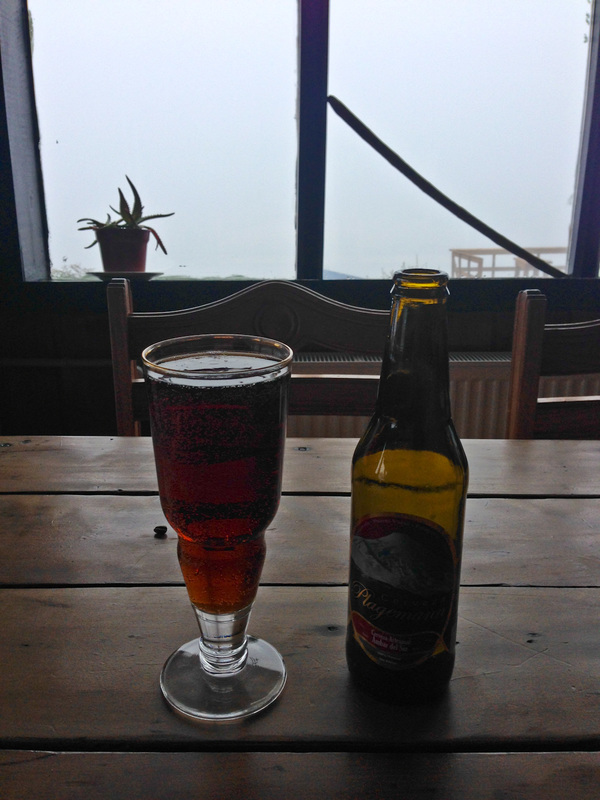
 Jess let me borrow her car one day and I drove up Osorno to do some recon on the ski area as well as a little hiking around.  The forest was absolutely gorgeous with lots of nice views out over the lake, but the top of the volcano was totally shrouded in clouds.  …which was good motivation to stop at a refugio at the top of the road to drink a beer and wait for the weather to clear.  
Picture
Picture
Picture
After some more hiking around in the woods, I worked my way down to a river that runs between the volcanoes and decided I ought to take a quick dip.  Fresh water is something of a novelty at this point, and I’ve got to take advantage whenever I can!

Picture
Picture
The Eruption of Volcano Calbuco
I’d been searching for some way to try and help repay Raul for his kindness and one day he let slip that he’s “getting too old to chop wood”.  I happen to love splitting wood, so he gave me a ride to his house one afternoon and I went to work on the pile.  While I was chopping, he told stories from his time sailing around in the south and blended up a couple of fresh orange juices.  Incredible.

After everything was split down to a manageable size, we went inside and started perusing his vast library of nautical charts.  He kept pulling out new charts, browsing over them for a few seconds and then he’d let out an exclamation, “Hey! Look at this island - it has a hot springs right next to the anchorage and towering Alerce trees!” I sat there taking notes as fast as I could and making sure to mark all the best fishing places and anchorages that were free of ice bergs.  “My friend Heinrich lives on this peninsula and you can hike up into this canyon with the fisherman’s son!”  On and on these inconceivably spectacular tips flowed, until Raul’s daughter piped up from the other room.  The volcano was erupting. 

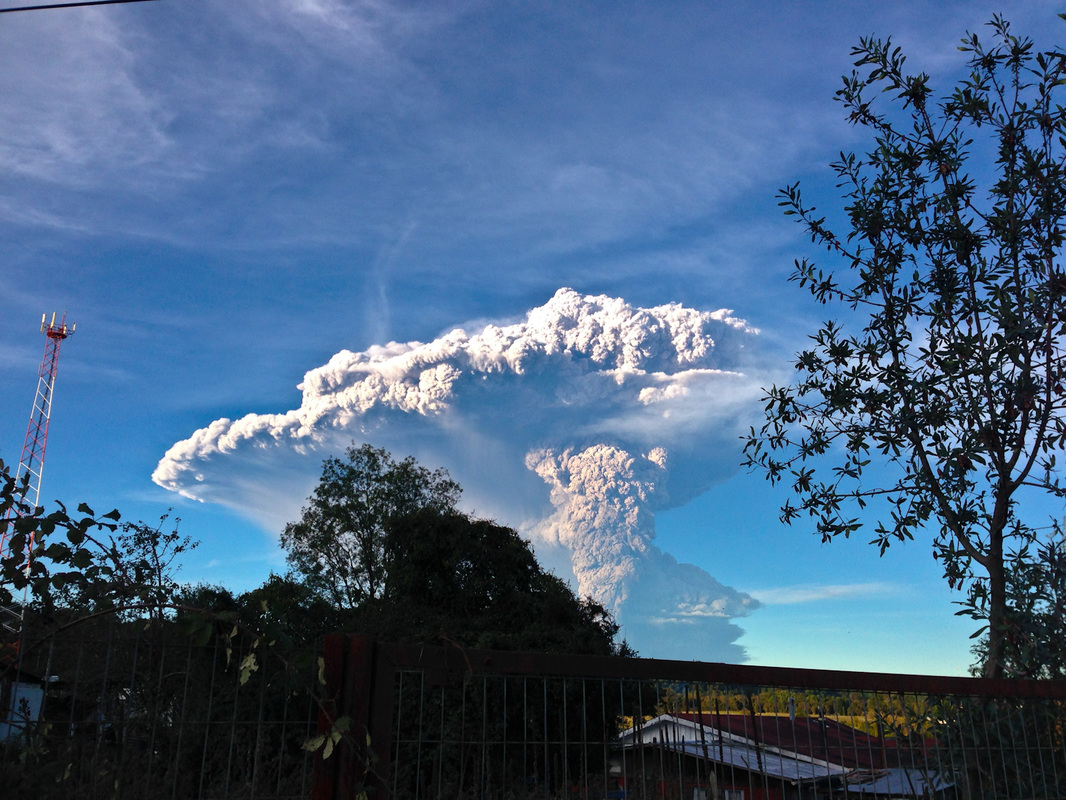
We all looked out the window our jaws dropped.    
Picture
Already people were streaming out into the street.  Dogs were barking, people were staring up at the sky, cameras were flashing, and we were staring in awe.  I looked over at Raul.  Raul looked over at me.  “This looks like a big one, huh?” I asked.  “Yes,” he said, “This is a big one.”

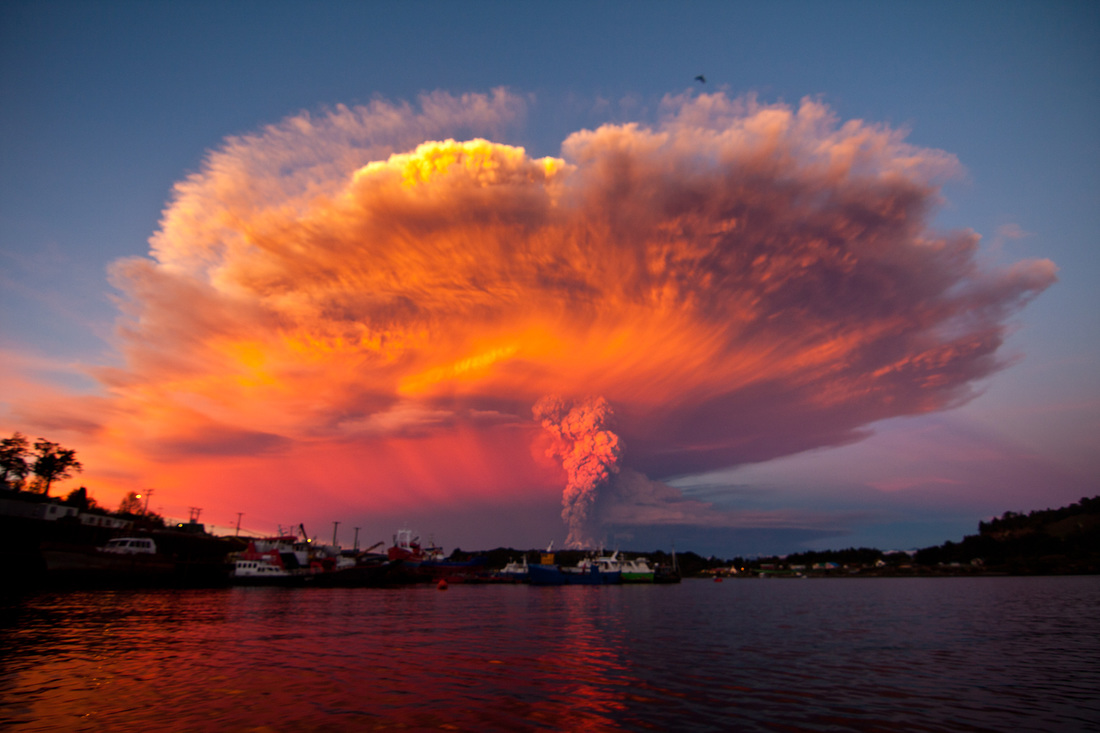
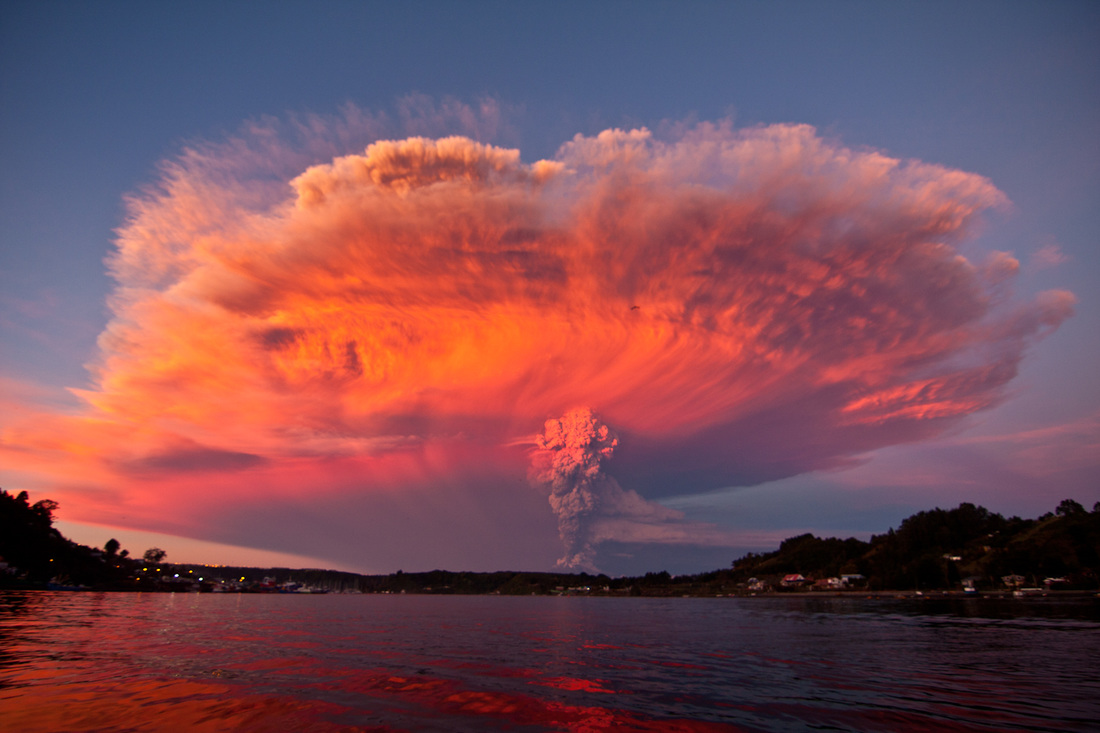
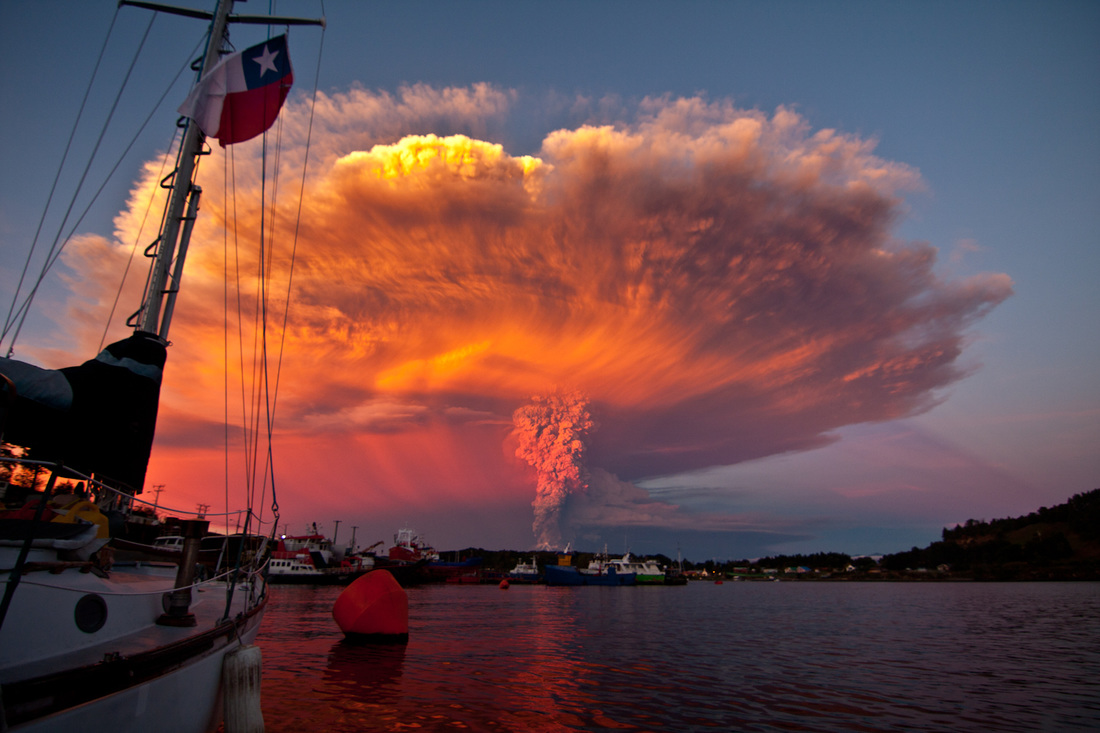
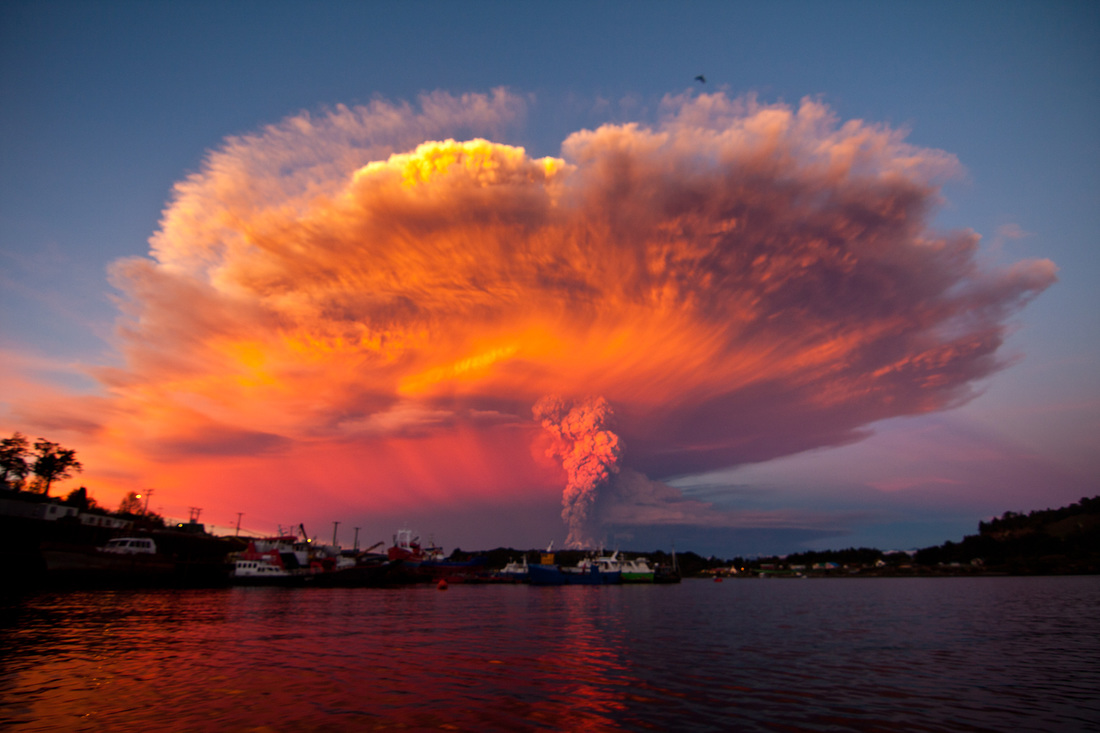
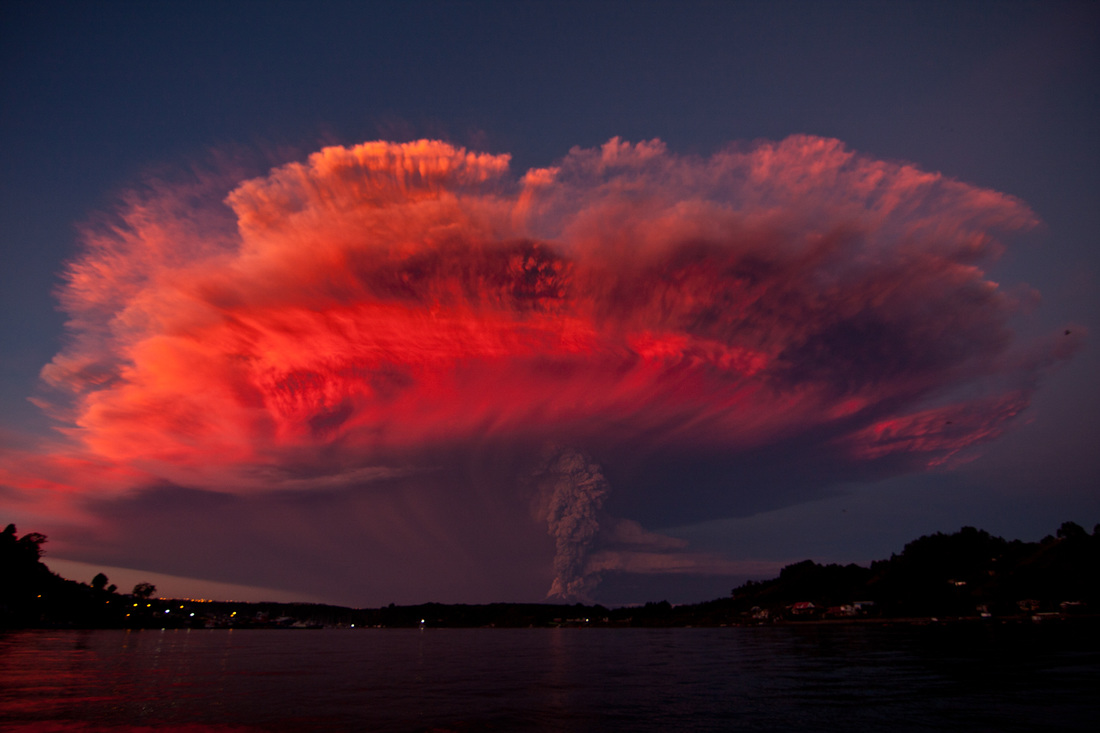
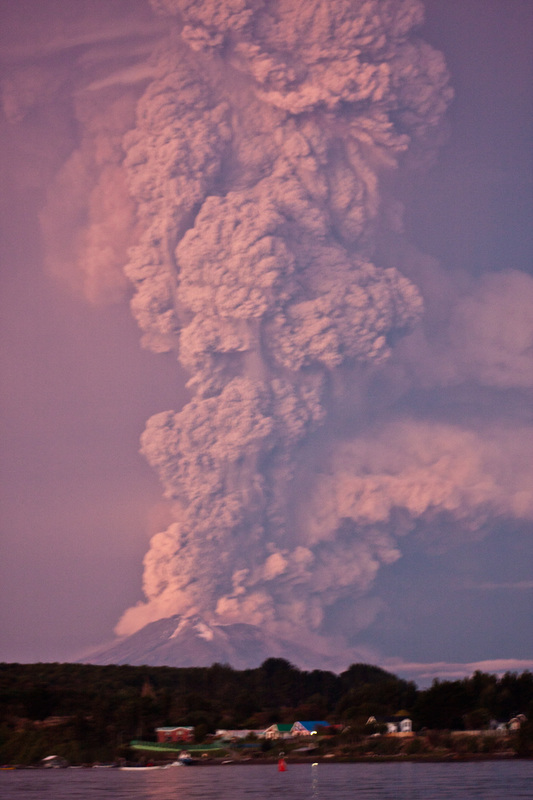
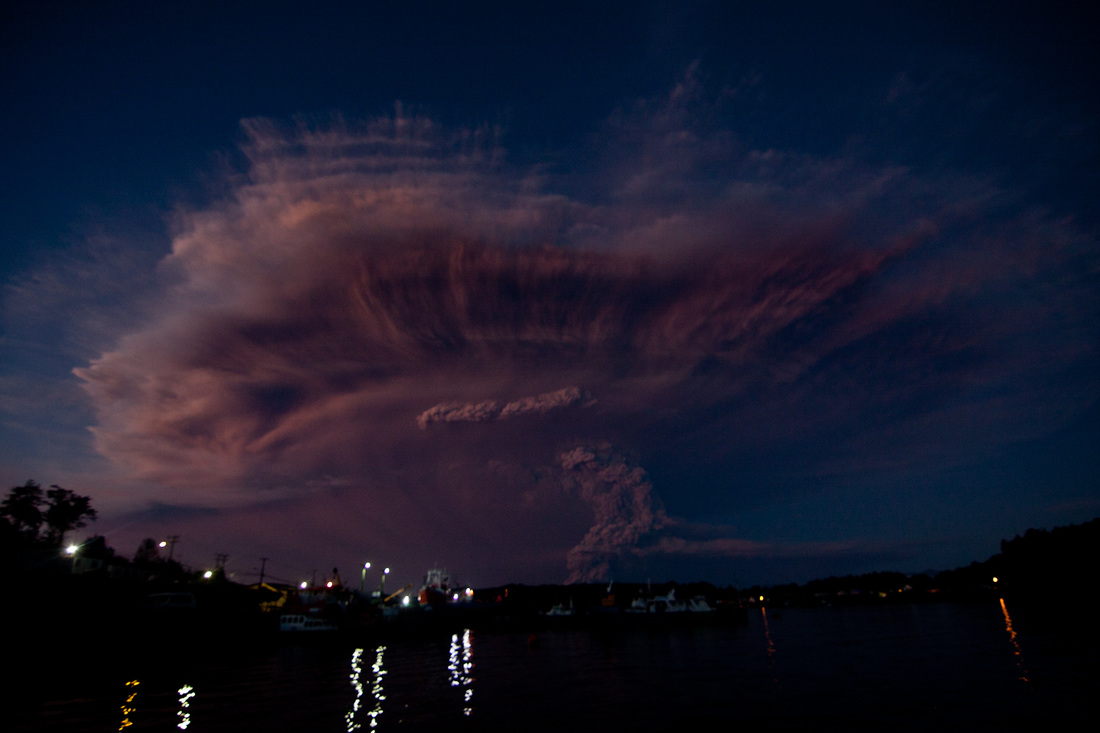
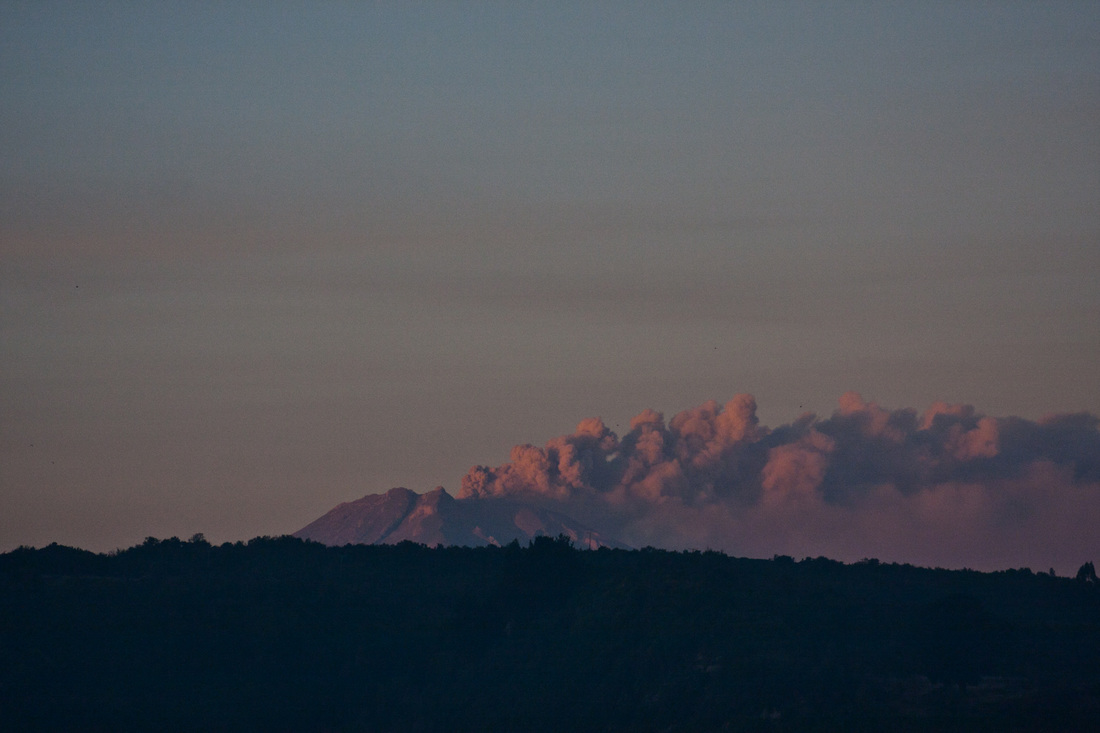
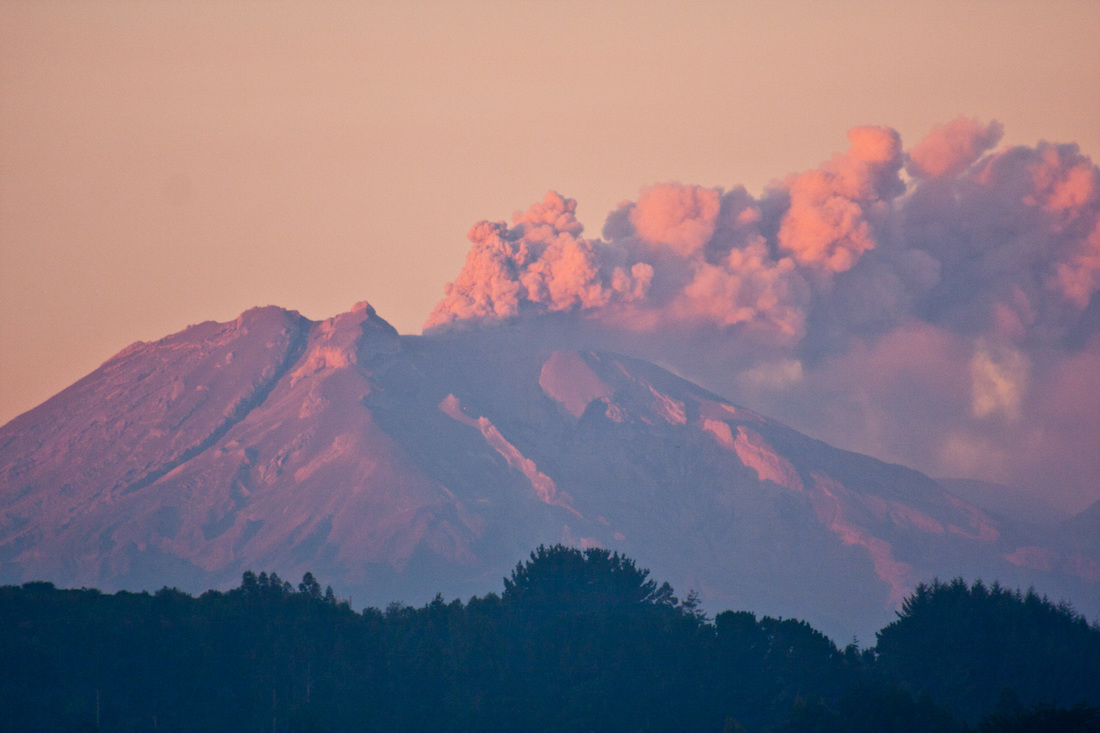
I’d like to think I’ve seen a fair bit of nature in the past year of sailing, but I everything else paled in comparison with this.  It was so enormous and felt so totally and completely powerful.  Volcano Calbuco was about 20 miles away, yet we could see the ash billowing up as if the peak was right on top of us.  Once it hit a certain height, it spread out, and was starting to look something like a mushroom cloud.  

Raul made a really poignant comment to the effect of, “In the eyes of the volcano, everyone is the same and everyone is nothing.  Fishermen, politicians, welders, policemen, and beggars are all humbled in the face of a force as strong a volcano or an earthquake.”  It’s interesting the way a natural disaster like that can erase the differences between men. 

Raul decided the safest place for them was on his boat and they dropped me off on their way to the marina.  My tiller was still in the shop at this point, so I knew there was no quick way for me to sneak out of town.  I grabbed my emergency ditch bag and zipped out in the Superhighway to start taking pictures just as the sun was beginning to set.  The entire mushroom cloud of the eruption lit up and slowly changed colors as it built and expanded.  Flashes of lightning continually danced around the base of the column.  It felt, for an instant, like I was transported back to some ancient time, where the earth was still being formed and dinosaurs were roaming around.  Everything about the scene was unreal. 
Picture
Picture
Picture
Picture
As the sun continued to set and the colors began to fade, my mind shifted gears and I started planning for the next few days.  I figured I'd potentially need fuel and I had to find a way to steer the boat without my normal tiller.  I zipped off towards the marina to fill up jerry cans.  
Picture
The radio was humming with reports of the eruption and thousands of people were being evacuated from around the base.  Westerly winds dominate in this part of Chile and a peek at the forecast showed that we would be safe from any falling ash for at least a few days.

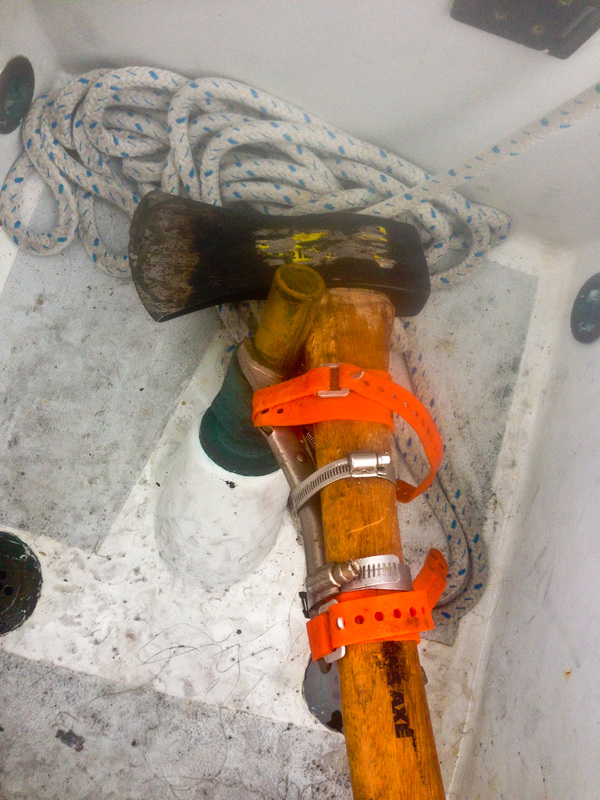
I got back to the boat as night was falling and I got to work rigging an emergency tiller with an axe, some vice grips, and a few voile straps.  MacGyver would've been proud!  It was ugly, but it was enough to steer the boat.  
Picture
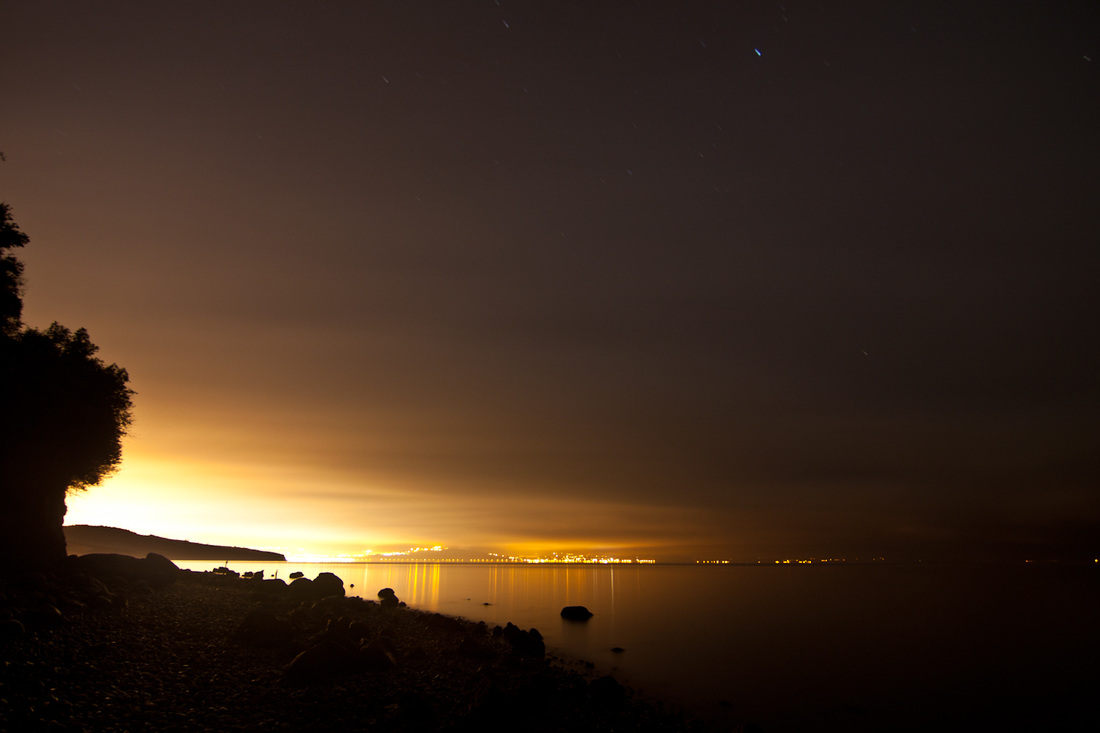
The eruption eventually stopped shortly after sunset, but the enormous cloud of ash still hung high in the sky and continued branching out as the night went on.  I went to bed around 1am and missed the second eruption (which apparently had lava flinging into the sky, and substantially more lightning - the pictures online are incredible!).  I woke up around five and went out to the other side of the island to try and get some long exposure shots of whatever was left.  You could see a bunch of suspended ash and cloud hovering above the lights of Puerto Montt, but not much else.  
Picture
A morning fog slowly descended on Puerto Montt after that and we didn't get a view of Calbuco until that afternoon.  She was still quietly belching ash and smoke into the air, but wasn't nearly as menacing and awe-inspiring as she was during the initial eruption.
Picture
Picture
As of this writing, she continues to slowly expel more ash and smoke and there are no signs of her slowing down (nor signs of another large eruption).  
Picture
Picture
As days went by, they eventually began to let those that'd been evacuated back into their homes.  There was rain in the forecast in a few days and with the heavy load of ash that had fallen, rain would be a death sentence to any roof that hadn't been cleared yet.  Insurance is very uncommon in Chile, so when a roof caves in, families loose everything.  Out in the country, lots of folks are just struggling to make ends meet.

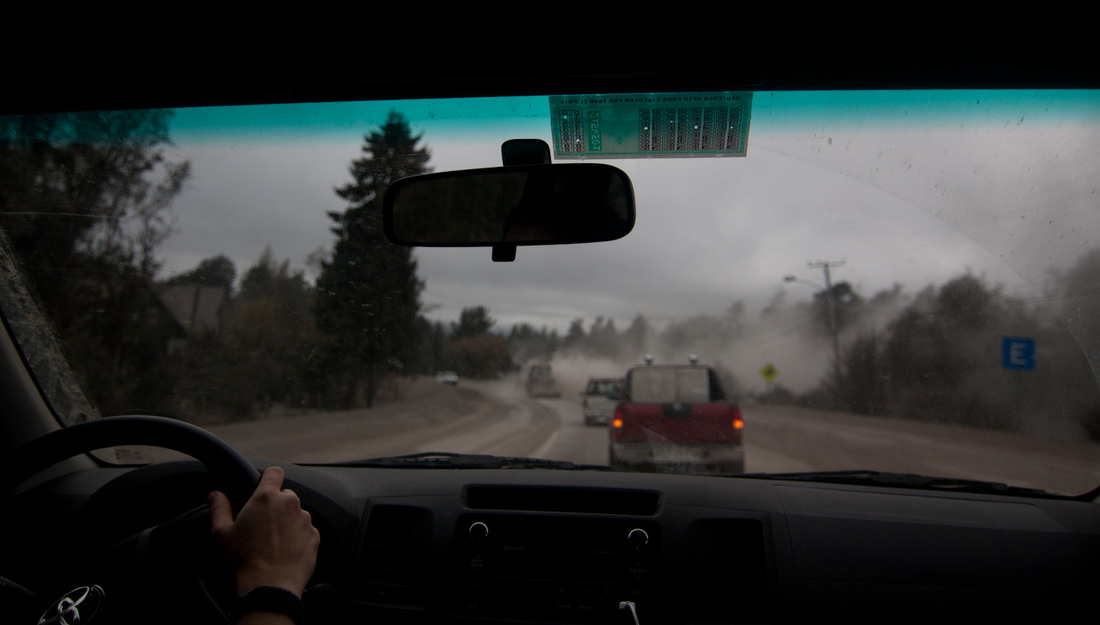
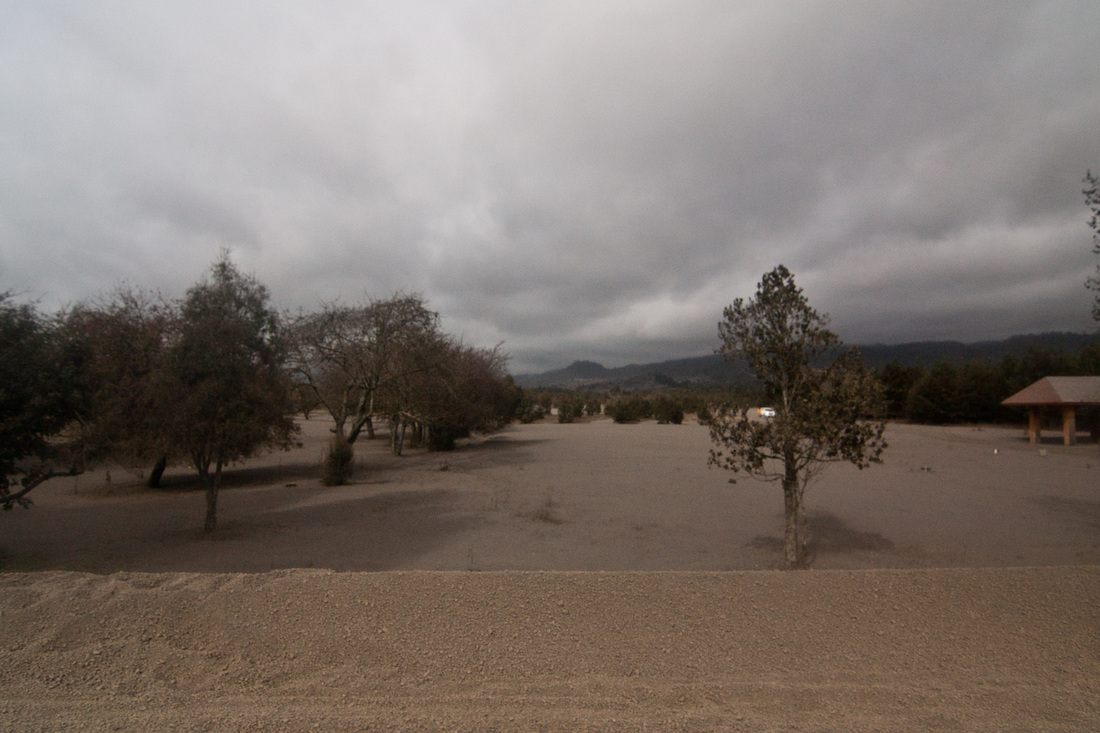
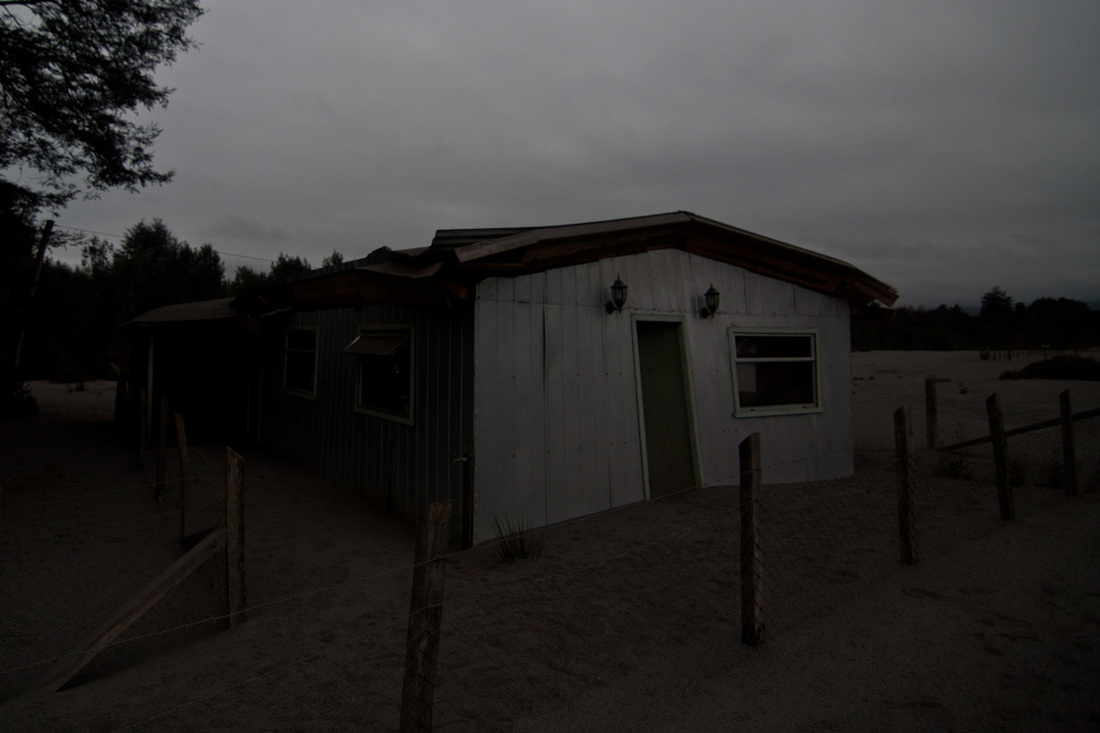
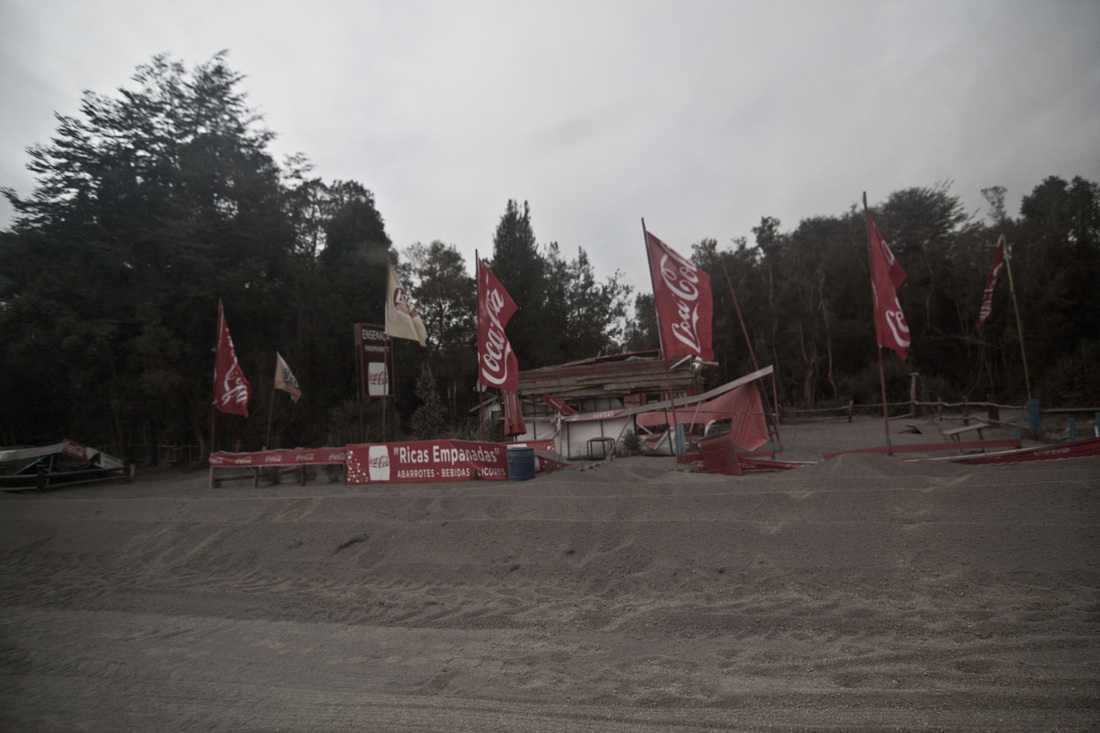
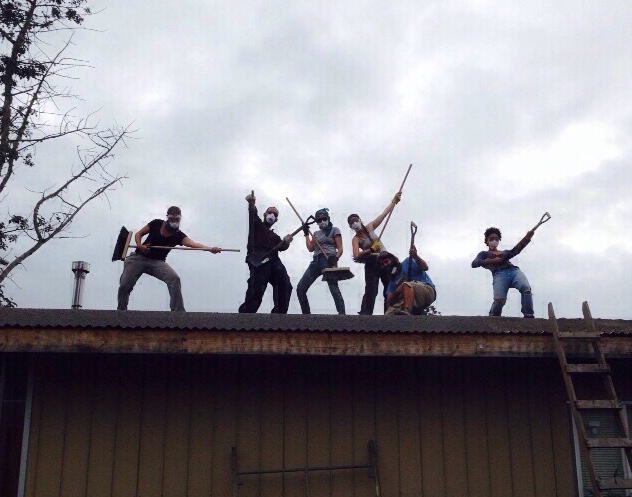
Jess called me with plans to go up and help with the cleanup effort and I decided to tag along.  A big group of her friends showed up, armed with shovels and brooms and we slowly made our way into the ash fall zone along with a bunch of rescue workers and huge military trucks.  At first, it just looked a little dusty, but as we got closer and closer, the ash began to pile up.  It looked like a big snow storm, with ash covering the ground and a  blanket of gray over everything.  
Picture
Picture
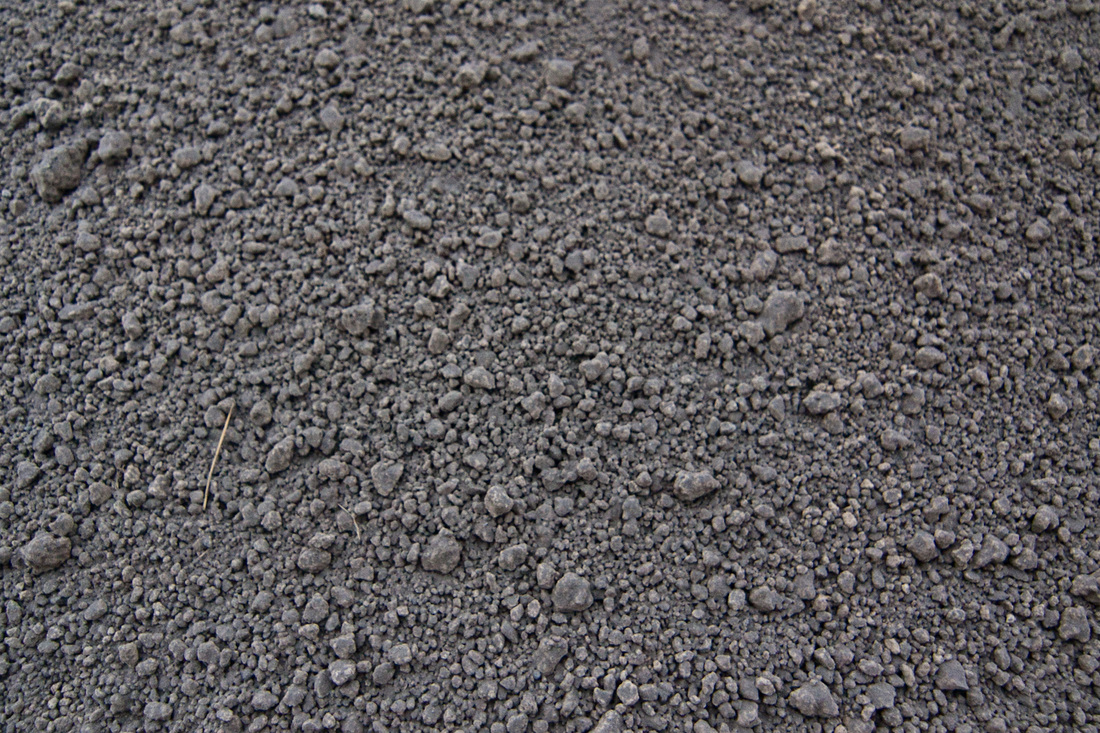
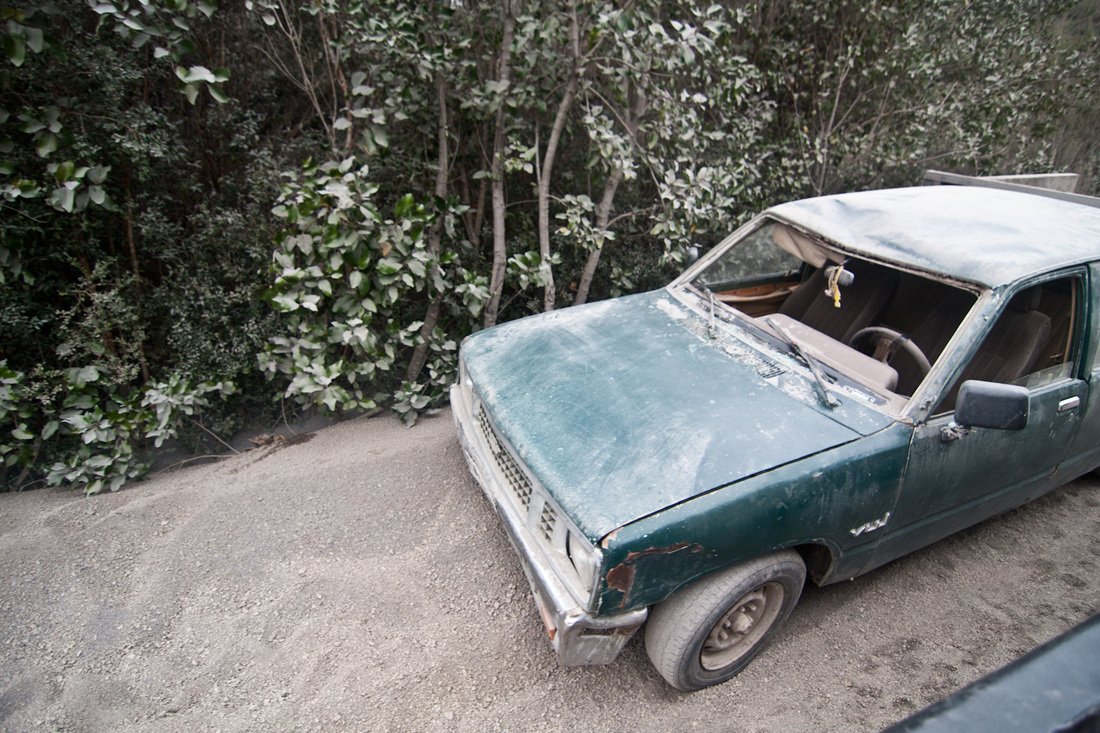
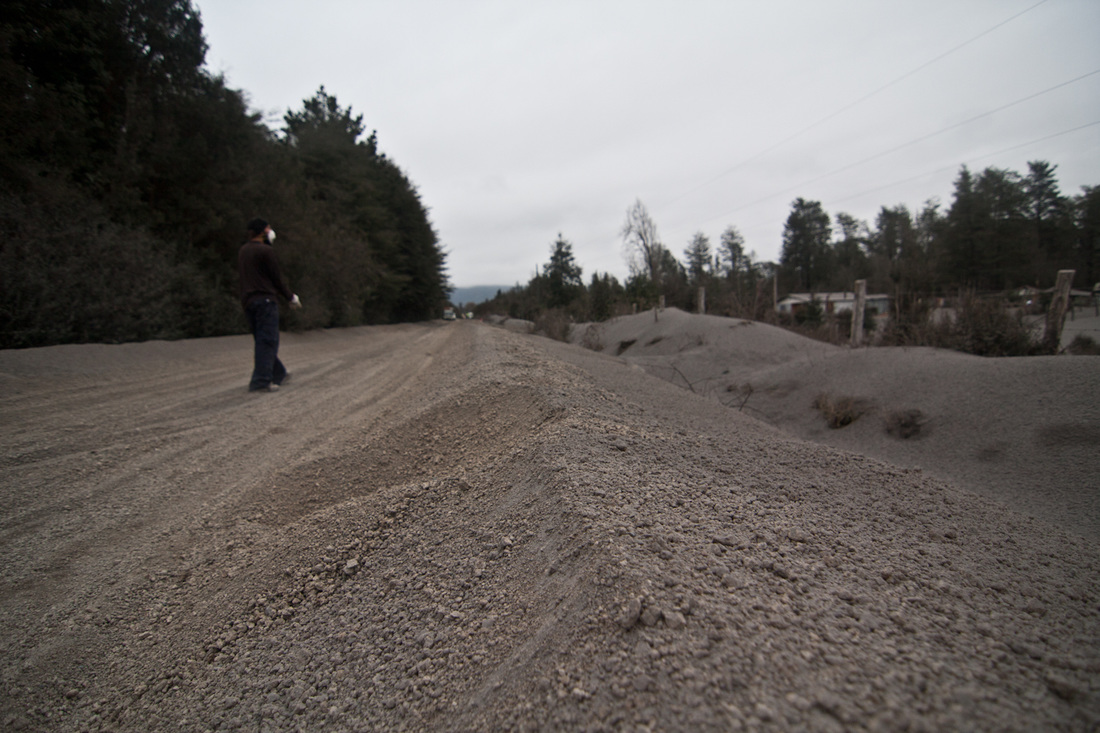
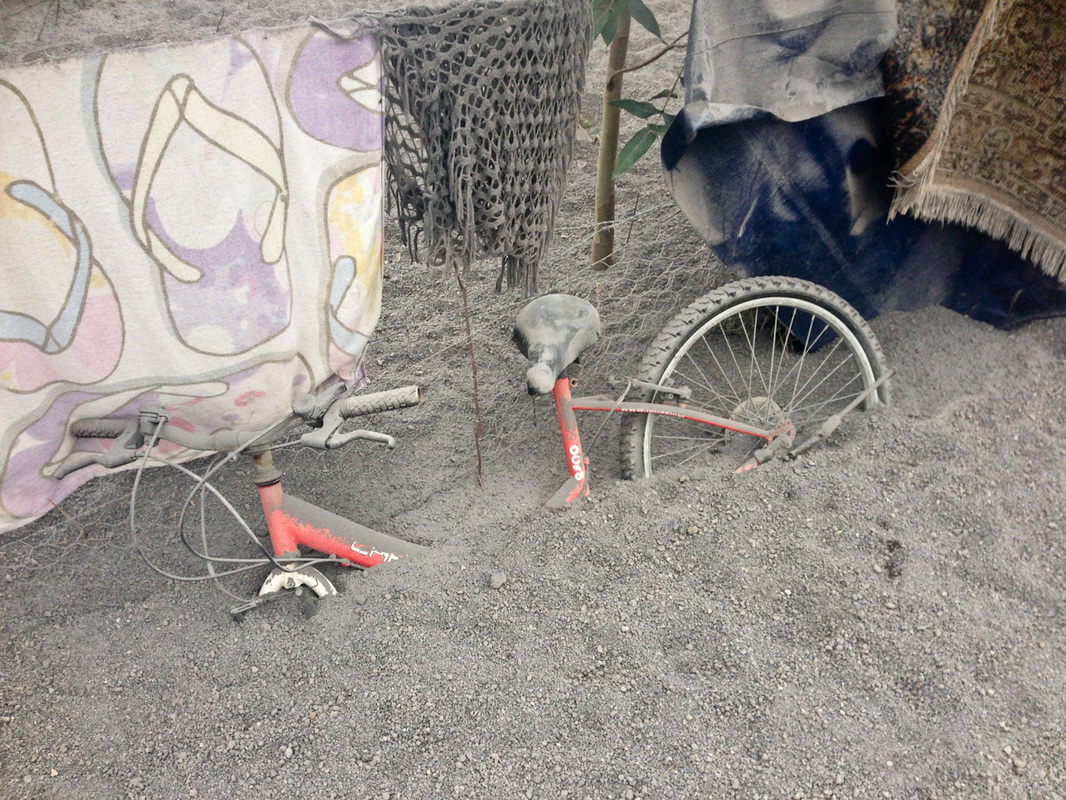
The further we drove, the deeper it got, until a uniform 8 inches was covering everything as far as the eye could see.  The ash wasn't at all what I was expecting.  Its nothing like the ash you find in the bottom of a woodstove, instead its like little pebbles of concrete.  If you think of what the inside of a mountain might look like, and then imagine that material exploded into a bunch of tiny pieces (ranging from a fine sand to 3/4 inch chunks, you've got volcanic ash.  Thus, you can imagine how heavy 8 inches of concrete would be and how much damage that would cause in an area where construction techniques are still fairly primitve.  The military had plowed the ash into big banks along the side of the road so that cars could pass.
Picture
Picture
Picture
Picture
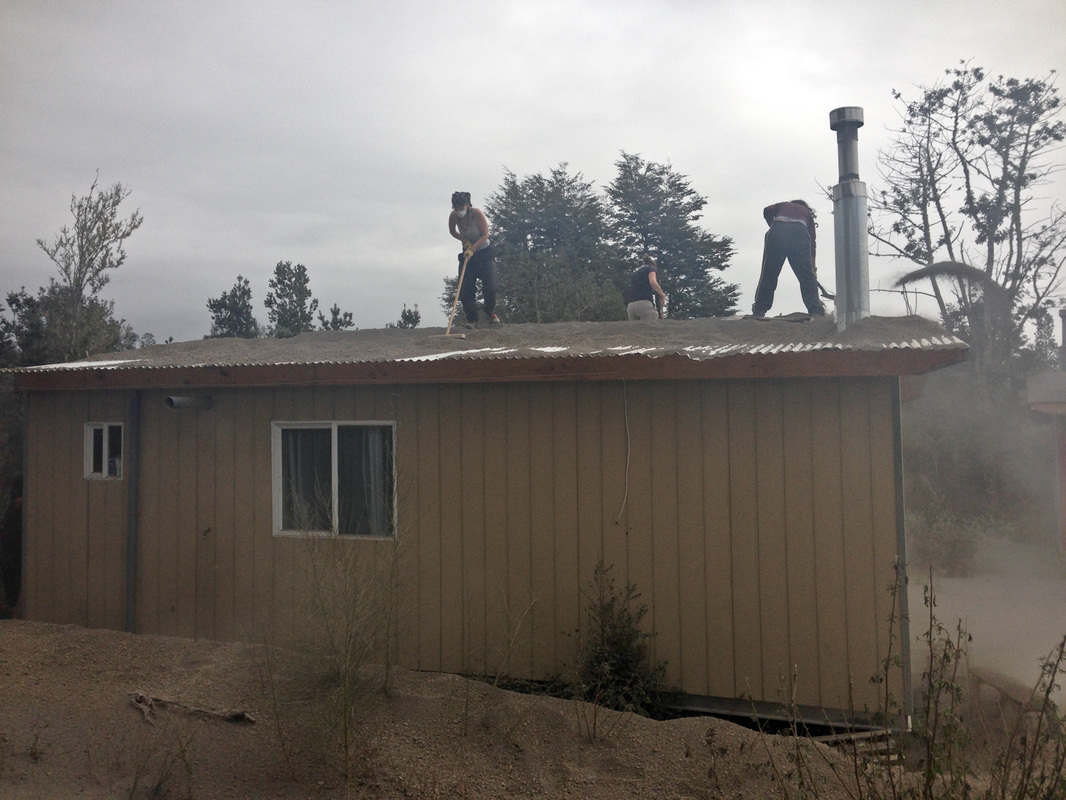
We soon found some houses where nobody had been in to help yet and we went to work shoveling and sweeping ash off of the roofs.  It was immensely heavy, and somewhat astounding that any house could withstand such a weight.  
Picture
Picture
While it was tremendously sad to see such destruction, with homes collapsed and people’s livelihood ruined by the thick blanket of ash, it was also quite heartening to see how many people were there to help and how quickly people were able to make a difference.
Picture
Picture
It was hot, sweaty, dusty work, but we made quick progress and soon had several houses cleared.  As we worked deeper into the countryside, it became obvious that the plants and animals were suffering just as much as the people, and much of the aid that arrived consisted of fodder for livestock and water that wasn't contaminated with ash.  
Picture
Picture
As with anything, it wasn't all doom and gloom and we spent a good portion of our time honing our air guitar skills.
Picture
Future Plans
I’m leaving today for an exploratory mission into the fjords.  I figure it’ll be good to get my feet wet while the weather is still good and I’m still close to the supply / repair facilities in Puerto Montt.  I must also admit that I’m really chomping at the bit to dig into the real part of Chile after being in port for a couple weeks. 

This trip will also help determine my course for the rest of the winter.  I should have a lot better idea of the feasibility of skiing from the boat once I’ve gotten a better look at the terrain and accessibility of snowfields.  In addition, I’m planning to catch a few king crabs, soak in a few hot springs, and maybe even drink a couple bottles of wine.  Wish me luck!
Picture
1 Comment

The Long Passage - Part 2

4/17/2015

2 Comments

 
Picture
I managed to avoid heavy weather during this last passage, but there was still plenty of excitement along the way.
Picture
Engine Tribulations and Equipment Malfunctions 
There are lots of things that can go wrong on a boat and, short of a dismasting or a major leak of some sort, I had all of the big, scary ones happen on this passage: A fire, an engine breakdown, and a steering failure.  When you're a thousand mile from land, there is only one thing to do: fix the problem and keep sailing.  And thats exactly what I did.
Picture
Boats are filled with lots of complex systems that are under constant assault from the elements.  The majority of this passage was spent sailing into the wind which puts a lot more strain on everything (with the boat heeled over, crashing through the waves, deck awash, etc).
Picture
Picture
The Rascal valiantly lasted almost a week before the first thing went.  It was the middle of the night and I was stacking Zs, when all of a sudden I woke up.  My body can always seem to tell when I haven't woken up naturally, but its rare that my conscious mind can immediately identify what woke me.  The Rascal is constantly singing and dancing while we're on passage, with a hundred different clinks, clanks, and squeaks and a whole host of different shimmies, sways, and rocks.  Thus, when I first wake up, I've got to spend a few seconds listening for the tink that turned into a clang or feeling for the wiggle that has turned into a shake. 

On this occasion, it was pretty easy to figure out.  Instead of tipping to starboard, we were tipping to port, which is an odd change to have happen without me affecting it.  I climbed up into the cockpit and found that one of the windvane steering lines was totally slack.  The Rascal did the right thing by heaving-to when this happened (thanks to her traditional design with a bit of weather-helm) which stopped her in her tracks in a safe position.  The pulley had been making an odd squeaky noise for a couple thousand miles, but it was actually the lashings that held it to the boat that failed.  I laced some new ones in, and we were back on our way.
Picture
The second thing that went bad during the passage was a slow leak from several of the port-lights (windows) and hatches around the cabin.  The Rascal had been completely drenched with rain and sea water for more than a week at this point and it was no big surprise that some of it finally found its way in.  I managed to stem the flow with some butyl tape (something of an industrial version of silly putty that my mom was kind enough to bring down to Mexico with her), and the cabin stayed dry for the rest of the trip. 
Picture
About two weeks into the trip, I was laying down in my bunk reading when I tarted to notice an electrical smell in the air.  I was sitting right under the fan, and figured it was starting to heat up or something.  A couple of sniffs proved that this wasn't the source and I began snooting around a few other electronics that could've been the culprit, all to no avail.  Eventually I decided to lift the cover of the engine compartment, and smoke billowed out in my face.  I could see flames leaping up the left side of the engine and sparks flying into the insulation.

The Rascal is a very sturdily built ship and there aren't many things that could sink her. I'm pretty well convinced that even hitting an iceburg or a container wouldn't put a hole in her.  Losing steering would be really bad news, but I could jury rig something to send her in the right direction.  A dismasting would also be a big problem, but I've always got the engine, and I'm sure I could figure out how to rig a shorter mast sufficient to send me to my destination.  At least I've still got the security of the Rascal to protect me from the elements.  A FIRE, however, is a much bigger problem.  A fire very likely means abandoning ship and ending up in a life raft (if the fire hasn't already roasted it) and I'm left without much in the way of food, water, or shelter.  

When I saw those flames, I nearly shit myself.  My eyes got as big as dinner plates and I let out a frightened shout.  I immediately reached over and grabbed the fire extinguisher that is mounted above the stove and blasted the engine compartment with a ferocious stream of powdery extinguisher juice.  That was enough to quench the blaze, but something was still sparking away, so I turned my attention to the battery switches.  I wasn't sure why the fire had started, but I knew some sort of electrical issue was the cause, so I turned everything off at the main.  Next, I sent my brother a message so he would know something was going on in case a fire blazed back up.  After all of this was accomplished, I sat down on my bunk and realized I was trembling.  I was about a thousand miles from the nearest land, several days from any potential rescue, and decidedly shaken.  Luckily, however, the fire was out, I was safe and sound with plenty of food and water, and the Rascal didn't seem to have any critical damage.
Picture
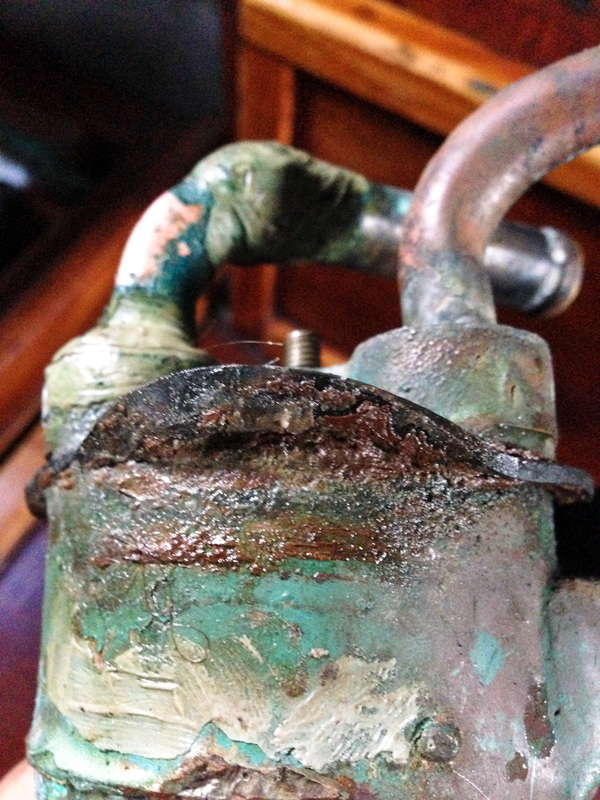
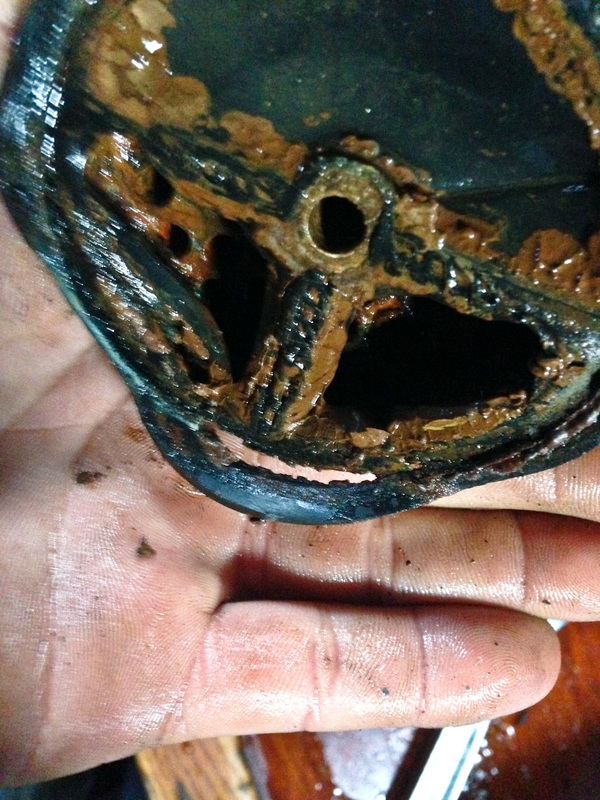
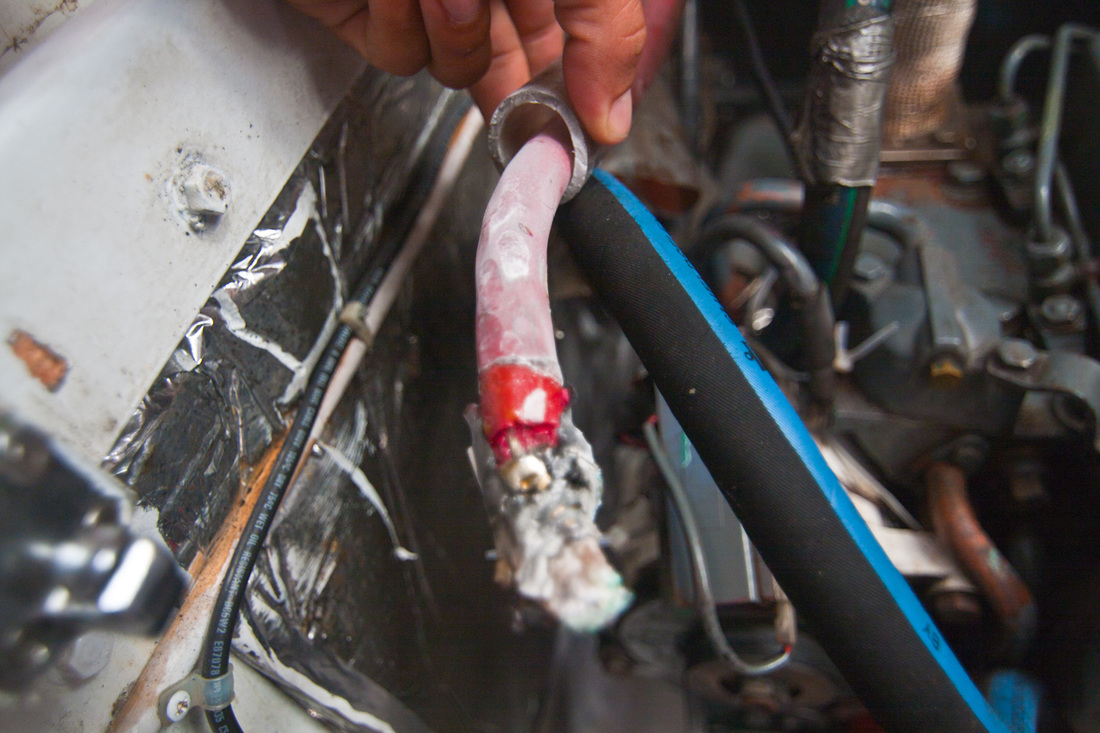
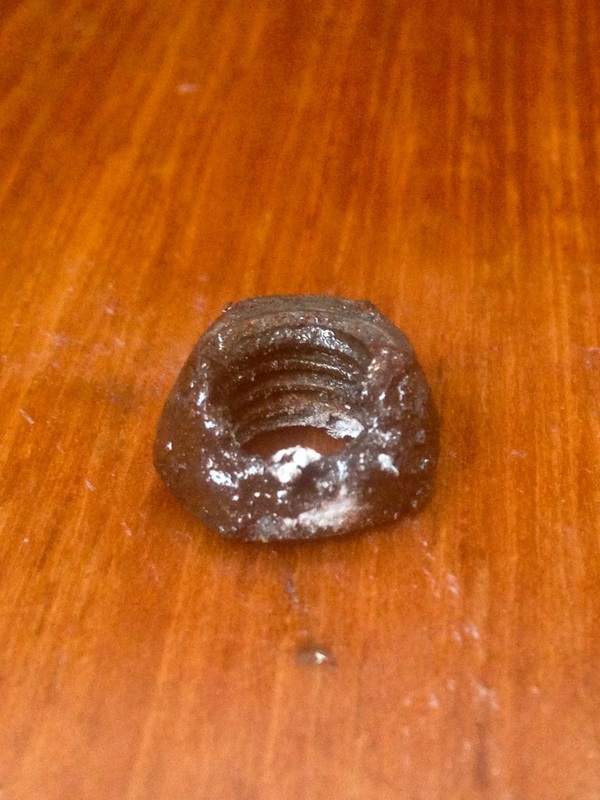
The next morning as soon as it was light out, I started digging in to determine what caused the blaze.  The fire started on the bottom left side of the engine, which meant that I'd have to pull the alternator and my good friend the heat exchanger to get at the source.  It soon became evident that a leak had developed on the sea water side of the heat exchanger (which is impossible to see without taking everything apart) and it was very slowly dripping on the electrical leads to the starter.  It eventually shorted out, and because they're direct leads to the battery to get full juice for starting, there was no fuse to blow.  Thus, the cable (which is about the size of a hot dog  (but not as big as a Capri-corn-dog)) continued to short until it melted through its copper connector and half of the nut!  It looked like a camp fire dinner gone wrong.  
Picture
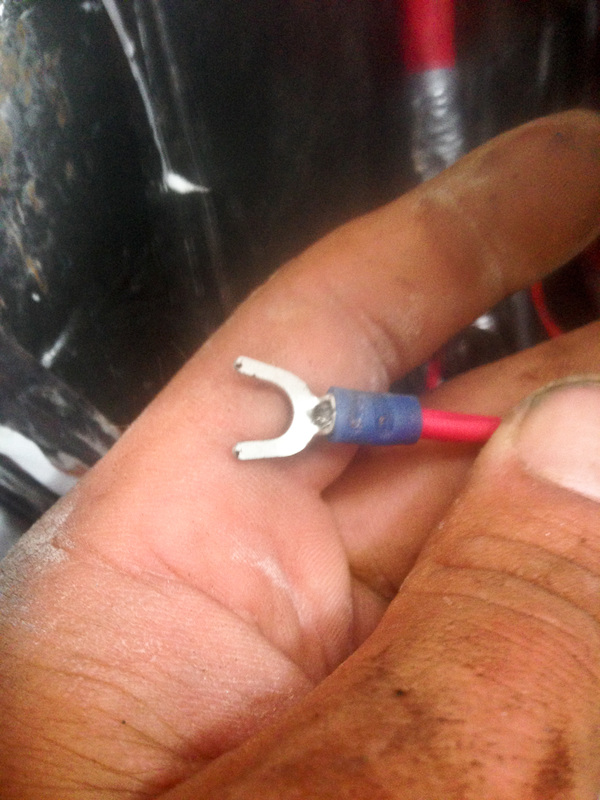
I didn't have any hot dog sized electrical connectors around, so I spliced some smaller cables and connectors on and reassembled it.  A slightly sketchy plan, but basically my only option if I want to use the engine at all.  Next, to avoid getting any more leakages or drops on the leads, I covered the starter with a couple of layers of sturdy clear plastic.  This is perhaps an even sketchier plan, but in the end it was very effective (I'm still alive and my starter still works).  Finally, I reassembled the heat exchanger (which was a big pain in the ass, requiring about five tries before everything lined up and held water), reinstalled the alternator, and tried to fire her up.  To my great surprise, she spun on the first twist and purred like a kitten!  Disaster averted!  
Picture
Picture
I checked everything several times for leaks and shorts and issues and got into the habit of cutting the battery main while I was sleeping (when I would be less likely to smell a fire before it got critical) and I was feeling pretty confident that everything was hunky-dory.  At this point I had found myself in the high-pressure area, with lots of calms and I was using the engine quite a bit.  One afternoon, I heard a buzzer and immediately cut the engine.  It was the high temperature alarm, which had gotten tripped when the heat exchanger decided to empty its freshwater into the bilge.  How thoughtful!  

I was faced with basically the same problem that I had in the Galapagos, the copper cooling lines didn't want to slide into the heat exchanger and seal off.  I decided that some sealant (which is actively discouraged in the shop manual) was my only chance at keeping them leak-free.  So I gooped 'em up, shoved 'em in, and gave them a few hours to cure.  I filled the system, and to my great joy, everything held water.  I ran the engine and all was well for a few hours until I heard the scream of the high temp alarm again.  I've gotten really severe headaches (migraines I suppose they'd be called) once every 2-3 years since I was in high school and as I cut the engine, one of these brain assaults began.  When it rains, it pours.  
Picture
I eventually slept the migraine off, and the next morning, I devised a new system to keep the heat exchanger from vibrating its lines out.  This new system used a couple of lengths of parachute cord, wrapped around the heat exchanger and various other things in the engine compartment to keep the lines pushed into the appropriate outlets.  As dubious as this spiderweb of support sounds, it was ultimately effective and I had no engine issues for the rest of the trip.
Picture
One night towards the end of the trip, I was awakened by an entirely new sound that the Rascal decided to add to her musical repertoire.  It was a clank that sounded like two bars of gold getting smacked together.  I had never heard her produce such a clank before and it had me very worried.  It only happened once every two or three minutes, so I wasn't sure, at first, what had woken me.  I figured it had to have come from the cockpit, so I hopped out through the companionway with a headlamp and waited for the clank.  When it finally came, it sounded like it was in the cabin.  I went back in the cabin and from in there, it sounded like it might've come from the kitchen sink area.  With my head in the kitchen sink, it sounded like it was surely coming from the vee berth.  From the vee berth, it sounded like it was emanating from the head, and from the head, it was definitely something in the engine compartment.  I spent the better part of an hour exploring and listening for the phantom clank and I never was able to isolate it.  In the morning, it was gone.  Hopefully the prospect of finding these mysterious gold bars will make me more likely to clean out the bilge in the future.  
Picture
Picture
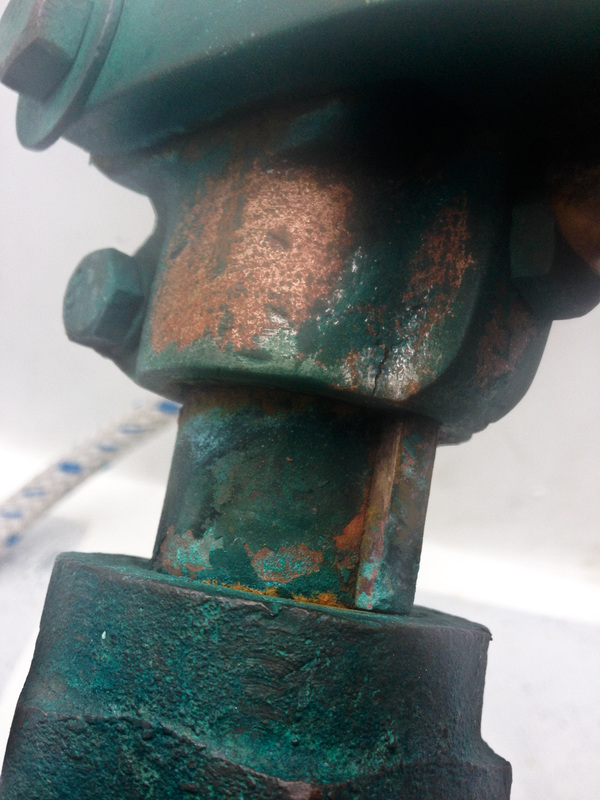
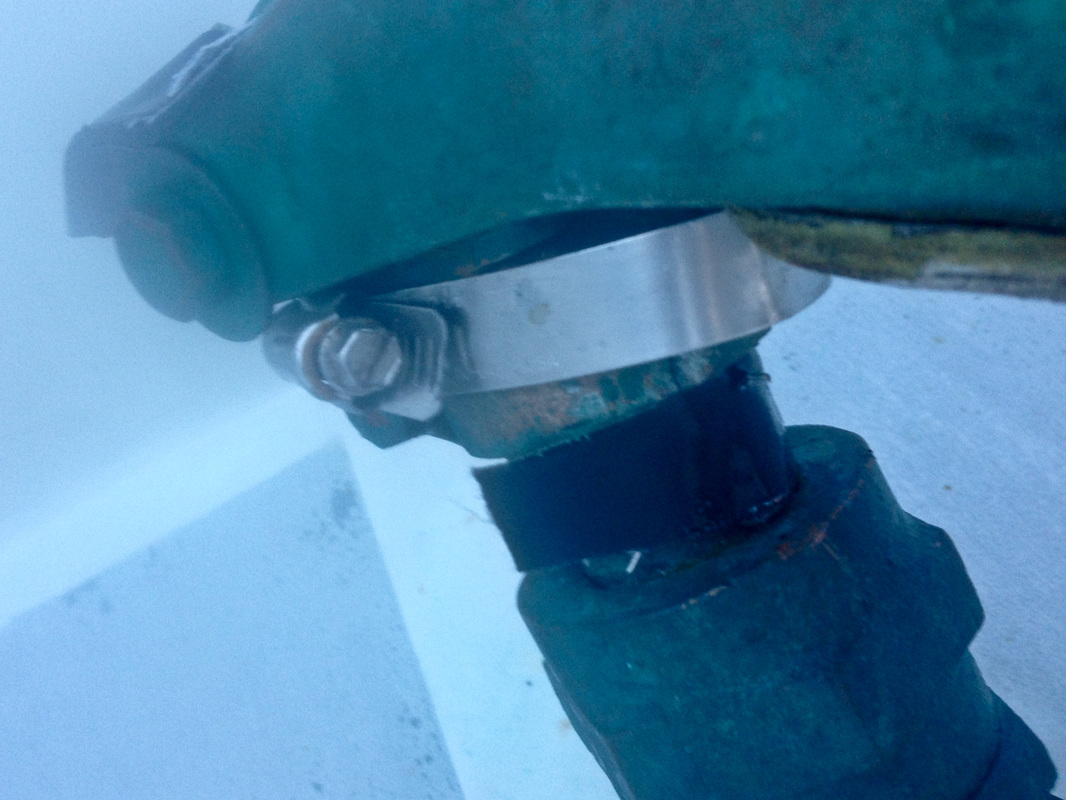
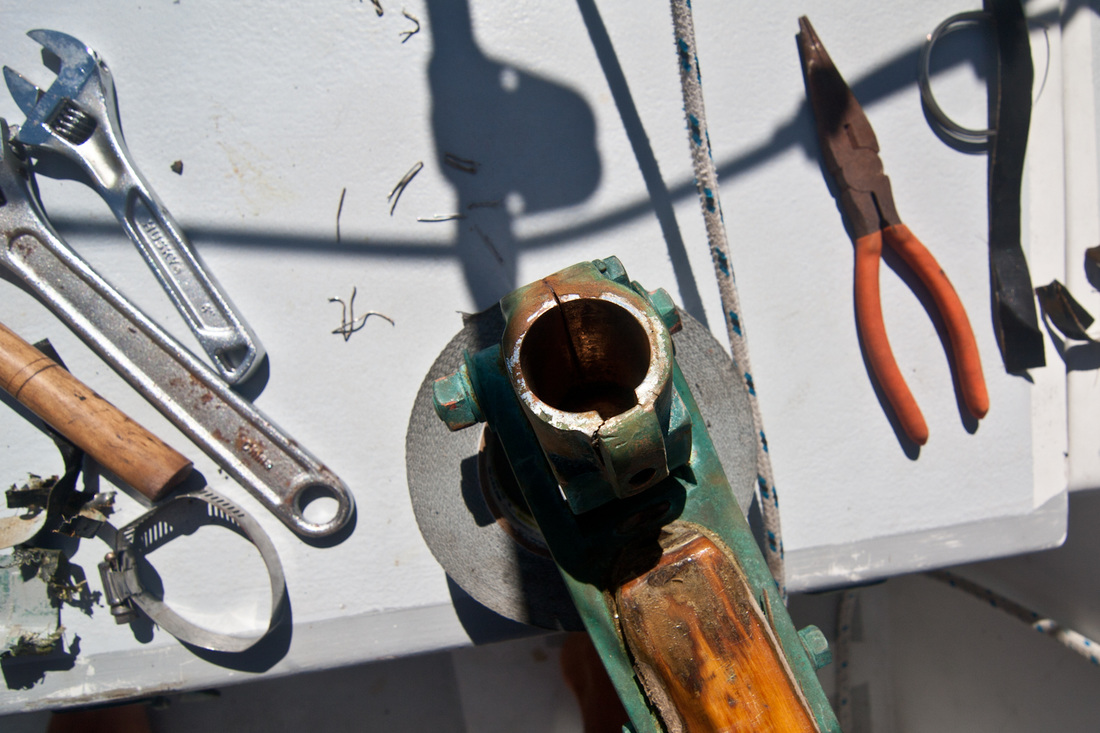
As the wind was picking up after the dreaded calms, there were a few really gusty squalls that came through and had me scrambling to shorten sail and change heading. I noticed at one point that the tiller was pushed way over, and didn't think anything of it until the next day - I was on a close reach and its typical for the Rascal to have lots of weather helm.  As I was changing course, however, I noticed a lot of slop in the tiller, perhaps 30 degrees!  "That's odd," I said to myself, and as I crouched over to examine the tiller, I noticed a pair of forked cracks.  The bronze casting at the end of the tiller (that grabs onto the rudder shaft) was cracking in two places.  In addition, the key stock that keeps the tiller locked to the rudder seemed to have slipped down and was on the verge of falling out.
Picture
All of this had me pretty freaked out.  If that casting cracked all the way through, I'd have no way to steer the boat.  The problem wasn't critical yet, but in a storm, steering failure would (obviously) be a really big issue.  The weather was fairly settled, so I spent some time coming up with a variety of potential solutions.  My main concern was breaking the Hippocratic Oath of Boat Ownership (first, do no harm).  In other words, "don't make it worse while you're trying to fix it" (which I've been guilty of several times on the Rascal already).  

I decided there were four things I could do with varying degrees of risk and varying degrees of fixedness.  The first was shoving the keystock further up into the hole, and using little bits of stainless wire to take up the slop that had developed in the joint.  Low risk, but not totally fixing the problem.  This I decided to do immediately, because I knew it was unlikely to make things worse.  In fact, I sailed the boat like this for several days without problems.  The second option would be injecting metal-epoxy into the joint to totally solidify it, but I was unsure if this would also eventually crack and fail.  The third option was drilling a hole through the casting and rudder-stock shaft and through-bolting them together to remove all slop and make the keystock redundant.  I was a bit leery of drilling holes in anything, for the chance of weakening it beyond functionality.  The fourth option (if everything went to hell) was to rig a new rudder system with the fiberglass floor of the Little Rascal and the spinnaker pole.
Picture
After three or four days of sailing with the stainless wire and duct-tape jury fix, I got another calm and decided I ought to take it apart and figure out a better fix.  Once I got the casting off of the shaft, I realized that the shaft extended much further than I expected and that the keystock (and consequently the position of the casting) was in the wrong place entirely.  Whether this happened during assembly (before I bought the boat) or happened as I sailed along, I will never know.  It took some careful shimmying, a little adhesive, and a few more bits of stainless wire, but I finally got everything reassembled in its proper position and all of the slop in the joint was gone.  This fix seemed totally solid, and indeed, it lasted for the rest of the voyage.
Picture
Picture
What does a typical day look like? 
When I first left Mexico and started these longer passages, I decided to split up my day into four blocks of six hours each (midnight to 6am to noon to 6pm to midnight).  I generally send a location point to Porter at the start of each block and make notes about mileage and navigation to keep track of how much distance I'm covering and what my plans will be for the next block based on expected weather.  Having these blocks provides some nice structure to my day and breaks up the monotony of passagemaking nicely.  

I've always been an early-to-bed, early-to-rise sort of fellow, and I typically get up around 5 just as light begins to play along the horizon.  First I check the iPad to see what the boat has been doing while I slept.  Often times, the wind will have shifted or changed speed and I'll go up on deck to get the Rascal back on track.  Sometimes I'll stay up on deck and watch the sunrise if it looks promising and the weather isn't too fierce.  
Picture
Morning is my favorite part of the day, and breakfast is my favorite meal, so I typically cook something grand once the sun is up and shining.  Its tough to buy anything in single serving sizes, so oftentimes breakfast will be brunch and lunch as well.  Thus, I don't pigeon-hole myself into breakfasty things, though sometimes my breakfast-brunch-lunch will have a breakfasty flair.  For instance, Lit'l Smokie-fettuccine alfredo or bacon that I can use for breakfast sandwiches in the morning and BLTs in the afternoon.  I've got nobody to impress on the open ocean and I absolutely deplore doing dishes, so oftentimes I'll eat right out of the pan *gasp*.  

Once my belly is good and full, I typically curl back up in bed to do some reading or listen to a book on tape.  Sometime around mid-morning, I'll get an in-reach message from Porter (my brother) with a weather forecast. I spend an inordinate amount of time thinking about and planning around the weather. Each forecast is eagerly awaited and once I get it, I spend some time plotting out new courses, thinking about the implications of what sails I'll put up, and when I'll make certain maneuvers.  Sometimes I'll send a couple of messages back and forth with him to clarify, get news from home, or just shoot the shit.  Having some sort of contact with the outside world (even if it is only 160 characters at a time) makes a big difference and really helps to keep me grounded and happy (and sane?).  Porter spent a lot of time putting the forecasts together and it would've been a much harder passage without his help.  I'm lucky to have such an awesome brother.
Picture
Once I'm done with weather, I go back to reading, keeping an eye on my speed and direction every so often to make sure the Rascal is holding her heading.  I try and alternate between books I read for entertainment and books that I read for edification.  This has the benefit of keeping me from getting bored with something ‘too educational’, but also helps me avoid reading garbage all day.  At any given time, I'll be working on five or six different books of varying subjects and I'll switch between titles every hour or so.  This allows me to ration particularly good books so they last longer and it also means that I have time to digest subject matter from particularly dense books for a day before diving back into them.

I think it’s just the greatest thing that I can sit around reading all day if I want to.  I'm of the opinion that reading is a tremendous luxury and while I'm on land its rare that I ever set aside more than an hour for reading each day.  I love a good story, but I also try and use my reading time as a tool to learn new things.  During the course of this last passage, I've been able to read about Chilean history, wine cultivation and production, modern nutrition and food systems, the history of Cape Horn, a treatise on art, math, music & artificial intelligence, as well as the lives of a couple of different classic authors via their autobiographies.  It would've taken me years to read and digest that much knowledge if I was working a full time job.  In a way, its somewhat like being in school, except I've got no homework and all the classes I take interest me greatly.  
Picture
Thus, I spend the majority of my day with my head buried in a book, taking breaks to scan the horizon, do some writing, fix a quick snack, or engage in some navel-gazing.  And you can imagine after such a busy morning, afternoon naps are basically mandatory.  Sometimes I'll take two if I'm so inclined.  Dinner comes around 5 or 6 and typically I just snack on something, be it leftovers, summer sausage, crackers or perhaps some granola.  I tend to not do much drinking while I'm on passage, but I do enjoy the occasional glass of wine or cocktail while I'm taking in the sunset.
Picture
On an average day, I would guess I spend an hour and a half actually sailing (changing sails, adjusting the wind vane, trimming sails, etc), an hour navigating (planning around weather, monitoring position / speed, charting courses, etc), an hour cooking and eating, eight hours reading and writing, and three hours staring off across the ocean, watching a sunset or an interesting piece of weather drifting by.  Some days when the weather is on the move, I spend six or eight hours sailing and navigating.  Oftentimes wind shifts happen in the dead of night when I'd much rather be sleeping. In settled weather, there have been times when I don't make any adjustments to the sails for days.
Picture
The Capri-corn-dog
Last, but certainly not least, I bring you the glory that is the Capri-corn-dog.

I realized I would be crossing the Tropic of Capricorn a week or two after I arrived in the Galapagos and I knew immediately that I'd have to do something really special to commemorate the occasion.  The only suitable option would be a feast of boundless proportions.  After a couple of weeks at sea, my larder was substantially depleted and lukewarm, but I had summoned my reserves of willpower and had cheddar-wursts to spare.  Thus, the concept of the Capri-corn-dog was born.  

When you're crossing the Tropic of Capricorn without refrigeration, make sure you've got well sealed food-stuffs or they won't go the distance.  Johnsonville's finest cheddar-wursts kept nicely.  A grill would've been a nice tool to have, but when you're bouncing around at sea, its tough to grill, so I started by pan frying it over high heat to build a little char (and protect myself from the ravages of undercooked, possibly-spoiled sausages).  As for the "corn" portion of the Capri-corn-dog, some corn masa flour I had leftover from Mexico was just the thing for the job.  I mixed up a thick batter with water and plenty of seasonings.  I was planning to batter it by dipping, but the greasy surfaces of a freshly roasted cheddar-wurst are tough to adhere to, so I had to drizzle the batter instead, which worked beautifully.
Picture
Picture
There is, of course, only one thing to fry a Capri-corn-dog in, and thats leftover bacon grease.  Don't skimp in this department, and apply liberal amounts of chili powder and garlic salt to the outer crust.  
Picture
Picture
The finished product was a glorious golden brown, piping hot, with impressive heft.  I'll leave you to choose your condiment of choice, but I must say that BBQ sauce was a lovely accompaniment.  Delightful.  Plan to have a short siesta after you're done.
Picture
Puerto Montt
I've been having the time of my life in Chile so far and I'm planning to spend the next couple of weeks exploring around Puerto Montt and Puerto Varas before I start diving into the fjords to the south.  Stay tuned for a post with my first impressions of Chile in the next week or two.
Picture
2 Comments
<<Previous
Forward>>

    Dwyer C. Haney

    Grabbing life by the horns and tickling it behind the ear.


    Categories

    All
    Cruising
    Maintenance And Upgrades
    Passage Making
    Ruminations
    Skiing
    Yacht Shopping


    Archives

    September 2016
    January 2016
    December 2015
    November 2015
    September 2015
    August 2015
    June 2015
    May 2015
    April 2015
    February 2015
    January 2015
    December 2014
    November 2014
    October 2014
    September 2014
    August 2014
    July 2014
    June 2014
    May 2014
    April 2014
    March 2014
    February 2014
    January 2014
    December 2013
    November 2013
    October 2013


    RSS Feed

Powered by Create your own unique website with customizable templates.